

Applied geomorphology and arid regions
463
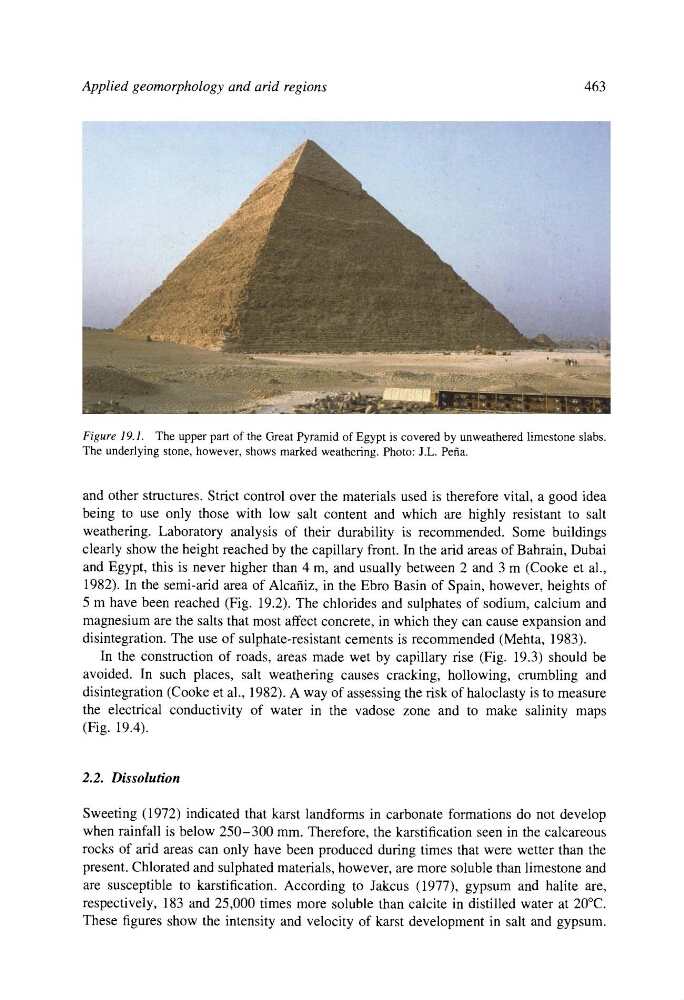
Figure 19.1. The upper part of the Great Pyramid of Egypt is covered by unweathered limestone slabs.
The underlying stone, however, shows marked weathering. Photo: J.L. Pefia.
and other structures. Strict control over the materials used is therefore vital, a good idea
being to use only those with low salt content and which are highly resistant to salt
weathering. Laboratory analysis of their durability is recommended. Some buildings
clearly show the height reached by the capillary front. In the arid areas of Bahrain, Dubai
and Egypt, this is never higher than 4 m, and usually between 2 and 3 m (Cooke et al.,
1982). In the semi-arid area of Alcafiiz, in the Ebro Basin of Spain, however, heights of
5 m have been reached (Fig. 19.2). The chlorides and sulphates of sodium, calcium and
magnesium are the salts that most affect concrete, in which they can cause expansion and
disintegration. The use of sulphate-resistant cements is recommended (Mehta, 1983).
In the construction of roads, areas made wet by capillary rise (Fig. 19.3) should be
avoided. In such places, salt weathering causes cracking, hollowing, crumbling and
disintegration (Cooke et al., 1982). A way of assessing the risk of haloclasty is to measure
the electrical conductivity of water in the vadose zone and to make salinity maps
(Fig. 19.4).
2.2. Dissolution
Sweeting (1972) indicated that karst landforms in carbonate formations do not develop
when rainfall is below 250-300 mm. Therefore, the karstification seen in the calcareous
rocks of arid areas can only have been produced during times that were wetter than the
present. Chlorated and sulphated materials, however, are more soluble than limestone and
are susceptible to karstification. According to Jakcus (1977), gypsum and halite are,
respectively, 183 and 25,000 times more soluble than calcite in distilled water at 20~
These figures show the intensity and velocity of karst development in salt and gypsum.
463
Figure 19.1. The upper part of the Great Pyramid of Egypt is covered by unweathered limestone slabs.
The underlying stone, however, shows marked weathering. Photo: J.L. Pefia.
and other structures. Strict control over the materials used is therefore vital, a good idea
being to use only those with low salt content and which are highly resistant to salt
weathering. Laboratory analysis of their durability is recommended. Some buildings
clearly show the height reached by the capillary front. In the arid areas of Bahrain, Dubai
and Egypt, this is never higher than 4 m, and usually between 2 and 3 m (Cooke et al.,
1982). In the semi-arid area of Alcafiiz, in the Ebro Basin of Spain, however, heights of
5 m have been reached (Fig. 19.2). The chlorides and sulphates of sodium, calcium and
magnesium are the salts that most affect concrete, in which they can cause expansion and
disintegration. The use of sulphate-resistant cements is recommended (Mehta, 1983).
In the construction of roads, areas made wet by capillary rise (Fig. 19.3) should be
avoided. In such places, salt weathering causes cracking, hollowing, crumbling and
disintegration (Cooke et al., 1982). A way of assessing the risk of haloclasty is to measure
the electrical conductivity of water in the vadose zone and to make salinity maps
(Fig. 19.4).
2.2. Dissolution
Sweeting (1972) indicated that karst landforms in carbonate formations do not develop
when rainfall is below 250-300 mm. Therefore, the karstification seen in the calcareous
rocks of arid areas can only have been produced during times that were wetter than the
present. Chlorated and sulphated materials, however, are more soluble than limestone and
are susceptible to karstification. According to Jakcus (1977), gypsum and halite are,
respectively, 183 and 25,000 times more soluble than calcite in distilled water at 20~
These figures show the intensity and velocity of karst development in salt and gypsum.