

452
Climatic Geomorphology
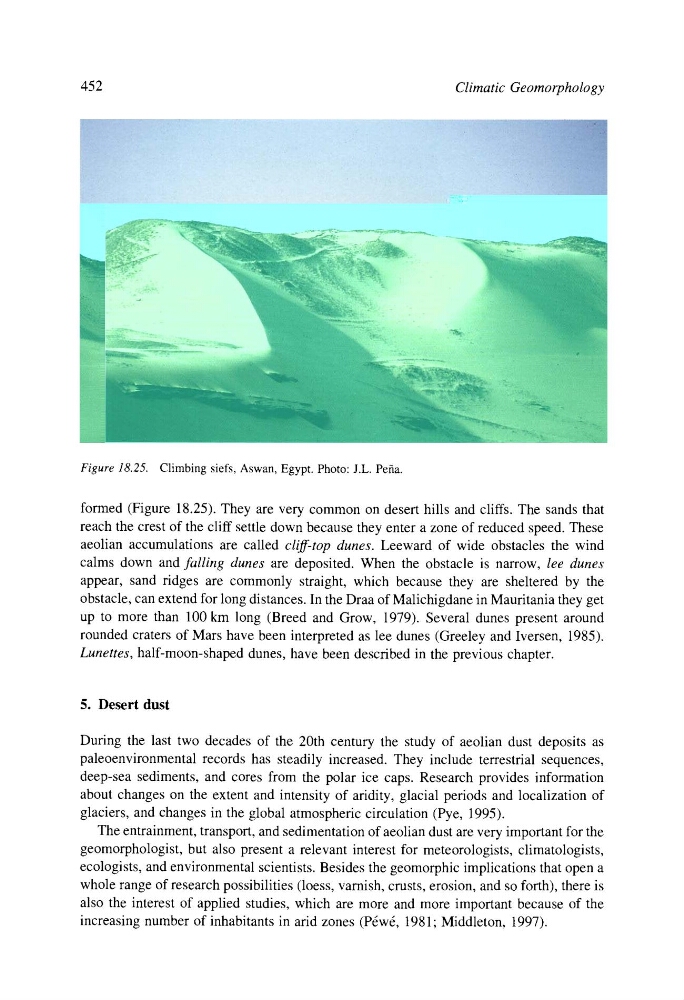
Figure 18.25. Climbing siefs, Aswan, Egypt. Photo: J.L. Pefia.
formed (Figure 18.25). They are very common on desert hills and cliffs. The sands that
reach the crest of the cliff settle down because they enter a zone of reduced speed. These
aeolian accumulations are called cliff-top dunes. Leeward of wide obstacles the wind
calms down and falling dunes are deposited. When the obstacle is narrow, lee dunes
appear, sand ridges are commonly straight, which because they are sheltered by the
obstacle, can extend for long distances. In the Draa of Malichigdane in Mauritania they get
up to more than 100 km long (Breed and Grow, 1979). Several dunes present around
rounded craters of Mars have been interpreted as lee dunes (Greeley and Iversen, 1985).
Lunettes, half-moon-shaped dunes, have been described in the previous chapter.
5. Desert dust
During the last two decades of the 20th century the study of aeolian dust deposits as
paleoenvironmental records has steadily increased. They include terrestrial sequences,
deep-sea sediments, and cores from the polar ice caps. Research provides information
about changes on the extent and intensity of aridity, glacial periods and localization of
glaciers, and changes in the global atmospheric circulation (Pye, 1995).
The entrainment, transport, and sedimentation of aeolian dust are very important for the
geomorphologist, but also present a relevant interest for meteorologists, climatologists,
ecologists, and environmental scientists. Besides the geomorphic implications that open a
whole range of research possibilities (loess, varnish, crusts, erosion, and so forth), there is
also the interest of applied studies, which are more and more important because of the
increasing number of inhabitants in arid zones (P~w~, 1981; Middleton, 1997).
Climatic Geomorphology
Figure 18.25. Climbing siefs, Aswan, Egypt. Photo: J.L. Pefia.
formed (Figure 18.25). They are very common on desert hills and cliffs. The sands that
reach the crest of the cliff settle down because they enter a zone of reduced speed. These
aeolian accumulations are called cliff-top dunes. Leeward of wide obstacles the wind
calms down and falling dunes are deposited. When the obstacle is narrow, lee dunes
appear, sand ridges are commonly straight, which because they are sheltered by the
obstacle, can extend for long distances. In the Draa of Malichigdane in Mauritania they get
up to more than 100 km long (Breed and Grow, 1979). Several dunes present around
rounded craters of Mars have been interpreted as lee dunes (Greeley and Iversen, 1985).
Lunettes, half-moon-shaped dunes, have been described in the previous chapter.
5. Desert dust
During the last two decades of the 20th century the study of aeolian dust deposits as
paleoenvironmental records has steadily increased. They include terrestrial sequences,
deep-sea sediments, and cores from the polar ice caps. Research provides information
about changes on the extent and intensity of aridity, glacial periods and localization of
glaciers, and changes in the global atmospheric circulation (Pye, 1995).
The entrainment, transport, and sedimentation of aeolian dust are very important for the
geomorphologist, but also present a relevant interest for meteorologists, climatologists,
ecologists, and environmental scientists. Besides the geomorphic implications that open a
whole range of research possibilities (loess, varnish, crusts, erosion, and so forth), there is
also the interest of applied studies, which are more and more important because of the
increasing number of inhabitants in arid zones (P~w~, 1981; Middleton, 1997).