

446
Climatic Geomorphology
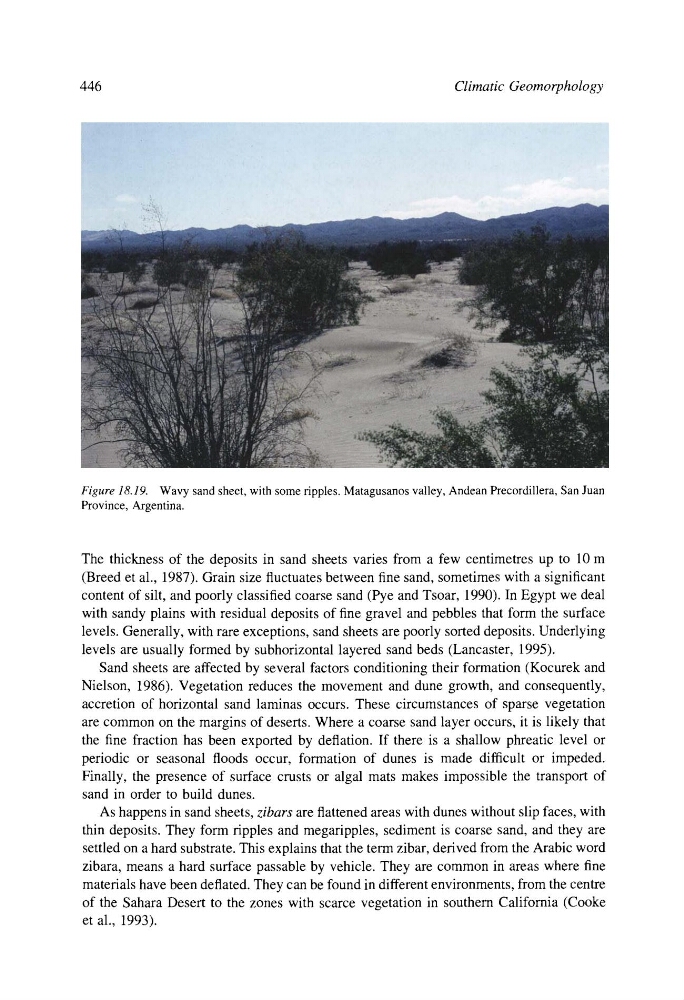
Figure 18.19. Wavy sand sheet, with some ripples. Matagusanos valley, Andean Precordillera, San Juan
Province, Argentina.
The thickness of the deposits in sand sheets varies from a few centimetres up to 10 m
(Breed et al., 1987). Grain size fluctuates between fine sand, sometimes with a significant
content of silt, and poorly classified coarse sand (Pye and Tsoar, 1990). In Egypt we deal
with sandy plains with residual deposits of fine gravel and pebbles that form the surface
levels. Generally, with rare exceptions, sand sheets are poorly sorted deposits. Underlying
levels are usually formed by subhorizontal layered sand beds (Lancaster, 1995).
Sand sheets are affected by several factors conditioning their formation (Kocurek and
Nielson, 1986). Vegetation reduces the movement and dune growth, and consequently,
accretion of horizontal sand laminas occurs. These circumstances of sparse vegetation
are common on the margins of deserts. Where a coarse sand layer occurs, it is likely that
the fine fraction has been exported by deflation. If there is a shallow phreatic level or
periodic or seasonal floods occur, formation of dunes is made difficult or impeded.
Finally, the presence of surface crusts or algal mats makes impossible the transport of
sand in order to build dunes.
As happens in sand sheets, zibars are flattened areas with dunes without slip faces, with
thin deposits. They form tipples and megaripples, sediment is coarse sand, and they are
settled on a hard substrate. This explains that the term zibar, derived from the Arabic word
zibara, means a hard surface passable by vehicle. They are common in areas where fine
materials have been deflated. They can be found in different environments, from the centre
of the Sahara Desert to the zones with scarce vegetation in southern California (Cooke
et al., 1993).
Climatic Geomorphology
Figure 18.19. Wavy sand sheet, with some ripples. Matagusanos valley, Andean Precordillera, San Juan
Province, Argentina.
The thickness of the deposits in sand sheets varies from a few centimetres up to 10 m
(Breed et al., 1987). Grain size fluctuates between fine sand, sometimes with a significant
content of silt, and poorly classified coarse sand (Pye and Tsoar, 1990). In Egypt we deal
with sandy plains with residual deposits of fine gravel and pebbles that form the surface
levels. Generally, with rare exceptions, sand sheets are poorly sorted deposits. Underlying
levels are usually formed by subhorizontal layered sand beds (Lancaster, 1995).
Sand sheets are affected by several factors conditioning their formation (Kocurek and
Nielson, 1986). Vegetation reduces the movement and dune growth, and consequently,
accretion of horizontal sand laminas occurs. These circumstances of sparse vegetation
are common on the margins of deserts. Where a coarse sand layer occurs, it is likely that
the fine fraction has been exported by deflation. If there is a shallow phreatic level or
periodic or seasonal floods occur, formation of dunes is made difficult or impeded.
Finally, the presence of surface crusts or algal mats makes impossible the transport of
sand in order to build dunes.
As happens in sand sheets, zibars are flattened areas with dunes without slip faces, with
thin deposits. They form tipples and megaripples, sediment is coarse sand, and they are
settled on a hard substrate. This explains that the term zibar, derived from the Arabic word
zibara, means a hard surface passable by vehicle. They are common in areas where fine
materials have been deflated. They can be found in different environments, from the centre
of the Sahara Desert to the zones with scarce vegetation in southern California (Cooke
et al., 1993).