

Aeolian accumulations
441
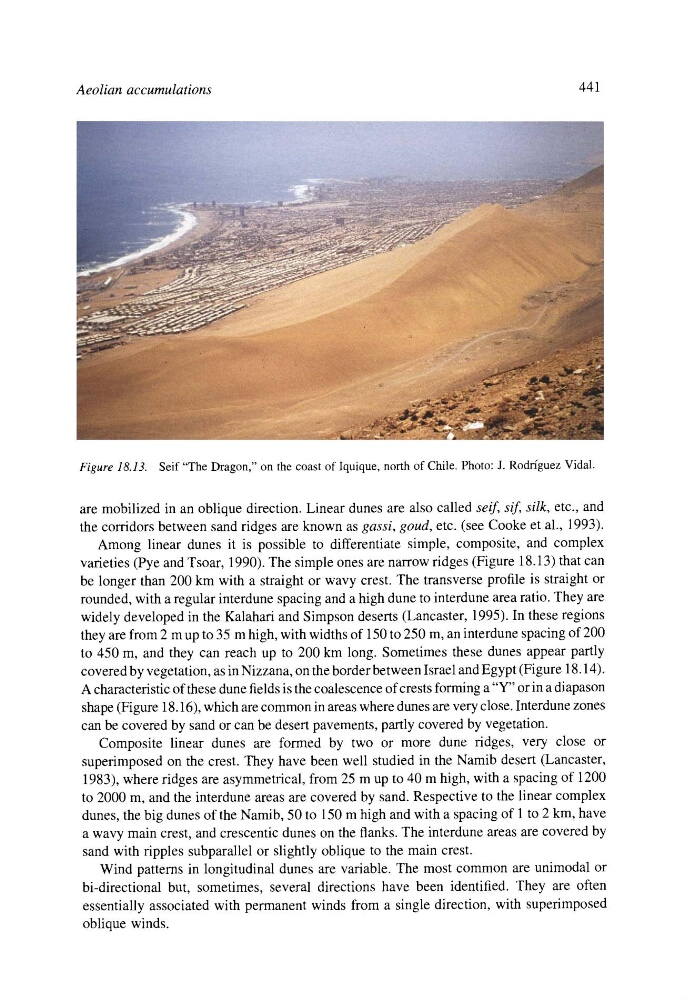
Figure 18.13. Seif "The Dragon," on the coast of Iquique, north of Chile. Photo: J. Rodr/guez Vidal.
are mobilized in an oblique direction. Linear dunes are also called seif, sif, silk, etc., and
the corridors between sand ridges are known as gassi, goud, etc. (see Cooke et al., 1993).
Among linear dunes it is possible to differentiate simple, composite, and complex
varieties (Pye and Tsoar, 1990). The simple ones are narrow ridges (Figure 18.13) that can
be longer than 200 km with a straight or wavy crest. The transverse profile is straight or
rounded, with a regular interdune spacing and a high dune to interdune area ratio. They are
widely developed in the Kalahari and Simpson deserts (Lancaster, 1995). In these regions
they are from 2 m up to 35 m high, with widths of 150 to 250 m, an interdune spacing of 200
to 450 m, and they can reach up to 200 km long. Sometimes these dunes appear partly
covered by vegetation, as in Nizzana, on the border between Israel and Egypt (Figure 18.14).
A characteristic of these dune fields is the coalescence of crests forming a "Y" or in a diapason
shape (Figure 18.16), which are common in areas where dunes are very close. Interdune zones
can be covered by sand or can be desert pavements, partly covered by vegetation.
Composite linear dunes are formed by two or more dune ridges, very close or
superimposed on the crest. They have been well studied in the Namib desert (Lancaster,
1983), where ridges are asymmetrical, from 25 m up to 40 m high, with a spacing of 1200
to 2000 m, and the interdune areas are covered by sand. Respective to the linear complex
dunes, the big dunes of the Namib, 50 to 150 m high and with a spacing of 1 to 2 km, have
a wavy main crest, and crescentic dunes on the flanks. The interdune areas are covered by
sand with tipples subparallel or slightly oblique to the main crest.
Wind patterns in longitudinal dunes are variable. The most common are unimodal or
bi-directional but, sometimes, several directions have been identified. They are often
essentially associated with permanent winds from a single direction, with superimposed
oblique winds.
441
Figure 18.13. Seif "The Dragon," on the coast of Iquique, north of Chile. Photo: J. Rodr/guez Vidal.
are mobilized in an oblique direction. Linear dunes are also called seif, sif, silk, etc., and
the corridors between sand ridges are known as gassi, goud, etc. (see Cooke et al., 1993).
Among linear dunes it is possible to differentiate simple, composite, and complex
varieties (Pye and Tsoar, 1990). The simple ones are narrow ridges (Figure 18.13) that can
be longer than 200 km with a straight or wavy crest. The transverse profile is straight or
rounded, with a regular interdune spacing and a high dune to interdune area ratio. They are
widely developed in the Kalahari and Simpson deserts (Lancaster, 1995). In these regions
they are from 2 m up to 35 m high, with widths of 150 to 250 m, an interdune spacing of 200
to 450 m, and they can reach up to 200 km long. Sometimes these dunes appear partly
covered by vegetation, as in Nizzana, on the border between Israel and Egypt (Figure 18.14).
A characteristic of these dune fields is the coalescence of crests forming a "Y" or in a diapason
shape (Figure 18.16), which are common in areas where dunes are very close. Interdune zones
can be covered by sand or can be desert pavements, partly covered by vegetation.
Composite linear dunes are formed by two or more dune ridges, very close or
superimposed on the crest. They have been well studied in the Namib desert (Lancaster,
1983), where ridges are asymmetrical, from 25 m up to 40 m high, with a spacing of 1200
to 2000 m, and the interdune areas are covered by sand. Respective to the linear complex
dunes, the big dunes of the Namib, 50 to 150 m high and with a spacing of 1 to 2 km, have
a wavy main crest, and crescentic dunes on the flanks. The interdune areas are covered by
sand with tipples subparallel or slightly oblique to the main crest.
Wind patterns in longitudinal dunes are variable. The most common are unimodal or
bi-directional but, sometimes, several directions have been identified. They are often
essentially associated with permanent winds from a single direction, with superimposed
oblique winds.