

410
Climatic Geomorphology
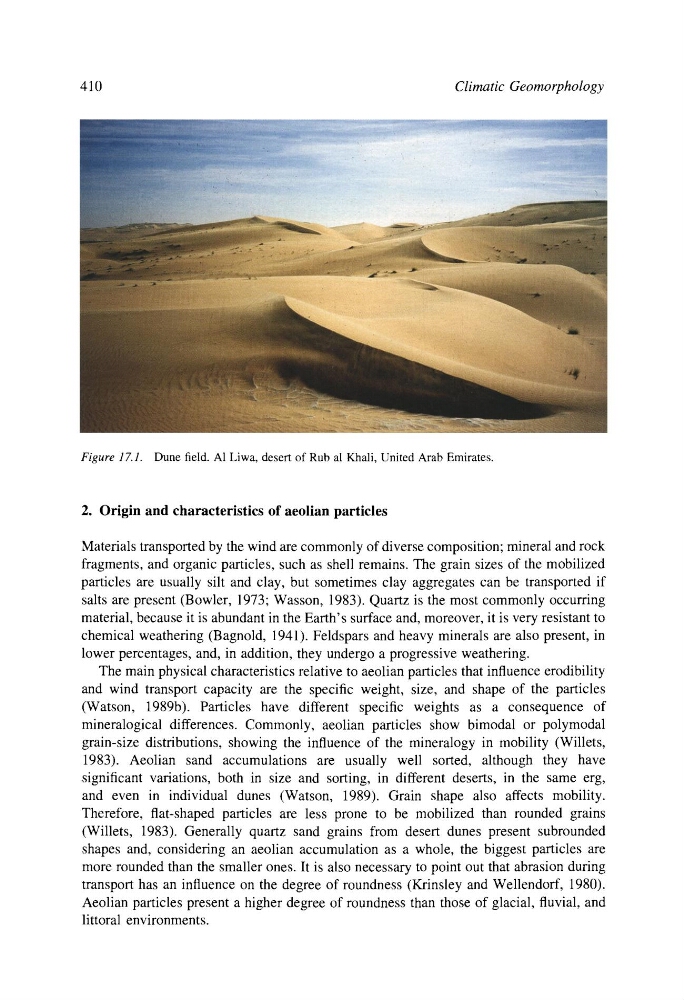
Figure 17.1. Dune field. A1 Liwa, desert of Rub al Khali, United Arab Emirates.
2. Origin and characteristics of aeolian particles
Materials transported by the wind are commonly of diverse composition; mineral and rock
fragments, and organic particles, such as shell remains. The grain sizes of the mobilized
particles are usually silt and clay, but sometimes clay aggregates can be transported if
salts are present (Bowler, 1973; Wasson, 1983). Quartz is the most commonly occurring
material, because it is abundant in the Earth's surface and, moreover, it is very resistant to
chemical weathering (Bagnold, 1941). Feldspars and heavy minerals are also present, in
lower percentages, and, in addition, they undergo a progressive weathering.
The main physical characteristics relative to aeolian particles that influence erodibility
and wind transport capacity are the specific weight, size, and shape of the particles
(Watson, 1989b). Particles have different specific weights as a consequence of
mineralogical differences. Commonly, aeolian particles show bimodal or polymodal
grain-size distributions, showing the influence of the mineralogy in mobility (Willets,
1983). Aeolian sand accumulations are usually well sorted, although they have
significant variations, both in size and sorting, in different deserts, in the same erg,
and even in individual dunes (Watson, 1989). Grain shape also affects mobility.
Therefore, fiat-shaped particles are less prone to be mobilized than rounded grains
(Willets, 1983). Generally quartz sand grains from desert dunes present subrounded
shapes and, considering an aeolian accumulation as a whole, the biggest particles are
more rounded than the smaller ones. It is also necessary to point out that abrasion during
transport has an influence on the degree of roundness (Krinsley and Wellendorf, 1980).
Aeolian particles present a higher degree of roundness than those of glacial, fluvial, and
littoral environments.
Climatic Geomorphology
Figure 17.1. Dune field. A1 Liwa, desert of Rub al Khali, United Arab Emirates.
2. Origin and characteristics of aeolian particles
Materials transported by the wind are commonly of diverse composition; mineral and rock
fragments, and organic particles, such as shell remains. The grain sizes of the mobilized
particles are usually silt and clay, but sometimes clay aggregates can be transported if
salts are present (Bowler, 1973; Wasson, 1983). Quartz is the most commonly occurring
material, because it is abundant in the Earth's surface and, moreover, it is very resistant to
chemical weathering (Bagnold, 1941). Feldspars and heavy minerals are also present, in
lower percentages, and, in addition, they undergo a progressive weathering.
The main physical characteristics relative to aeolian particles that influence erodibility
and wind transport capacity are the specific weight, size, and shape of the particles
(Watson, 1989b). Particles have different specific weights as a consequence of
mineralogical differences. Commonly, aeolian particles show bimodal or polymodal
grain-size distributions, showing the influence of the mineralogy in mobility (Willets,
1983). Aeolian sand accumulations are usually well sorted, although they have
significant variations, both in size and sorting, in different deserts, in the same erg,
and even in individual dunes (Watson, 1989). Grain shape also affects mobility.
Therefore, fiat-shaped particles are less prone to be mobilized than rounded grains
(Willets, 1983). Generally quartz sand grains from desert dunes present subrounded
shapes and, considering an aeolian accumulation as a whole, the biggest particles are
more rounded than the smaller ones. It is also necessary to point out that abrasion during
transport has an influence on the degree of roundness (Krinsley and Wellendorf, 1980).
Aeolian particles present a higher degree of roundness than those of glacial, fluvial, and
littoral environments.