

402
Climatic Geomorphology
a FORMATION OF SALT BLISTERS
d THICKENING AND MARGINAL
TRIMMING
-
~/
,Rain+
+
Brine on plate
b FORMATION OF SALT POLYGONS
Salt polygon
Broken blister
+
+
--.
...,. ,,..
e DEVELOPMENT OF THRUST
POLYGONS
--.
=,
......
-~
~-----.___ plastic wet mud
,
,
..=
.
C LATERAL GROWTH OF POLYGONS f EXTRUSION OF MUD PINNACLES
Point of intense
_..Dry
I coo,+nuo~176 ,nO
A
salt-crystal growth
_,~.l~
......
...=~
.
....
!
. . . .
i
i:
-
1
I
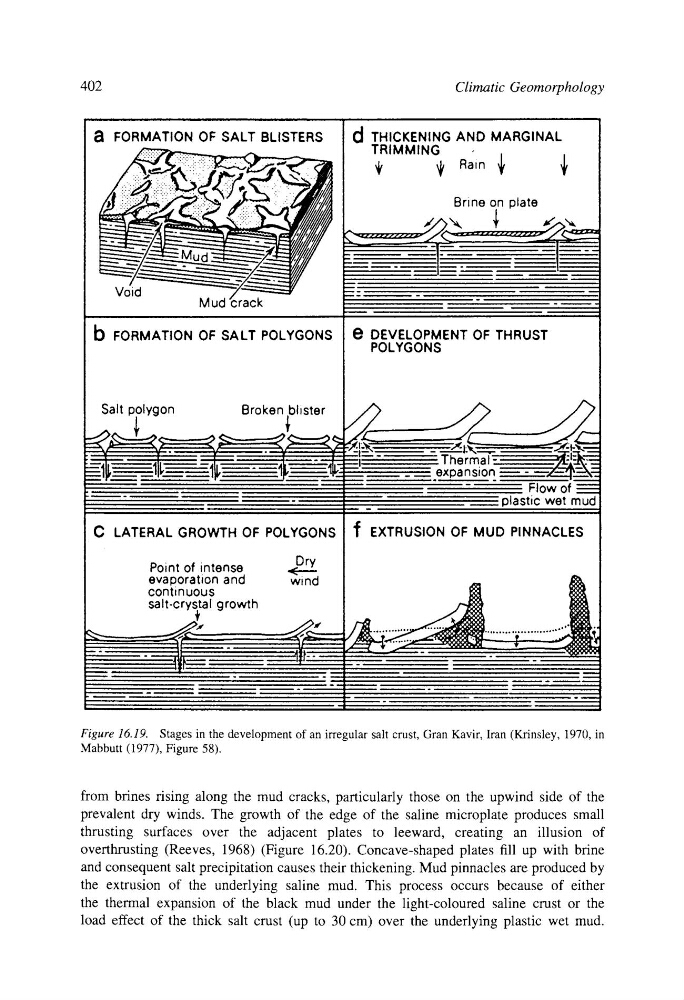
Figure 16.19. Stages in the development of an irregular salt crust, Gran Kavir, Iran (Krinsley, 1970, in
Mabbutt (1977), Figure 58).
from brines rising along the mud cracks, particularly those on the upwind side of the
prevalent dry winds. The growth of the edge of the saline microplate produces small
thrusting surfaces over the adjacent plates to leeward, creating an illusion of
overthrusting (Reeves, 1968) (Figure 16.20). Concave-shaped plates fill up with brine
and consequent salt precipitation causes their thickening. Mud pinnacles are produced by
the extrusion of the underlying saline mud. This process occurs because of either
the thermal expansion of the black mud under the light-coloured saline crust or the
load effect of the thick salt crust (up to 30 cm) over the underlying plastic wet mud.
Climatic Geomorphology
a FORMATION OF SALT BLISTERS
d THICKENING AND MARGINAL
TRIMMING
-
~/
,Rain+
+
Brine on plate
b FORMATION OF SALT POLYGONS
Salt polygon
Broken blister
+
+
--.
...,. ,,..
e DEVELOPMENT OF THRUST
POLYGONS
--.
=,
......
-~
~-----.___ plastic wet mud
,
,
..=
.
C LATERAL GROWTH OF POLYGONS f EXTRUSION OF MUD PINNACLES
Point of intense
_..Dry
I coo,+nuo~176 ,nO
A
salt-crystal growth
_,~.l~
......
...=~
.
....
!
. . . .
i
i:
-
1
I
Figure 16.19. Stages in the development of an irregular salt crust, Gran Kavir, Iran (Krinsley, 1970, in
Mabbutt (1977), Figure 58).
from brines rising along the mud cracks, particularly those on the upwind side of the
prevalent dry winds. The growth of the edge of the saline microplate produces small
thrusting surfaces over the adjacent plates to leeward, creating an illusion of
overthrusting (Reeves, 1968) (Figure 16.20). Concave-shaped plates fill up with brine
and consequent salt precipitation causes their thickening. Mud pinnacles are produced by
the extrusion of the underlying saline mud. This process occurs because of either
the thermal expansion of the black mud under the light-coloured saline crust or the
load effect of the thick salt crust (up to 30 cm) over the underlying plastic wet mud.