

The action of water in arid regions
291
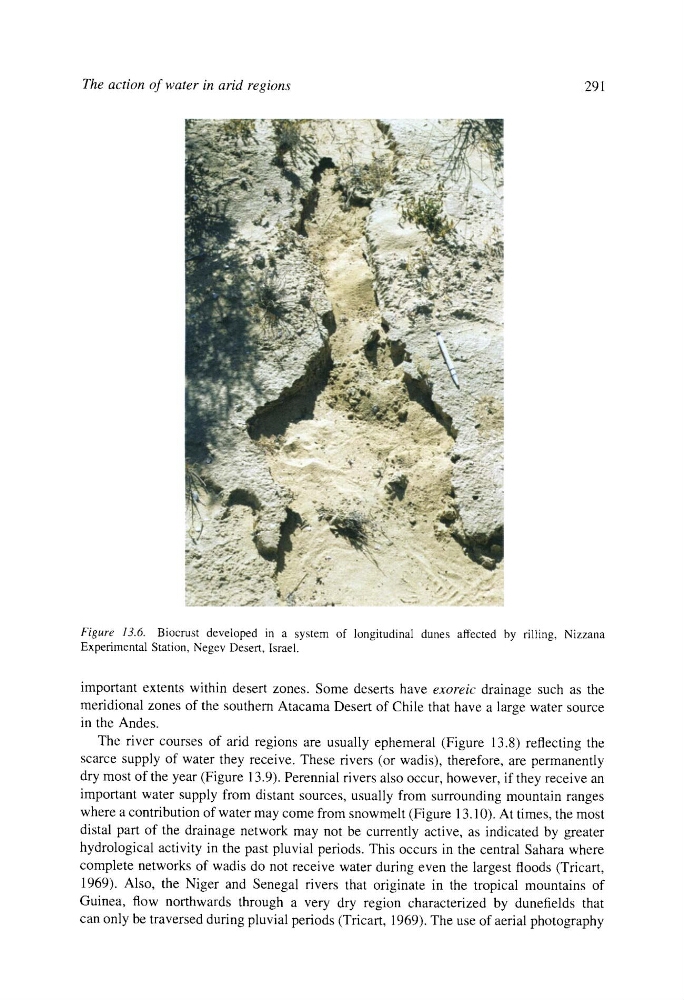
Figure 13.6. Biocrust developed in a system of longitudinal dunes affected by rilling, Nizzana
Experimental Station, Negev Desert, Israel.
important extents within desert zones. Some deserts have exoreic drainage such as the
meridional zones of the southern Atacama Desert of Chile that have a large water source
in the Andes.
The river courses of arid regions are usually ephemeral (Figure 13.8) reflecting the
scarce supply of water they receive. These rivers (or wadis), therefore, are permanently
dry most of the year (Figure 13.9). Perennial rivers also occur, however, if they receive an
important water supply from distant sources, usually from surrounding mountain ranges
where a contribution of water may come from snowmelt (Figure 13.10). At times, the most
distal part of the drainage network may not be currently active, as indicated by greater
hydrological activity in the past pluvial periods. This occurs in the central Sahara where
complete networks of wadis do not receive water during even the largest floods (Tricart,
1969). Also, the Niger and Senegal rivers that originate in the tropical mountains of
Guinea, flow northwards through a very dry region characterized by dunefields that
can only be traversed during pluvial periods (Tricart, 1969). The use of aerial photography
291
Figure 13.6. Biocrust developed in a system of longitudinal dunes affected by rilling, Nizzana
Experimental Station, Negev Desert, Israel.
important extents within desert zones. Some deserts have exoreic drainage such as the
meridional zones of the southern Atacama Desert of Chile that have a large water source
in the Andes.
The river courses of arid regions are usually ephemeral (Figure 13.8) reflecting the
scarce supply of water they receive. These rivers (or wadis), therefore, are permanently
dry most of the year (Figure 13.9). Perennial rivers also occur, however, if they receive an
important water supply from distant sources, usually from surrounding mountain ranges
where a contribution of water may come from snowmelt (Figure 13.10). At times, the most
distal part of the drainage network may not be currently active, as indicated by greater
hydrological activity in the past pluvial periods. This occurs in the central Sahara where
complete networks of wadis do not receive water during even the largest floods (Tricart,
1969). Also, the Niger and Senegal rivers that originate in the tropical mountains of
Guinea, flow northwards through a very dry region characterized by dunefields that
can only be traversed during pluvial periods (Tricart, 1969). The use of aerial photography