

288
Climatic Geomorphology
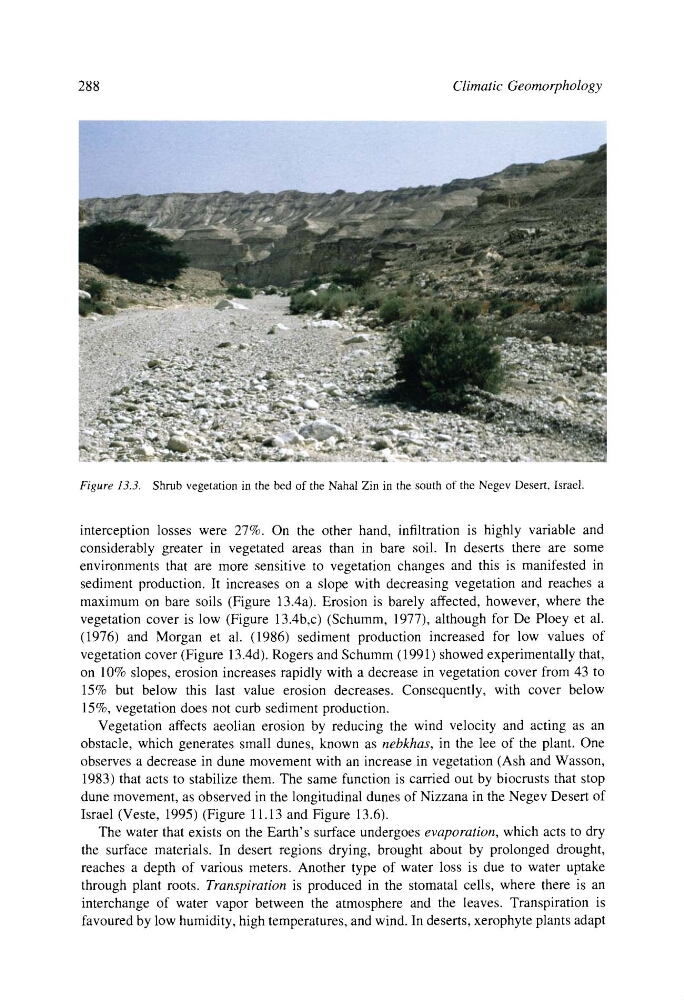
Figure 13.3. Shrub vegetation in the bed of the Nahal Zin in the south of the Negev Desert, Israel.
interception losses were 27%. On the other hand, infiltration is highly variable and
considerably greater in vegetated areas than in bare soil. In deserts there are some
environments that are more sensitive to vegetation changes and this is manifested in
sediment production. It increases on a slope with decreasing vegetation and reaches a
maximum on bare soils (Figure 13.4a). Erosion is barely affected, however, where the
vegetation cover is low (Figure 13.4b,c) (Schumm, 1977), although for De Ploey et al.
(1976) and Morgan et al. (1986) sediment production increased for low values of
vegetation cover (Figure 13.4d). Rogers and Schumm (1991) showed experimentally that,
on 10% slopes, erosion increases rapidly with a decrease in vegetation cover from 43 to
15% but below this last value erosion decreases. Consequently, with cover below
15%, vegetation does not curb sediment production.
Vegetation affects aeolian erosion by reducing the wind velocity and acting as an
obstacle, which generates small dunes, known as nebkhas, in the lee of the plant. One
observes a decrease in dune movement with an increase in vegetation (Ash and Wasson,
1983) that acts to stabilize them. The same function is carried out by biocrusts that stop
dune movement, as observed in the longitudinal dunes of Nizzana in the Negev Desert of
Israel (Veste, 1995) (Figure 11.13 and Figure 13.6).
The water that exists on the Earth's surface undergoes evaporation, which acts to dry
the surface materials. In desert regions drying, brought about by prolonged drought,
reaches a depth of various meters. Another type of water loss is due to water uptake
through plant roots. Transpiration is produced in the stomatal cells, where there is an
interchange of water vapor between the atmosphere and the leaves. Transpiration is
favoured by low humidity, high temperatures, and wind. In deserts, xerophyte plants adapt
Climatic Geomorphology
Figure 13.3. Shrub vegetation in the bed of the Nahal Zin in the south of the Negev Desert, Israel.
interception losses were 27%. On the other hand, infiltration is highly variable and
considerably greater in vegetated areas than in bare soil. In deserts there are some
environments that are more sensitive to vegetation changes and this is manifested in
sediment production. It increases on a slope with decreasing vegetation and reaches a
maximum on bare soils (Figure 13.4a). Erosion is barely affected, however, where the
vegetation cover is low (Figure 13.4b,c) (Schumm, 1977), although for De Ploey et al.
(1976) and Morgan et al. (1986) sediment production increased for low values of
vegetation cover (Figure 13.4d). Rogers and Schumm (1991) showed experimentally that,
on 10% slopes, erosion increases rapidly with a decrease in vegetation cover from 43 to
15% but below this last value erosion decreases. Consequently, with cover below
15%, vegetation does not curb sediment production.
Vegetation affects aeolian erosion by reducing the wind velocity and acting as an
obstacle, which generates small dunes, known as nebkhas, in the lee of the plant. One
observes a decrease in dune movement with an increase in vegetation (Ash and Wasson,
1983) that acts to stabilize them. The same function is carried out by biocrusts that stop
dune movement, as observed in the longitudinal dunes of Nizzana in the Negev Desert of
Israel (Veste, 1995) (Figure 11.13 and Figure 13.6).
The water that exists on the Earth's surface undergoes evaporation, which acts to dry
the surface materials. In desert regions drying, brought about by prolonged drought,
reaches a depth of various meters. Another type of water loss is due to water uptake
through plant roots. Transpiration is produced in the stomatal cells, where there is an
interchange of water vapor between the atmosphere and the leaves. Transpiration is
favoured by low humidity, high temperatures, and wind. In deserts, xerophyte plants adapt