

280
Climatic Geomorphology
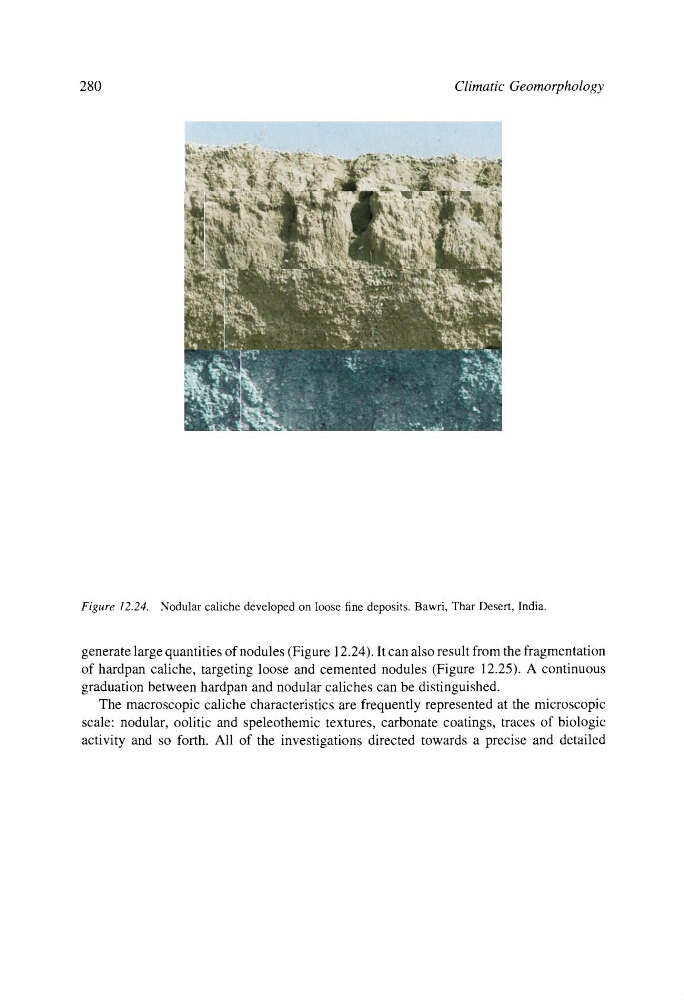
Figure 12.24. Nodular caliche developed on loose fine deposits. Bawri, Thar Desert, India.
generate large quantities of nodules (Figure 12.24). It can also result from the fragmentation
of hardpan caliche, targeting loose and cemented nodules (Figure 12.25). A continuous
graduation between hardpan and nodular caliches can be distinguished.
The macroscopic caliche characteristics are frequently represented at the microscopic
scale: nodular, oolitic and speleothemic textures, carbonate coatings, traces of biologic
activity and so forth. All of the investigations directed towards a precise and detailed
understanding of these micromorphologies and textures have as an objective an improved
understanding of caliche formation processes.
5.2.3. Origin
The analysis of caliches reveals the presence of complex sequences, whereby the
superposition of various caliche horizons can be recognised. In addition, the majority of
the profiles exhibit diverse stages of precipitation, dissolution and reworking.
For caliche to form there must be a source of calcium carbonate, which may be in
the rocky substrate, plant remains, volcanic emissions, aeolian dust, and other factors
Climatic Geomorphology
Figure 12.24. Nodular caliche developed on loose fine deposits. Bawri, Thar Desert, India.
generate large quantities of nodules (Figure 12.24). It can also result from the fragmentation
of hardpan caliche, targeting loose and cemented nodules (Figure 12.25). A continuous
graduation between hardpan and nodular caliches can be distinguished.
The macroscopic caliche characteristics are frequently represented at the microscopic
scale: nodular, oolitic and speleothemic textures, carbonate coatings, traces of biologic
activity and so forth. All of the investigations directed towards a precise and detailed
understanding of these micromorphologies and textures have as an objective an improved
understanding of caliche formation processes.
5.2.3. Origin
The analysis of caliches reveals the presence of complex sequences, whereby the
superposition of various caliche horizons can be recognised. In addition, the majority of
the profiles exhibit diverse stages of precipitation, dissolution and reworking.
For caliche to form there must be a source of calcium carbonate, which may be in
the rocky substrate, plant remains, volcanic emissions, aeolian dust, and other factors