

Desert surfaces: pavements, patterned ground, varnishes and crusts
269
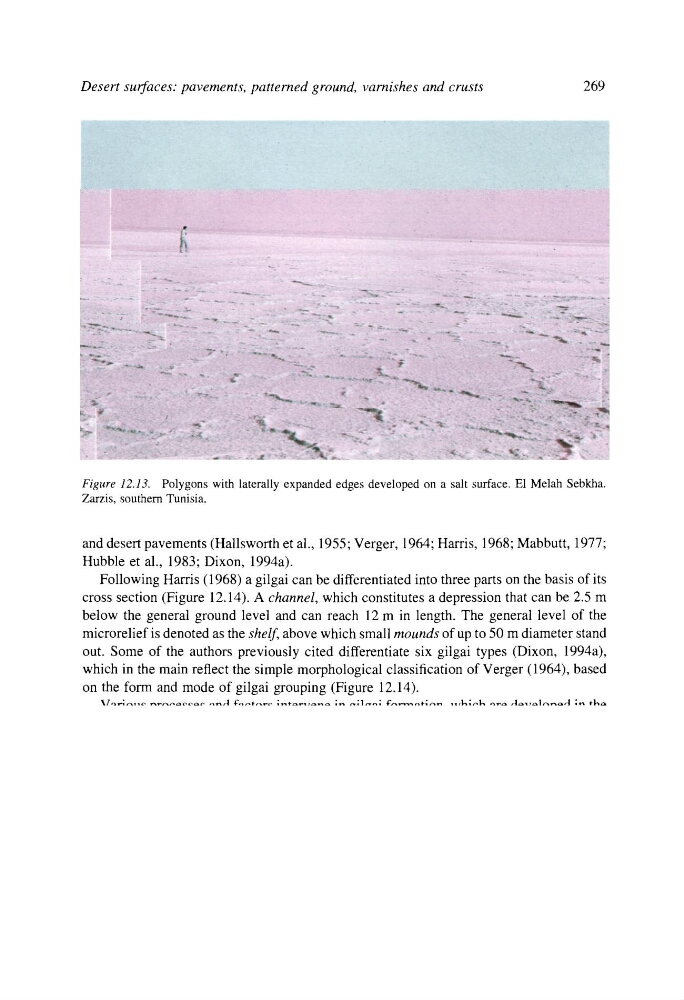
Figure 12.13. Polygons with laterally expanded edges developed on a salt surface. E1 Melah Sebkha.
Zarzis, southern Tunisia.
and desert pavements (Hallsworth et al., 1955; Verger, 1964; Harris, 1968; Mabbutt, 1977;
Hubble et al., 1983; Dixon, 1994a).
Following Harris (1968) a gilgai can be differentiated into three parts on the basis of its
cross section (Figure 12.14). A channel, which constitutes a depression that can be 2.5 m
below the general ground level and can reach 12 m in length. The general level of the
microrelief is denoted as the shelf, above which small mounds of up to 50 m diameter stand
out. Some of the authors previously cited differentiate six gilgai types (Dixon, 1994a),
which in the main reflect the simple morphological classification of Verger (1964), based
on the form and mode of gilgai grouping (Figure 12.14).
Various processes and factors intervene in gilgai formation, which are developed in the
monographs of Cooke and Warren (1973) and Mabbutt (1977). Gilgai form in areas of
alternating humid and dry conditions. Dry periods, during which the surface cracks,
alternate with humid periods in which swelling dominates. They occur mainly in vertisol
areas (black expansive clay-rich soils) in tropical and subtropical zones. Gilgai microrelief
results from upward movement produced by swelling of the humid subsoil. This
expansivity, along with soil contraction, as a consequence of humidifying and drying
cycles, explains the genesis of circular and stepped gilgai (Ollier, 1966) (Figure 12.15).
Swelling is due to the presence of expansive clays, such as montmorillonite, and the
existence of elevated interchangeable sodium percentages. The gilgai amplitude increases
with increasing expansive clay and sodium content. The expansion which gives rise to
gilgai can be seen in the soil profile, where small fault surfaces and thrust planes are
relatively common. Similarly, stakes placed in the soil are found tilted or even expelled
269
Figure 12.13. Polygons with laterally expanded edges developed on a salt surface. E1 Melah Sebkha.
Zarzis, southern Tunisia.
and desert pavements (Hallsworth et al., 1955; Verger, 1964; Harris, 1968; Mabbutt, 1977;
Hubble et al., 1983; Dixon, 1994a).
Following Harris (1968) a gilgai can be differentiated into three parts on the basis of its
cross section (Figure 12.14). A channel, which constitutes a depression that can be 2.5 m
below the general ground level and can reach 12 m in length. The general level of the
microrelief is denoted as the shelf, above which small mounds of up to 50 m diameter stand
out. Some of the authors previously cited differentiate six gilgai types (Dixon, 1994a),
which in the main reflect the simple morphological classification of Verger (1964), based
on the form and mode of gilgai grouping (Figure 12.14).
Various processes and factors intervene in gilgai formation, which are developed in the
monographs of Cooke and Warren (1973) and Mabbutt (1977). Gilgai form in areas of
alternating humid and dry conditions. Dry periods, during which the surface cracks,
alternate with humid periods in which swelling dominates. They occur mainly in vertisol
areas (black expansive clay-rich soils) in tropical and subtropical zones. Gilgai microrelief
results from upward movement produced by swelling of the humid subsoil. This
expansivity, along with soil contraction, as a consequence of humidifying and drying
cycles, explains the genesis of circular and stepped gilgai (Ollier, 1966) (Figure 12.15).
Swelling is due to the presence of expansive clays, such as montmorillonite, and the
existence of elevated interchangeable sodium percentages. The gilgai amplitude increases
with increasing expansive clay and sodium content. The expansion which gives rise to
gilgai can be seen in the soil profile, where small fault surfaces and thrust planes are
relatively common. Similarly, stakes placed in the soil are found tilted or even expelled