

Desert surfaces: pavements, patterned ground, varnishes and crusts
265
(a) Coarse/Medium Sand
""-.
,.//
/
',,
./
....-" ;
-~ ........... f...
,,,
.
..
......... -
,,,'
,.."
;,
.,,,-_':_ ....
""-.. .....
-I ~ ..........
/
//
~. ........
,/
/s
s
............
-~'- ...........
~,.,"
s/
~ ...........
i S
,/
~
..~"
........... .,e. .............. ,,"
___'~--" - .......
~
.,.
.,,,,
\
---/.-"
I
,,,i
\
. ..____..-0 cm 5
!
,
J
(b) Clay
/'-"
r162 ,-'
'"
.~.~1
t',.,
0 cm 5
i
-
I
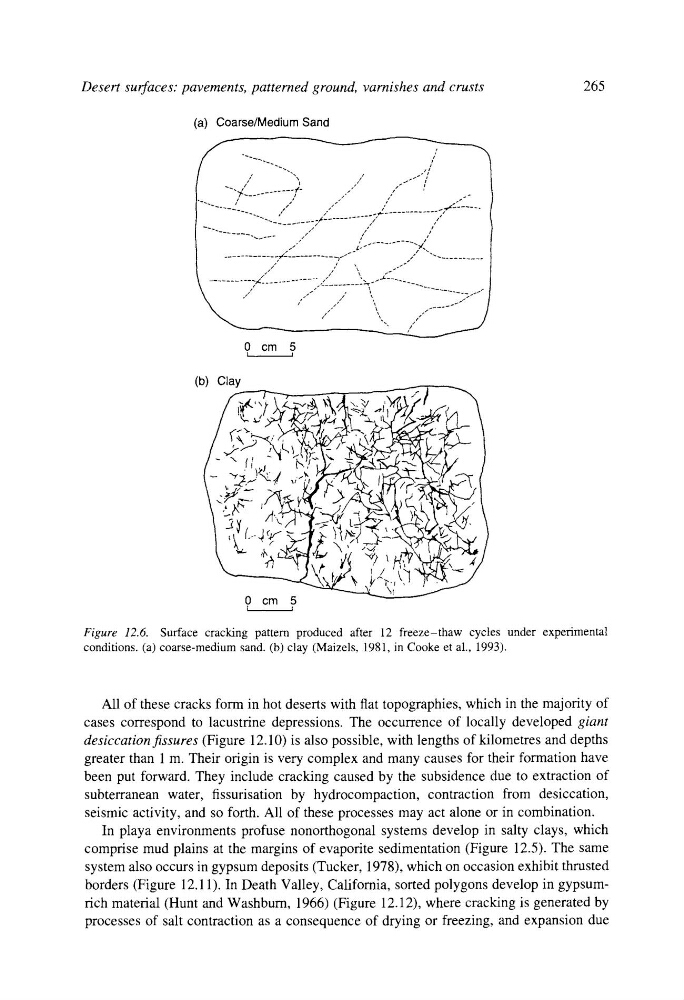
Figure 12.6. Surface cracking pattern produced after 12 freeze-thaw cycles under experimental
conditions. (a) coarse-medium sand. (b) clay (Maizels, 1981, in Cooke et al., 1993).
All of these cracks form in hot deserts with flat topographies, which in the majority of
cases correspond to lacustrine depressions. The occurrence of locally developed giant
desiccation fissures (Figure 12.10) is also possible, with lengths of kilometres and depths
greater than 1 m. Their origin is very complex and many causes for their formation have
been put forward. They include cracking caused by the subsidence due to extraction of
subterranean water, fissurisation by hydrocompaction, contraction from desiccation,
seismic activity, and so forth. All of these processes may act alone or in combination.
In playa environments profuse nonorthogonal systems develop in salty clays, which
comprise mud plains at the margins of evaporite sedimentation (Figure 12.5). The same
system also occurs in gypsum deposits (Tucker, 1978), which on occasion exhibit thrusted
borders (Figure 12.11). In Death Valley, California, sorted polygons develop in gypsumrich material (Hunt and Washburn, 1966) (Figure 12.12), where cracking is generated by
processes of salt contraction as a consequence of drying or freezing, and expansion due
265
(a) Coarse/Medium Sand
""-.
,.//
/
',,
./
....-" ;
-~ ........... f...
,,,
.
..
......... -
,,,'
,.."
;,
.,,,-_':_ ....
""-.. .....
-I ~ ..........
/
//
~. ........
,/
/s
s
............
-~'- ...........
~,.,"
s/
~ ...........
i S
,/
~
..~"
........... .,e. .............. ,,"
___'~--" - .......
~
.,.
.,,,,
\
---/.-"
I
,,,i
\
. ..____..-0 cm 5
!
,
J
(b) Clay
/'-"
r162 ,-'
'"
.~.~1
t',.,
0 cm 5
i
-
I
Figure 12.6. Surface cracking pattern produced after 12 freeze-thaw cycles under experimental
conditions. (a) coarse-medium sand. (b) clay (Maizels, 1981, in Cooke et al., 1993).
All of these cracks form in hot deserts with flat topographies, which in the majority of
cases correspond to lacustrine depressions. The occurrence of locally developed giant
desiccation fissures (Figure 12.10) is also possible, with lengths of kilometres and depths
greater than 1 m. Their origin is very complex and many causes for their formation have
been put forward. They include cracking caused by the subsidence due to extraction of
subterranean water, fissurisation by hydrocompaction, contraction from desiccation,
seismic activity, and so forth. All of these processes may act alone or in combination.
In playa environments profuse nonorthogonal systems develop in salty clays, which
comprise mud plains at the margins of evaporite sedimentation (Figure 12.5). The same
system also occurs in gypsum deposits (Tucker, 1978), which on occasion exhibit thrusted
borders (Figure 12.11). In Death Valley, California, sorted polygons develop in gypsumrich material (Hunt and Washburn, 1966) (Figure 12.12), where cracking is generated by
processes of salt contraction as a consequence of drying or freezing, and expansion due