

Desert surfaces: pavements, patterned ground, varnishes and crusts
263
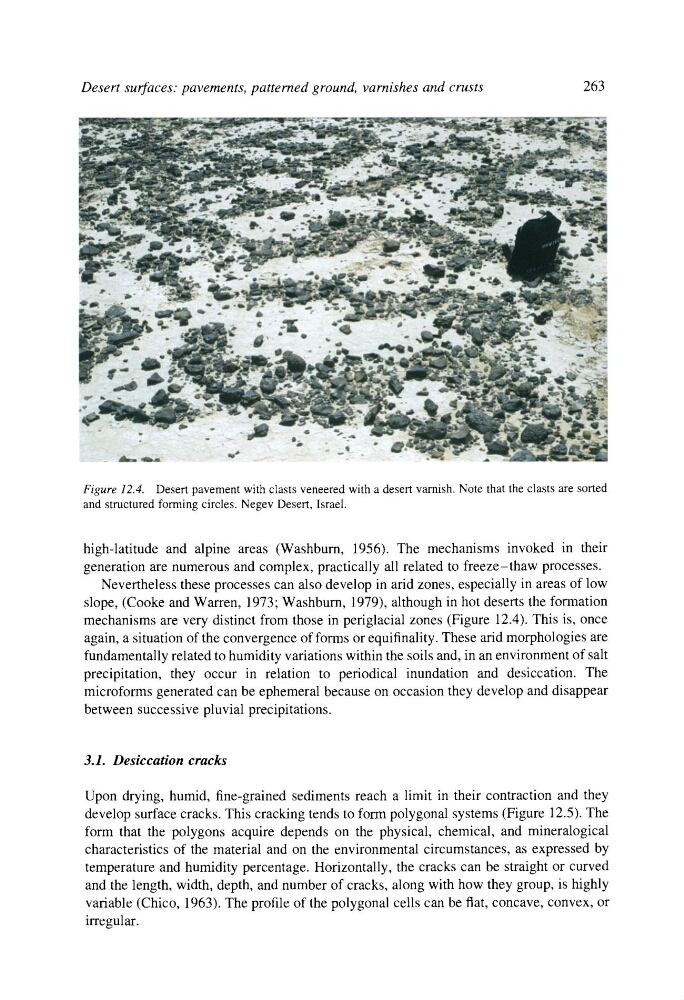
Figure 12.4. Desert pavement with clasts veneered with a desert varnish. Note that the clasts are sorted
and structured forming circles. Negev Desert, Israel.
high-latitude and alpine areas (Washburn, 1956). The mechanisms invoked in their
generation are numerous and complex, practically all related to freeze-thaw processes.
Nevertheless these processes can also develop in arid zones, especially in areas of low
slope, (Cooke and Warren, 1973; Washburn, 1979), although in hot deserts the formation
mechanisms are very distinct from those in periglacial zones (Figure 12.4). This is, once
again, a situation of the convergence of forms or equifinality. These arid morphologies are
fundamentally related to humidity variations within the soils and, in an environment of salt
precipitation, they occur in relation to periodical inundation and desiccation. The
microforms generated can be ephemeral because on occasion they develop and disappear
between successive pluvial precipitations.
3.1. Desiccation cracks
Upon drying, humid, fine-grained sediments reach a limit in their contraction and they
develop surface cracks. This cracking tends to form polygonal systems (Figure 12.5). The
form that the polygons acquire depends on the physical, chemical, and mineralogical
characteristics of the material and on the environmental circumstances, as expressed by
temperature and humidity percentage. Horizontally, the cracks can be straight or curved
and the length, width, depth, and number of cracks, along with how they group, is highly
variable (Chico, 1963). The profile of the polygonal cells can be flat, concave, convex, or
irregular.
263
Figure 12.4. Desert pavement with clasts veneered with a desert varnish. Note that the clasts are sorted
and structured forming circles. Negev Desert, Israel.
high-latitude and alpine areas (Washburn, 1956). The mechanisms invoked in their
generation are numerous and complex, practically all related to freeze-thaw processes.
Nevertheless these processes can also develop in arid zones, especially in areas of low
slope, (Cooke and Warren, 1973; Washburn, 1979), although in hot deserts the formation
mechanisms are very distinct from those in periglacial zones (Figure 12.4). This is, once
again, a situation of the convergence of forms or equifinality. These arid morphologies are
fundamentally related to humidity variations within the soils and, in an environment of salt
precipitation, they occur in relation to periodical inundation and desiccation. The
microforms generated can be ephemeral because on occasion they develop and disappear
between successive pluvial precipitations.
3.1. Desiccation cracks
Upon drying, humid, fine-grained sediments reach a limit in their contraction and they
develop surface cracks. This cracking tends to form polygonal systems (Figure 12.5). The
form that the polygons acquire depends on the physical, chemical, and mineralogical
characteristics of the material and on the environmental circumstances, as expressed by
temperature and humidity percentage. Horizontally, the cracks can be straight or curved
and the length, width, depth, and number of cracks, along with how they group, is highly
variable (Chico, 1963). The profile of the polygonal cells can be flat, concave, convex, or
irregular.