

250
Climatic Geomorphology
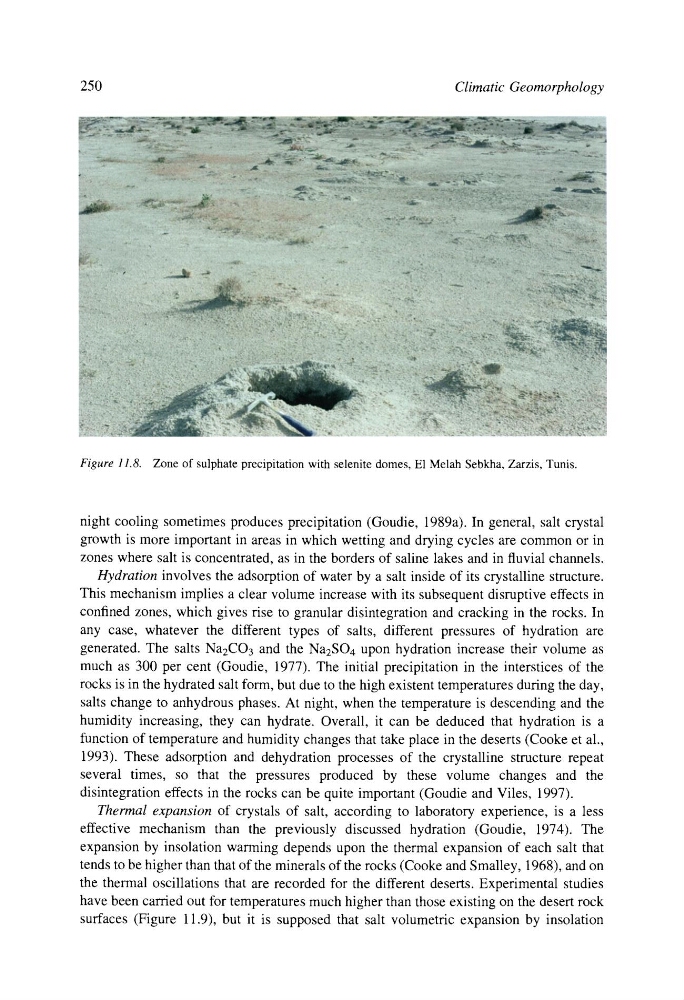
Figure 11.8. Zone of sulphate precipitation with selenite domes, E1 Melah Sebkha, Zarzis, Tunis.
night cooling sometimes produces precipitation (Goudie, 1989a). In general, salt crystal
growth is more important in areas in which wetting and drying cycles are common or in
zones where salt is concentrated, as in the borders of saline lakes and in fluvial channels.
Hydration involves the adsorption of water by a salt inside of its crystalline structure.
This mechanism implies a clear volume increase with its subsequent disruptive effects in
confined zones, which gives rise to granular disintegration and cracking in the rocks. In
any case, whatever the different types of salts, different pressures of hydration are
generated. The salts Na2CO3 and the Na2SO4 upon hydration increase their volume as
much as 300 per cent (Goudie, 1977). The initial precipitation in the interstices of the
rocks is in the hydrated salt form, but due to the high existent temperatures during the day,
salts change to anhydrous phases. At night, when the temperature is descending and the
humidity increasing, they can hydrate. Overall, it can be deduced that hydration is a
function of temperature and humidity changes that take place in the deserts (Cooke et al.,
1993). These adsorption and dehydration processes of the crystalline structure repeat
several times, so that the pressures produced by these volume changes and the
disintegration effects in the rocks can be quite important (Goudie and Viles, 1997).
Thermal expansion of crystals of salt, according to laboratory experience, is a less
effective mechanism than the previously discussed hydration (Goudie, 1974). The
expansion by insolation warming depends upon the thermal expansion of each salt that
tends to be higher than that of the minerals of the rocks (Cooke and Smalley, 1968), and on
the thermal oscillations that are recorded for the different deserts. Experimental studies
have been carried out for temperatures much higher than those existing on the desert rock
surfaces (Figure 11.9), but it is supposed that salt volumetric expansion by insolation
Climatic Geomorphology
Figure 11.8. Zone of sulphate precipitation with selenite domes, E1 Melah Sebkha, Zarzis, Tunis.
night cooling sometimes produces precipitation (Goudie, 1989a). In general, salt crystal
growth is more important in areas in which wetting and drying cycles are common or in
zones where salt is concentrated, as in the borders of saline lakes and in fluvial channels.
Hydration involves the adsorption of water by a salt inside of its crystalline structure.
This mechanism implies a clear volume increase with its subsequent disruptive effects in
confined zones, which gives rise to granular disintegration and cracking in the rocks. In
any case, whatever the different types of salts, different pressures of hydration are
generated. The salts Na2CO3 and the Na2SO4 upon hydration increase their volume as
much as 300 per cent (Goudie, 1977). The initial precipitation in the interstices of the
rocks is in the hydrated salt form, but due to the high existent temperatures during the day,
salts change to anhydrous phases. At night, when the temperature is descending and the
humidity increasing, they can hydrate. Overall, it can be deduced that hydration is a
function of temperature and humidity changes that take place in the deserts (Cooke et al.,
1993). These adsorption and dehydration processes of the crystalline structure repeat
several times, so that the pressures produced by these volume changes and the
disintegration effects in the rocks can be quite important (Goudie and Viles, 1997).
Thermal expansion of crystals of salt, according to laboratory experience, is a less
effective mechanism than the previously discussed hydration (Goudie, 1974). The
expansion by insolation warming depends upon the thermal expansion of each salt that
tends to be higher than that of the minerals of the rocks (Cooke and Smalley, 1968), and on
the thermal oscillations that are recorded for the different deserts. Experimental studies
have been carried out for temperatures much higher than those existing on the desert rock
surfaces (Figure 11.9), but it is supposed that salt volumetric expansion by insolation