

230
Climatic Geomorphology
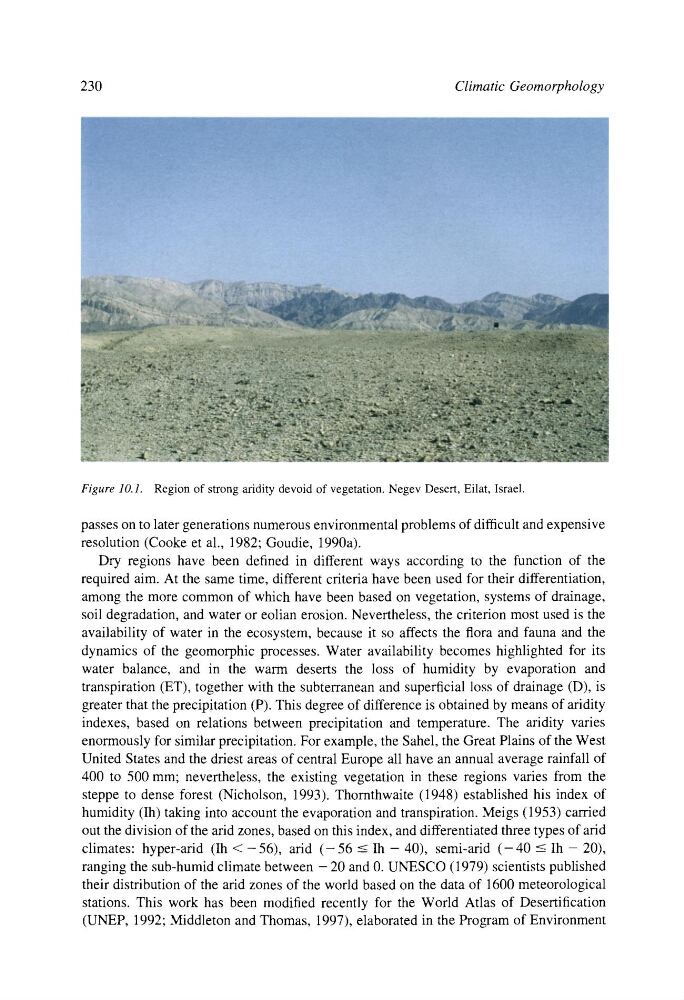
Figure 10.1. Region of strong aridity devoid of vegetation. Negev Desert, Eilat, Israel.
passes on to later generations numerous environmental problems of difficult and expensive
resolution (Cooke et al., 1982; Goudie, 1990a).
Dry regions have been defined in different ways according to the function of the
required aim. At the same time, different criteria have been used for their differentiation,
among the more common of which have been based on vegetation, systems of drainage,
soil degradation, and water or eolian erosion. Nevertheless, the criterion most used is the
availability of water in the ecosystem, because it so affects the flora and fauna and the
dynamics of the geomorphic processes. Water availability becomes highlighted for its
water balance, and in the warm deserts the loss of humidity by evaporation and
transpiration (ET), together with the subterranean and superficial loss of drainage (D), is
greater that the precipitation (P). This degree of difference is obtained by means of aridity
indexes, based on relations between precipitation and temperature. The aridity varies
enormously for similar precipitation. For example, the Sahel, the Great Plains of the West
United States and the driest areas of central Europe all have an annual average rainfall of
400 to 500 mm; nevertheless, the existing vegetation in these regions varies from the
steppe to dense forest (Nicholson, 1993). Thornthwaite (1948)established his index of
humidity (Ih) taking into account the evaporation and transpiration. Meigs (1953) carried
out the division of the arid zones, based on this index, and differentiated three types of arid
climates: hyper-arid (Ih <-56), arid (-56-< Ih- 40), semi-arid (-40 _< Ih- 20),
ranging the sub-humid climate between - 20 and 0. UNESCO (1979) scientists published
their distribution of the arid zones of the world based on the data of 1600 meteorological
stations. This work has been modified recently for the World Atlas of Desertification
(UNEP, 1992; Middleton and Thomas, 1997), elaborated in the Program of Environment
Climatic Geomorphology
Figure 10.1. Region of strong aridity devoid of vegetation. Negev Desert, Eilat, Israel.
passes on to later generations numerous environmental problems of difficult and expensive
resolution (Cooke et al., 1982; Goudie, 1990a).
Dry regions have been defined in different ways according to the function of the
required aim. At the same time, different criteria have been used for their differentiation,
among the more common of which have been based on vegetation, systems of drainage,
soil degradation, and water or eolian erosion. Nevertheless, the criterion most used is the
availability of water in the ecosystem, because it so affects the flora and fauna and the
dynamics of the geomorphic processes. Water availability becomes highlighted for its
water balance, and in the warm deserts the loss of humidity by evaporation and
transpiration (ET), together with the subterranean and superficial loss of drainage (D), is
greater that the precipitation (P). This degree of difference is obtained by means of aridity
indexes, based on relations between precipitation and temperature. The aridity varies
enormously for similar precipitation. For example, the Sahel, the Great Plains of the West
United States and the driest areas of central Europe all have an annual average rainfall of
400 to 500 mm; nevertheless, the existing vegetation in these regions varies from the
steppe to dense forest (Nicholson, 1993). Thornthwaite (1948)established his index of
humidity (Ih) taking into account the evaporation and transpiration. Meigs (1953) carried
out the division of the arid zones, based on this index, and differentiated three types of arid
climates: hyper-arid (Ih <-56), arid (-56-< Ih- 40), semi-arid (-40 _< Ih- 20),
ranging the sub-humid climate between - 20 and 0. UNESCO (1979) scientists published
their distribution of the arid zones of the world based on the data of 1600 meteorological
stations. This work has been modified recently for the World Atlas of Desertification
(UNEP, 1992; Middleton and Thomas, 1997), elaborated in the Program of Environment