

156
Climatic Geomorphology
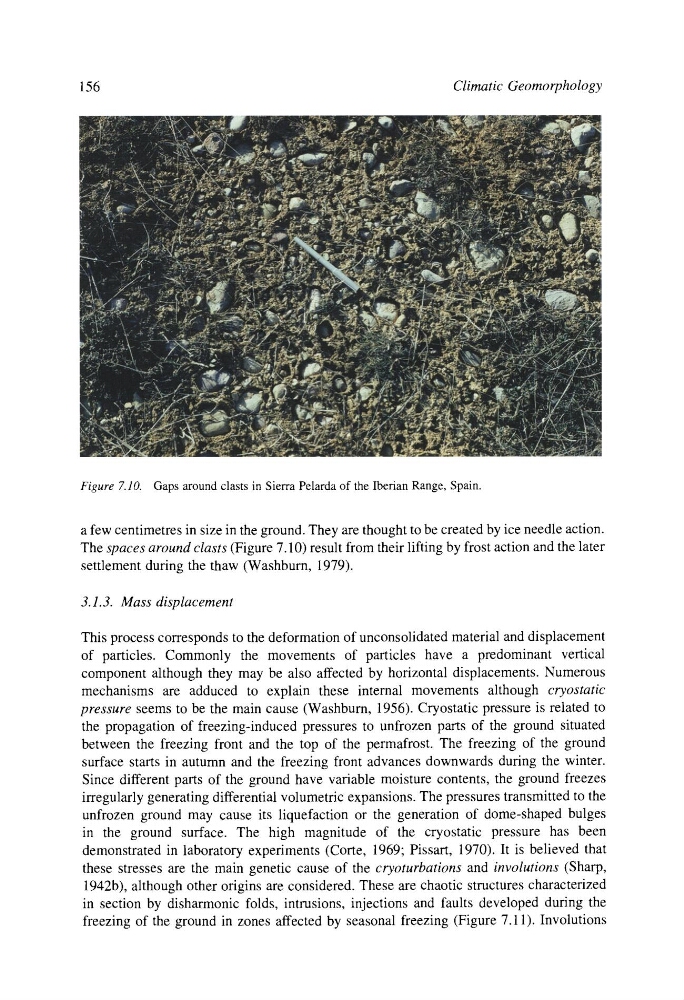
Figure 7.10. Gaps around clasts in Sierra Pelarda of the Iberian Range, Spain.
a few centimetres in size in the ground. They are thought to be created by ice needle action.
The spaces around clasts (Figure 7.10) result from their lifting by frost action and the later
settlement during the thaw (Washburn, 1979).
3.1.3. Mass displacement
This process corresponds to the deformation of unconsolidated material and displacement
of particles. Commonly the movements of particles have a predominant vertical
component although they may be also affected by horizontal displacements. Numerous
mechanisms are adduced to explain these internal movements although cryostatic
pressure seems to be the main cause (Washburn, 1956). Cryostatic pressure is related to
the propagation of freezing-induced pressures to unfrozen parts of the ground situated
between the freezing front and the top of the permafrost. The freezing of the ground
surface starts in autumn and the freezing front advances downwards during the winter.
Since different parts of the ground have variable moisture contents, the ground freezes
irregularly generating differential volumetric expansions. The pressures transmitted to the
unfrozen ground may cause its liquefaction or the generation of dome-shaped bulges
in the ground surface. The high magnitude of the cryostatic pressure has been
demonstrated in laboratory experiments (Corte, 1969; Pissart, 1970). It is believed that
these stresses are the main genetic cause of the cryoturbations and involutions (Sharp,
1942b), although other origins are considered. These are chaotic structures characterized
in section by disharmonic folds, intrusions, injections and faults developed during the
freezing of the ground in zones affected by seasonal freezing (Figure 7.11). Involutions
Climatic Geomorphology
Figure 7.10. Gaps around clasts in Sierra Pelarda of the Iberian Range, Spain.
a few centimetres in size in the ground. They are thought to be created by ice needle action.
The spaces around clasts (Figure 7.10) result from their lifting by frost action and the later
settlement during the thaw (Washburn, 1979).
3.1.3. Mass displacement
This process corresponds to the deformation of unconsolidated material and displacement
of particles. Commonly the movements of particles have a predominant vertical
component although they may be also affected by horizontal displacements. Numerous
mechanisms are adduced to explain these internal movements although cryostatic
pressure seems to be the main cause (Washburn, 1956). Cryostatic pressure is related to
the propagation of freezing-induced pressures to unfrozen parts of the ground situated
between the freezing front and the top of the permafrost. The freezing of the ground
surface starts in autumn and the freezing front advances downwards during the winter.
Since different parts of the ground have variable moisture contents, the ground freezes
irregularly generating differential volumetric expansions. The pressures transmitted to the
unfrozen ground may cause its liquefaction or the generation of dome-shaped bulges
in the ground surface. The high magnitude of the cryostatic pressure has been
demonstrated in laboratory experiments (Corte, 1969; Pissart, 1970). It is believed that
these stresses are the main genetic cause of the cryoturbations and involutions (Sharp,
1942b), although other origins are considered. These are chaotic structures characterized
in section by disharmonic folds, intrusions, injections and faults developed during the
freezing of the ground in zones affected by seasonal freezing (Figure 7.11). Involutions