

132
Climatic Geomorphology
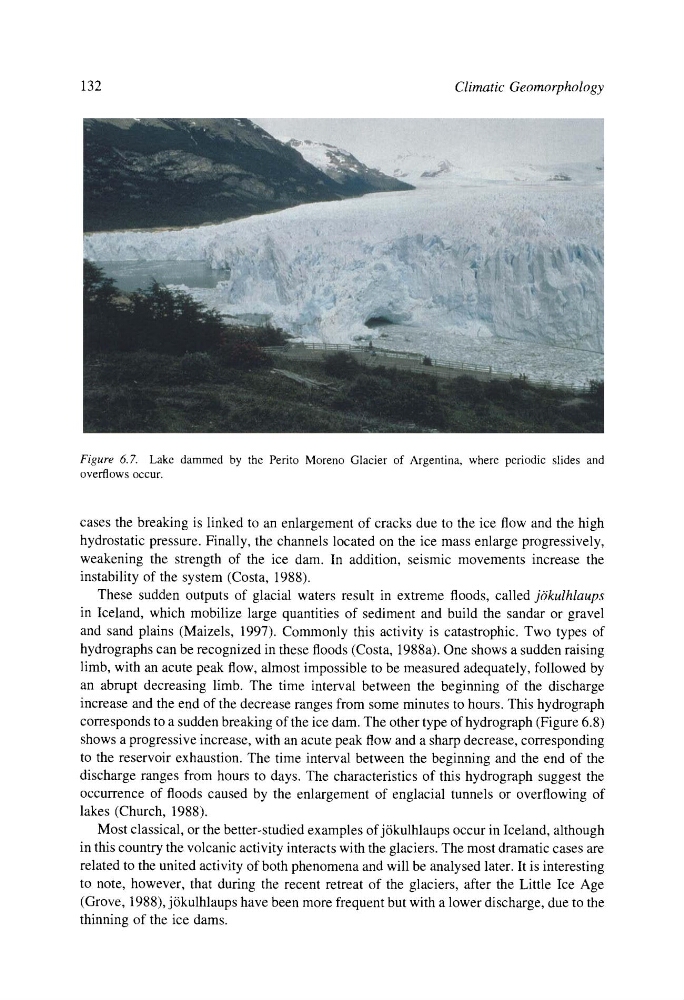
Figure 6.7. Lake dammed by the Perito Moreno Glacier of Argentina, where periodic slides and
overflows occur.
cases the breaking is linked to an enlargement of cracks due to the ice flow and the high
hydrostatic pressure. Finally, the channels located on the ice mass enlarge progressively,
weakening the strength of the ice dam. In addition, seismic movements increase the
instability of the system (Costa, 1988).
These sudden outputs of glacial waters result in extreme floods, called j6kulhlaups
in Iceland, which mobilize large quantities of sediment and build the sandar or gravel
and sand plains (Maizels, 1997). Commonly this activity is catastrophic. Two types of
hydrographs can be recognized in these floods (Costa, 1988a). One shows a sudden raising
limb, with an acute peak flow, almost impossible to be measured adequately, followed by
an abrupt decreasing limb. The time interval between the beginning of the discharge
increase and the end of the decrease ranges from some minutes to hours. This hydrograph
corresponds to a sudden breaking of the ice dam. The other type of hydrograph (Figure 6.8)
shows a progressive increase, with an acute peak flow and a sharp decrease, corresponding
to the reservoir exhaustion. The time interval between the beginning and the end of the
discharge ranges from hours to days. The characteristics of this hydrograph suggest the
occurrence of floods caused by the enlargement of englacial tunnels or overflowing of
lakes (Church, 1988).
Most classical, or the better-studied examples ofj6kulhlaups occur in Iceland, although
in this country the volcanic activity interacts with the glaciers. The most dramatic cases are
related to the united activity of both phenomena and will be analysed later. It is interesting
to note, however, that during the recent retreat of the glaciers, after the Little Ice Age
(Grove, 1988), j6kulhlaups have been more frequent but with a lower discharge, due to the
thinning of the ice dams.
Climatic Geomorphology
Figure 6.7. Lake dammed by the Perito Moreno Glacier of Argentina, where periodic slides and
overflows occur.
cases the breaking is linked to an enlargement of cracks due to the ice flow and the high
hydrostatic pressure. Finally, the channels located on the ice mass enlarge progressively,
weakening the strength of the ice dam. In addition, seismic movements increase the
instability of the system (Costa, 1988).
These sudden outputs of glacial waters result in extreme floods, called j6kulhlaups
in Iceland, which mobilize large quantities of sediment and build the sandar or gravel
and sand plains (Maizels, 1997). Commonly this activity is catastrophic. Two types of
hydrographs can be recognized in these floods (Costa, 1988a). One shows a sudden raising
limb, with an acute peak flow, almost impossible to be measured adequately, followed by
an abrupt decreasing limb. The time interval between the beginning of the discharge
increase and the end of the decrease ranges from some minutes to hours. This hydrograph
corresponds to a sudden breaking of the ice dam. The other type of hydrograph (Figure 6.8)
shows a progressive increase, with an acute peak flow and a sharp decrease, corresponding
to the reservoir exhaustion. The time interval between the beginning and the end of the
discharge ranges from hours to days. The characteristics of this hydrograph suggest the
occurrence of floods caused by the enlargement of englacial tunnels or overflowing of
lakes (Church, 1988).
Most classical, or the better-studied examples ofj6kulhlaups occur in Iceland, although
in this country the volcanic activity interacts with the glaciers. The most dramatic cases are
related to the united activity of both phenomena and will be analysed later. It is interesting
to note, however, that during the recent retreat of the glaciers, after the Little Ice Age
(Grove, 1988), j6kulhlaups have been more frequent but with a lower discharge, due to the
thinning of the ice dams.