

Geomorphology applied to glacial regions
127
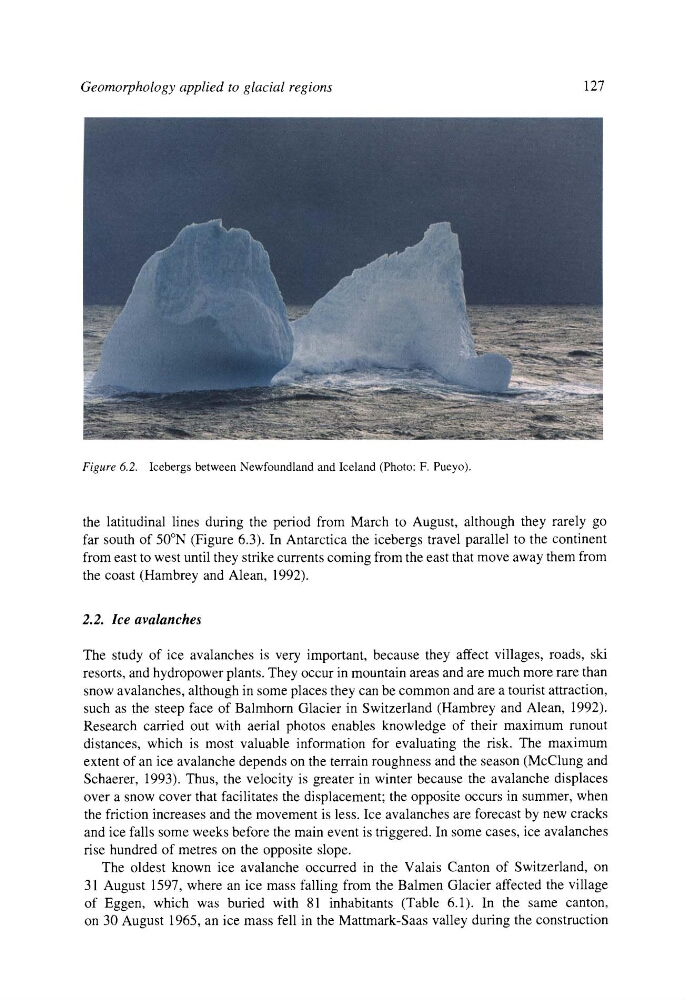
Figure 6.2. Icebergs between Newfoundland and Iceland (Photo: F. Pueyo).
the latitudinal lines during the period from March to August, although they rarely go
far south of 50~ (Figure 6.3). In Antarctica the icebergs travel parallel to the continent
from east to west until they strike currents coming from the east that move away them from
the coast (Hambrey and Alean, 1992).
2.2. Ice avalanches
The study of ice avalanches is very important, because they affect villages, roads, ski
resorts, and hydropower plants. They occur in mountain areas and are much more rare than
snow avalanches, although in some places they can be common and are a tourist attraction,
such as the steep face of Balmhom Glacier in Switzerland (Hambrey and Alean, 1992).
Research carried out with aerial photos enables knowledge of their maximum runout
distances, which is most valuable information for evaluating the risk. The maximum
extent of an ice avalanche depends on the terrain roughness and the season (McClung and
Schaerer, 1993). Thus, the velocity is greater in winter because the avalanche displaces
over a snow cover that facilitates the displacement; the opposite occurs in summer, when
the friction increases and the movement is less. Ice avalanches are forecast by new cracks
and ice falls some weeks before the main event is triggered. In some cases, ice avalanches
rise hundred of metres on the opposite slope.
The oldest known ice avalanche occurred in the Valais Canton of Switzerland, on
31 August 1597, where an ice mass falling from the Balmen Glacier affected the village
of Eggen, which was buffed with 81 inhabitants (Table 6.1). In the same canton,
on 30 August 1965, an ice mass fell in the Mattmark-Saas valley during the construction
127
Figure 6.2. Icebergs between Newfoundland and Iceland (Photo: F. Pueyo).
the latitudinal lines during the period from March to August, although they rarely go
far south of 50~ (Figure 6.3). In Antarctica the icebergs travel parallel to the continent
from east to west until they strike currents coming from the east that move away them from
the coast (Hambrey and Alean, 1992).
2.2. Ice avalanches
The study of ice avalanches is very important, because they affect villages, roads, ski
resorts, and hydropower plants. They occur in mountain areas and are much more rare than
snow avalanches, although in some places they can be common and are a tourist attraction,
such as the steep face of Balmhom Glacier in Switzerland (Hambrey and Alean, 1992).
Research carried out with aerial photos enables knowledge of their maximum runout
distances, which is most valuable information for evaluating the risk. The maximum
extent of an ice avalanche depends on the terrain roughness and the season (McClung and
Schaerer, 1993). Thus, the velocity is greater in winter because the avalanche displaces
over a snow cover that facilitates the displacement; the opposite occurs in summer, when
the friction increases and the movement is less. Ice avalanches are forecast by new cracks
and ice falls some weeks before the main event is triggered. In some cases, ice avalanches
rise hundred of metres on the opposite slope.
The oldest known ice avalanche occurred in the Valais Canton of Switzerland, on
31 August 1597, where an ice mass falling from the Balmen Glacier affected the village
of Eggen, which was buffed with 81 inhabitants (Table 6.1). In the same canton,
on 30 August 1965, an ice mass fell in the Mattmark-Saas valley during the construction