

Glacial transport and sedimentation
97
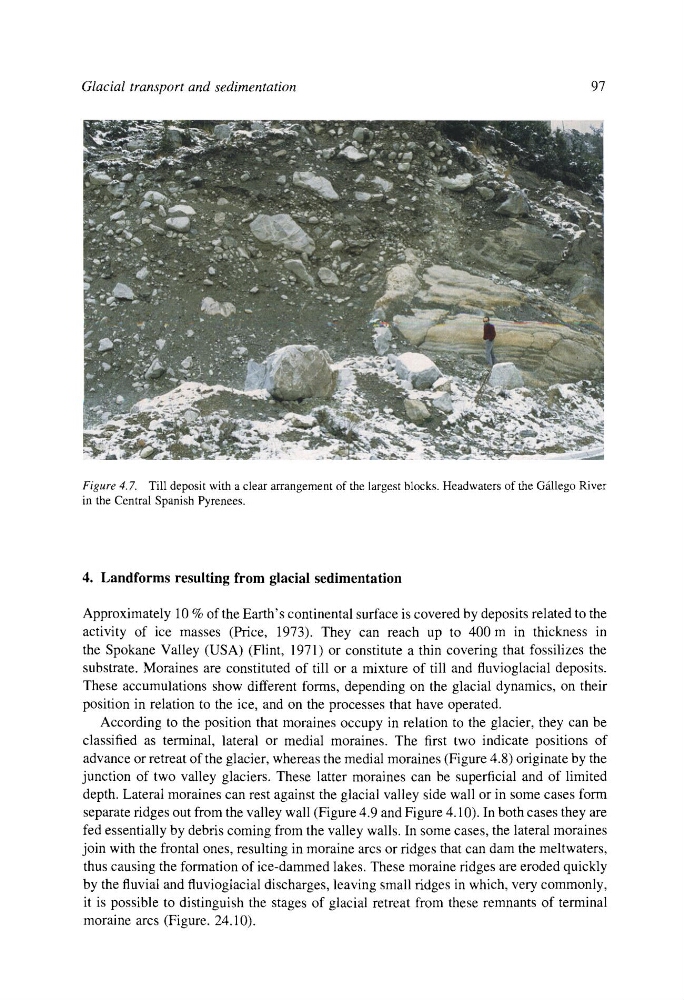
Figure 4. 7. Till deposit with a clear arrangement of the largest blocks. Headwaters of the Gfillego River
in the Central Spanish Pyrenees.
4. Landforms resulting from glacial sedimentation
Approximately 10 % of the Earth' s continental surface is covered by deposits related to the
activity of ice masses (Price, 1973). They can reach up to 400m in thickness in
the Spokane Valley (USA) (Flint, 1971) or constitute a thin covering that fossilizes the
substrate. Moraines are constituted of till or a mixture of till and fluvioglacial deposits.
These accumulations show different forms, depending on the glacial dynamics, on their
position in relation to the ice, and on the processes that have operated.
According to the position that moraines occupy in relation to the glacier, they can be
classified as terminal, lateral or medial moraines. The first two indicate positions of
advance or retreat of the glacier, whereas the medial moraines (Figure 4.8) originate by the
junction of two valley glaciers. These latter moraines can be superficial and of limited
depth. Lateral moraines can rest against the glacial valley side wall or in some cases form
separate ridges out from the valley wall (Figure 4.9 and Figure 4.10). In both cases they are
fed essentially by debris coming from the valley walls. In some cases, the lateral moraines
join with the frontal ones, resulting in moraine arcs or ridges that can dam the meltwaters,
thus causing the formation of ice-dammed lakes. These moraine ridges are eroded quickly
by the fluvial and fluvioglacial discharges, leaving small ridges in which, very commonly,
it is possible to distinguish the stages of glacial retreat from these remnants of terminal
moraine arcs (Figure. 24.10).
97
Figure 4. 7. Till deposit with a clear arrangement of the largest blocks. Headwaters of the Gfillego River
in the Central Spanish Pyrenees.
4. Landforms resulting from glacial sedimentation
Approximately 10 % of the Earth' s continental surface is covered by deposits related to the
activity of ice masses (Price, 1973). They can reach up to 400m in thickness in
the Spokane Valley (USA) (Flint, 1971) or constitute a thin covering that fossilizes the
substrate. Moraines are constituted of till or a mixture of till and fluvioglacial deposits.
These accumulations show different forms, depending on the glacial dynamics, on their
position in relation to the ice, and on the processes that have operated.
According to the position that moraines occupy in relation to the glacier, they can be
classified as terminal, lateral or medial moraines. The first two indicate positions of
advance or retreat of the glacier, whereas the medial moraines (Figure 4.8) originate by the
junction of two valley glaciers. These latter moraines can be superficial and of limited
depth. Lateral moraines can rest against the glacial valley side wall or in some cases form
separate ridges out from the valley wall (Figure 4.9 and Figure 4.10). In both cases they are
fed essentially by debris coming from the valley walls. In some cases, the lateral moraines
join with the frontal ones, resulting in moraine arcs or ridges that can dam the meltwaters,
thus causing the formation of ice-dammed lakes. These moraine ridges are eroded quickly
by the fluvial and fluvioglacial discharges, leaving small ridges in which, very commonly,
it is possible to distinguish the stages of glacial retreat from these remnants of terminal
moraine arcs (Figure. 24.10).