

75
6 Lake Eutrophication and Plankton Food Webs
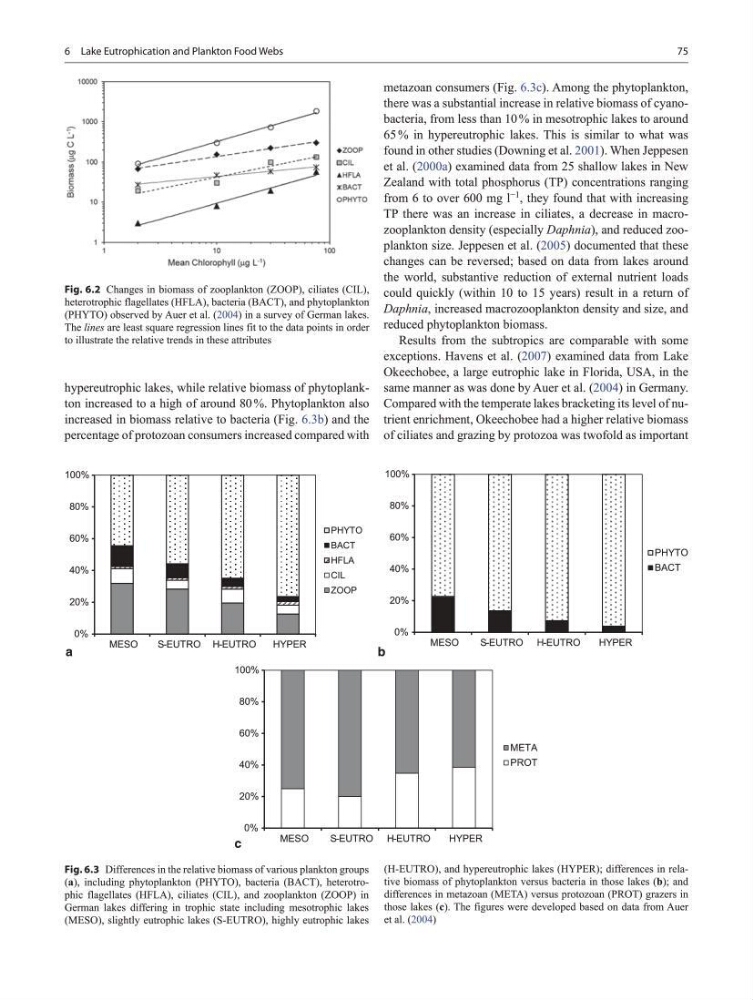
hypereutrophic lakes, while relative biomass of phytoplankton increased to a high of around 80 %. Phytoplankton also
increased in biomass relative to bacteria (Fig. 6.3b) and the
percentage of protozoan consumers increased compared with
metazoan consumers (Fig. 6.3c). Among the phytoplankton,
there was a substantial increase in relative biomass of cyanobacteria, from less than 10 % in mesotrophic lakes to around
65 % in hypereutrophic lakes. This is similar to what was
found in other studies (Downing et al. 2001). When Jeppesen
et al. (2000a) examined data from 25 shallow lakes in New
Zealand with total phosphorus (TP) concentrations ranging
from 6 to over 600 mg l
−1
, they found that with increasing
TP there was an increase in ciliates, a decrease in macrozooplankton density (especially Daphnia), and reduced zooplankton size. Jeppesen et al. (2005) documented that these
changes can be reversed; based on data from lakes around
the world, substantive reduction of external nutrient loads
could quickly (within 10 to 15 years) result in a return of
Daphnia, increased macrozooplankton density and size, and
reduced phytoplankton biomass.
Results from the subtropics are comparable with some
exceptions. Havens et al. (2007) examined data from Lake
Okeechobee, a large eutrophic lake in Florida, USA, in the
same manner as was done by Auer et al. (2004) in Germany.
Compared with the temperate lakes bracketing its level of nutrient enrichment, Okeechobee had a higher relative biomass
of ciliates and grazing by protozoa was twofold as important
0(62
6(8752 +(8752
+<3(5
3+<72
%$&7
0(62
6(8752 +(8752
+<3(5
3+<72
%$&7
+)/$
&,/
=223
0(62
6(8752 +(8752
+<3(5
0(7$
3527
a
b
c
Fig. 6.3 Differences in the relative biomass of various plankton groups
(a), including phytoplankton (PHYTO), bacteria (BACT), heterotrophic flagellates (HFLA), ciliates (CIL), and zooplankton (ZOOP) in
German lakes differing in trophic state including mesotrophic lakes
(MESO), slightly eutrophic lakes (S-EUTRO), highly eutrophic lakes
(H-EUTRO), and hypereutrophic lakes (HYPER); differences in relative biomass of phytoplankton versus bacteria in those lakes (b); and
differences in metazoan (META) versus protozoan (PROT) grazers in
those lakes (c). The figures were developed based on data from Auer
et al. (2004)
Fig. 6.2 Changes in biomass of zooplankton (ZOOP), ciliates (CIL),
heterotrophic flagellates (HFLA), bacteria (BACT), and phytoplankton
(PHYTO) observed by Auer et al. (2004) in a survey of German lakes.
The lines are least square regression lines fit to the data points in order
to illustrate the relative trends in these attributes
6 Lake Eutrophication and Plankton Food Webs
hypereutrophic lakes, while relative biomass of phytoplankton increased to a high of around 80 %. Phytoplankton also
increased in biomass relative to bacteria (Fig. 6.3b) and the
percentage of protozoan consumers increased compared with
metazoan consumers (Fig. 6.3c). Among the phytoplankton,
there was a substantial increase in relative biomass of cyanobacteria, from less than 10 % in mesotrophic lakes to around
65 % in hypereutrophic lakes. This is similar to what was
found in other studies (Downing et al. 2001). When Jeppesen
et al. (2000a) examined data from 25 shallow lakes in New
Zealand with total phosphorus (TP) concentrations ranging
from 6 to over 600 mg l
−1
, they found that with increasing
TP there was an increase in ciliates, a decrease in macrozooplankton density (especially Daphnia), and reduced zooplankton size. Jeppesen et al. (2005) documented that these
changes can be reversed; based on data from lakes around
the world, substantive reduction of external nutrient loads
could quickly (within 10 to 15 years) result in a return of
Daphnia, increased macrozooplankton density and size, and
reduced phytoplankton biomass.
Results from the subtropics are comparable with some
exceptions. Havens et al. (2007) examined data from Lake
Okeechobee, a large eutrophic lake in Florida, USA, in the
same manner as was done by Auer et al. (2004) in Germany.
Compared with the temperate lakes bracketing its level of nutrient enrichment, Okeechobee had a higher relative biomass
of ciliates and grazing by protozoa was twofold as important
0(62
6(8752 +(8752
+<3(5
3+<72
%$&7
0(62
6(8752 +(8752
+<3(5
3+<72
%$&7
+)/$
&,/
=223
0(62
6(8752 +(8752
+<3(5
0(7$
3527
a
b
c
Fig. 6.3 Differences in the relative biomass of various plankton groups
(a), including phytoplankton (PHYTO), bacteria (BACT), heterotrophic flagellates (HFLA), ciliates (CIL), and zooplankton (ZOOP) in
German lakes differing in trophic state including mesotrophic lakes
(MESO), slightly eutrophic lakes (S-EUTRO), highly eutrophic lakes
(H-EUTRO), and hypereutrophic lakes (HYPER); differences in relative biomass of phytoplankton versus bacteria in those lakes (b); and
differences in metazoan (META) versus protozoan (PROT) grazers in
those lakes (c). The figures were developed based on data from Auer
et al. (2004)
Fig. 6.2 Changes in biomass of zooplankton (ZOOP), ciliates (CIL),
heterotrophic flagellates (HFLA), bacteria (BACT), and phytoplankton
(PHYTO) observed by Auer et al. (2004) in a survey of German lakes.
The lines are least square regression lines fit to the data points in order
to illustrate the relative trends in these attributes