

254
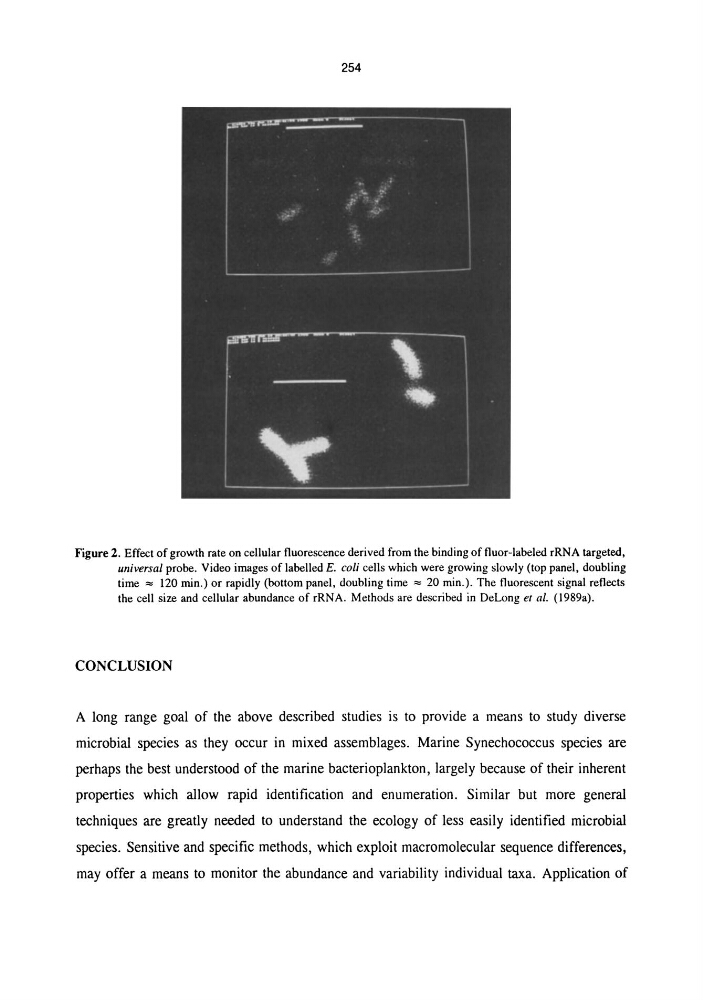
Figure 2. Effect of growth rate on cellular fluorescence derived from the binding of fluor-labeled rRNA targeted,
universal probe. Video images of labelled E. coli cells which were growing slowly (top panel, doubling
time .. 120 min.) or rapidly (bottom panel, doubling time .. 20 min.). The fluorescent signal reflects
the cell size and cellular abundance of rRNA. Methods are described in DeLong et al. (1989a).
CONCLUSION
A long range goal of the above described studies is to provide a means to study diverse
microbial species as they occur in mixed assemblages. Marine Synechococcus species are
perhaps the best understood of the marine bacterioplankton, largely because of their inherent
properties which allow rapid identification and enumeration. Similar but more general
techniques are greatly needed to understand the ecology of less easily identified microbial
species. Sensitive and specific methods, which exploit macromolecular sequence differences,
may offer a means to monitor the abundance and variability individual taxa. Application of
Figure 2. Effect of growth rate on cellular fluorescence derived from the binding of fluor-labeled rRNA targeted,
universal probe. Video images of labelled E. coli cells which were growing slowly (top panel, doubling
time .. 120 min.) or rapidly (bottom panel, doubling time .. 20 min.). The fluorescent signal reflects
the cell size and cellular abundance of rRNA. Methods are described in DeLong et al. (1989a).
CONCLUSION
A long range goal of the above described studies is to provide a means to study diverse
microbial species as they occur in mixed assemblages. Marine Synechococcus species are
perhaps the best understood of the marine bacterioplankton, largely because of their inherent
properties which allow rapid identification and enumeration. Similar but more general
techniques are greatly needed to understand the ecology of less easily identified microbial
species. Sensitive and specific methods, which exploit macromolecular sequence differences,
may offer a means to monitor the abundance and variability individual taxa. Application of