

190
be used to calculate the scattering from small, irregularly shaped cells and other particles. The
relatively new idea of phase differential scattering is then presented. The chapter ends with
a brief review of the uses of light scattering polarization measurements in flow.
P
INCIDENT
..
•
..
•
•
•
•
•
•
•
..
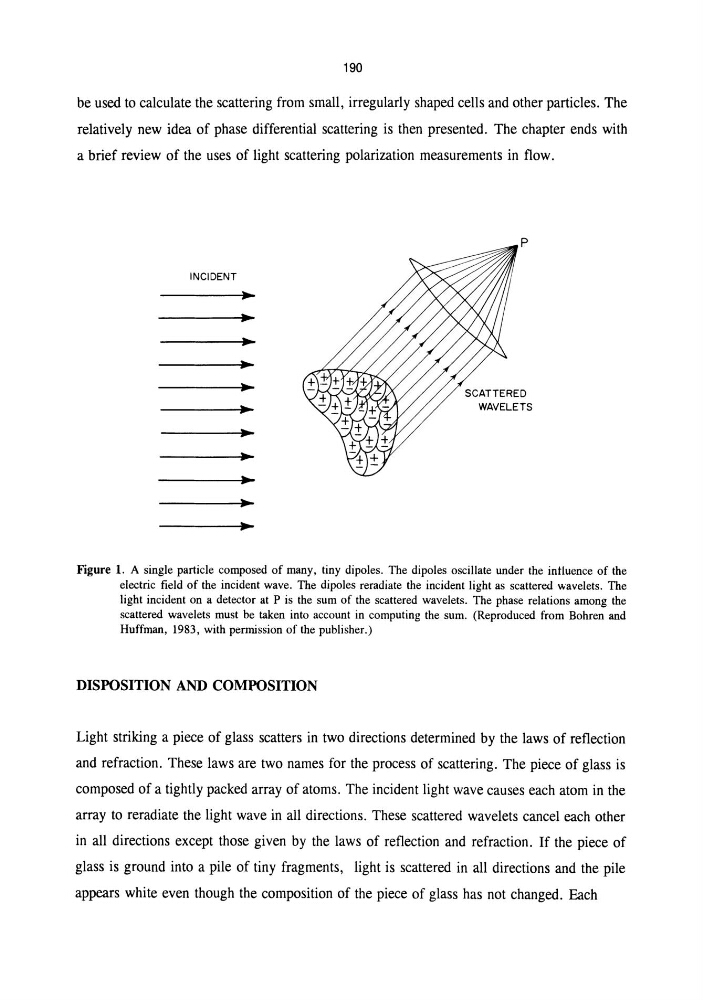
Figure 1. A single particle composed of many, tiny dipoles. The dipoles oscillate under the intluence of the
electric field of the incident wave. The dipoles reradiate the incident light as scattered wavelets. The
light incident on a detector at P is the sum of the scattered wavelets. The phase relations among the
scattered wavelets must be taken into account in computing the sum. (Reproduced from Bohren and
Huffman, 1983, with permission of the publisher.)
DISPOSITION AND COMPOSITION
Light striking a piece of glass scatters in two directions determined by the laws of reflection
and refraction. These laws are two names for the process of scattering. The piece of glass is
composed of a tightly packed array of atoms. The incident light wave causes each atom in the
array to reradiate the light wave in all directions. These scattered wavelets cancel each other
in all directions except those given by the laws of reflection and refraction. If the piece of
glass is ground into a pile of tiny fragments, light is scattered in all directions and the pile
appears white even though the composition of the piece of glass has not changed. Each
be used to calculate the scattering from small, irregularly shaped cells and other particles. The
relatively new idea of phase differential scattering is then presented. The chapter ends with
a brief review of the uses of light scattering polarization measurements in flow.
P
INCIDENT
..
•
..
•
•
•
•
•
•
•
..
Figure 1. A single particle composed of many, tiny dipoles. The dipoles oscillate under the intluence of the
electric field of the incident wave. The dipoles reradiate the incident light as scattered wavelets. The
light incident on a detector at P is the sum of the scattered wavelets. The phase relations among the
scattered wavelets must be taken into account in computing the sum. (Reproduced from Bohren and
Huffman, 1983, with permission of the publisher.)
DISPOSITION AND COMPOSITION
Light striking a piece of glass scatters in two directions determined by the laws of reflection
and refraction. These laws are two names for the process of scattering. The piece of glass is
composed of a tightly packed array of atoms. The incident light wave causes each atom in the
array to reradiate the light wave in all directions. These scattered wavelets cancel each other
in all directions except those given by the laws of reflection and refraction. If the piece of
glass is ground into a pile of tiny fragments, light is scattered in all directions and the pile
appears white even though the composition of the piece of glass has not changed. Each