

114
variable fluorescence represents the transition from a state of maximal photochemical
quenching at Fo (qp = 1) to minimal quenching at Fmax (qp = 0). (For a review of
standardized fluorescence nomenclature see van Kooten and Snel, 1990).
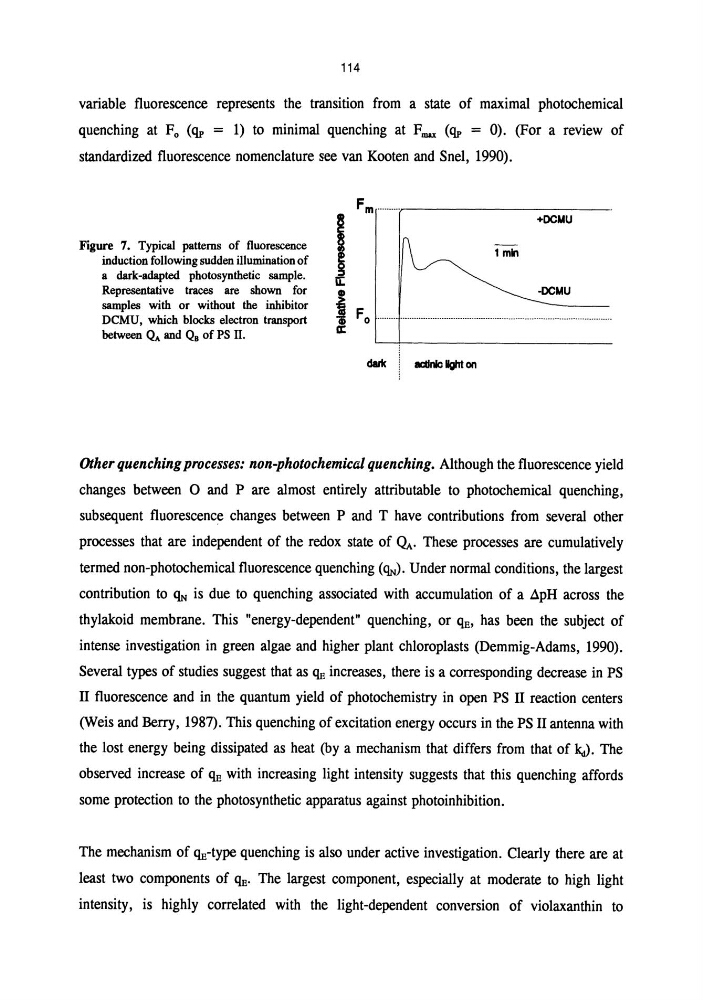
Figure 7. Typical patterns of fluorescence
induction following sudden illumination of
a dark-adapted photosynthetic sample.
Representative traces are shown for
samples with or without the inhibitor
DCMU. which blocks electron transport
between ~ and QB of PS II.
Fm .......... r - - - - - - - - - - - -
i !
~MU
I Fo .................................................................................................... .
+DCMU
1 min
clark
actinic light on
Other quenching processes: non-photochemical quenching. Although the fluorescence yield
changes between 0 and P are almost entirely attributable to photochemical quenching,
subsequent fluorescence changes between P and T have contributions from several other
processes that are independent of the redox state of~. These processes are cumulatively
termed non-photochemical fluorescence quenching (
intense investigation in green algae and higher plant chloroplasts (Demmig-Adams, 1990).
Several types of studies suggest that as 'IE increases, there is a corresponding decrease in PS
II fluorescence and in the quantum yield of photochemistry in open PS II reaction centers
(Weis and Berry, 1987). This quenching of excitation energy occurs in the PS II antenna with
the lost energy being dissipated as heat (by a mechanism that differs from that of kJ. The
observed increase of 'IE with increasing light intensity suggests that this quenching affords
some protection to the photosynthetic apparatus against photoinhibition.
The mechanism of 'IE-type quenching is also under active investigation. Clearly there are at
least two components of 'IE. The largest component, especially at moderate to high light
intensity, is highly correlated with the light-dependent conversion of violaxanthin to
variable fluorescence represents the transition from a state of maximal photochemical
quenching at Fo (qp = 1) to minimal quenching at Fmax (qp = 0). (For a review of
standardized fluorescence nomenclature see van Kooten and Snel, 1990).
Figure 7. Typical patterns of fluorescence
induction following sudden illumination of
a dark-adapted photosynthetic sample.
Representative traces are shown for
samples with or without the inhibitor
DCMU. which blocks electron transport
between ~ and QB of PS II.
Fm .......... r - - - - - - - - - - - -
i !
~MU
I Fo .................................................................................................... .
+DCMU
1 min
clark
actinic light on
Other quenching processes: non-photochemical quenching. Although the fluorescence yield
changes between 0 and P are almost entirely attributable to photochemical quenching,
subsequent fluorescence changes between P and T have contributions from several other
processes that are independent of the redox state of~. These processes are cumulatively
termed non-photochemical fluorescence quenching (
intense investigation in green algae and higher plant chloroplasts (Demmig-Adams, 1990).
Several types of studies suggest that as 'IE increases, there is a corresponding decrease in PS
II fluorescence and in the quantum yield of photochemistry in open PS II reaction centers
(Weis and Berry, 1987). This quenching of excitation energy occurs in the PS II antenna with
the lost energy being dissipated as heat (by a mechanism that differs from that of kJ. The
observed increase of 'IE with increasing light intensity suggests that this quenching affords
some protection to the photosynthetic apparatus against photoinhibition.
The mechanism of 'IE-type quenching is also under active investigation. Clearly there are at
least two components of 'IE. The largest component, especially at moderate to high light
intensity, is highly correlated with the light-dependent conversion of violaxanthin to