

16
CONCLUDING REMARKS
results. On the other hand only the over-all effect of the combined four parameterisations can
be confirmed but the separate parameterisations may still have errors, which are compensating each other.
To give an impression how reliable the resulting MHT becomes, we assumed an conservative error of only 2% in each parameterisation, which yield an error of 0.3 PW at 30 0 S, of
the same order of magnitude as MHT itself. A variation of the vapor transfer coefficient CE
by 5%, to give another example, changes the MWT across 30
0
S by about 100%, because the
mean Atlantic evaporation is 115.8 W m- 2 whereas the mean net heat flux, which determines
the heat transport into the basin, is only -5.6 Wm- 2 • By a slight change of the parameterisations nearly any desired MHT can be obtained, without transgressing meteorological
constraints. Thus, a realistic MHT does not prove the correctness of the applied parameterisations, but indicates merely, that the used combination is a possible solution.
5 Concluding Remarks
The climate data and air-sea fluxes presented in this work are based on the most comprehensive collection of marine meteorological observations and on the best available parameterisations for the open ocean.
40
i>
20
[f]
"" +' .... 0
0
p..
[JJ
>::
E-<
-20
-40
-40
-20
o
20
Latitude
40
60
In this study wind and
wind stress data were improved in three aspects: First,
an improved equivalent scale
is used to convert the Beaufort
estimates, which is the commonly used wind observation
technique at sea. Second, a
time-dependent scale is used
to obtain temporally consistent wind speeds. Third, it is
shown that the inevitable random observational errors cause
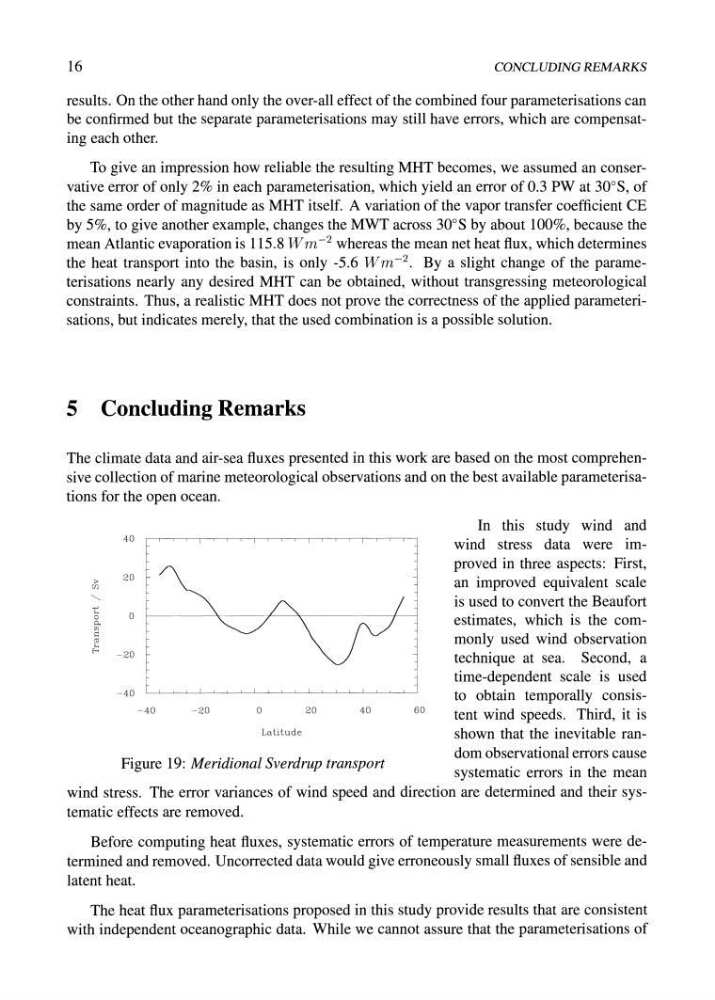
Figure 19: Meridional Sverdrup transport
systematic errors in the mean
wind stress. The error variances of wind speed and direction are determined and their systematic effects are removed.
Before computing heat fluxes, systematic errors of temperature measurements were determined and removed. Uncorrected data would give erroneously small fluxes of sensible and
latent heat.
The heat flux parameterisations proposed in this study provide results that are consistent
with independent oceanographic data. While we cannot assure that the parameterisations of
CONCLUDING REMARKS
results. On the other hand only the over-all effect of the combined four parameterisations can
be confirmed but the separate parameterisations may still have errors, which are compensating each other.
To give an impression how reliable the resulting MHT becomes, we assumed an conservative error of only 2% in each parameterisation, which yield an error of 0.3 PW at 30 0 S, of
the same order of magnitude as MHT itself. A variation of the vapor transfer coefficient CE
by 5%, to give another example, changes the MWT across 30
0
S by about 100%, because the
mean Atlantic evaporation is 115.8 W m- 2 whereas the mean net heat flux, which determines
the heat transport into the basin, is only -5.6 Wm- 2 • By a slight change of the parameterisations nearly any desired MHT can be obtained, without transgressing meteorological
constraints. Thus, a realistic MHT does not prove the correctness of the applied parameterisations, but indicates merely, that the used combination is a possible solution.
5 Concluding Remarks
The climate data and air-sea fluxes presented in this work are based on the most comprehensive collection of marine meteorological observations and on the best available parameterisations for the open ocean.
40
i>
20
[f]
"" +' .... 0
0
p..
[JJ
>::
E-<
-20
-40
-40
-20
o
20
Latitude
40
60
In this study wind and
wind stress data were improved in three aspects: First,
an improved equivalent scale
is used to convert the Beaufort
estimates, which is the commonly used wind observation
technique at sea. Second, a
time-dependent scale is used
to obtain temporally consistent wind speeds. Third, it is
shown that the inevitable random observational errors cause
Figure 19: Meridional Sverdrup transport
systematic errors in the mean
wind stress. The error variances of wind speed and direction are determined and their systematic effects are removed.
Before computing heat fluxes, systematic errors of temperature measurements were determined and removed. Uncorrected data would give erroneously small fluxes of sensible and
latent heat.
The heat flux parameterisations proposed in this study provide results that are consistent
with independent oceanographic data. While we cannot assure that the parameterisations of