

Zooplankton
15
100
80
60
40
20
o
66 67 68 2
6 13 20 25 28 76 33 36 37 46 49 52 55 56 57
stations
•
O.similis
0 C.citer
•
D.forcipatus ~ C.brevipes •
M.pusillus
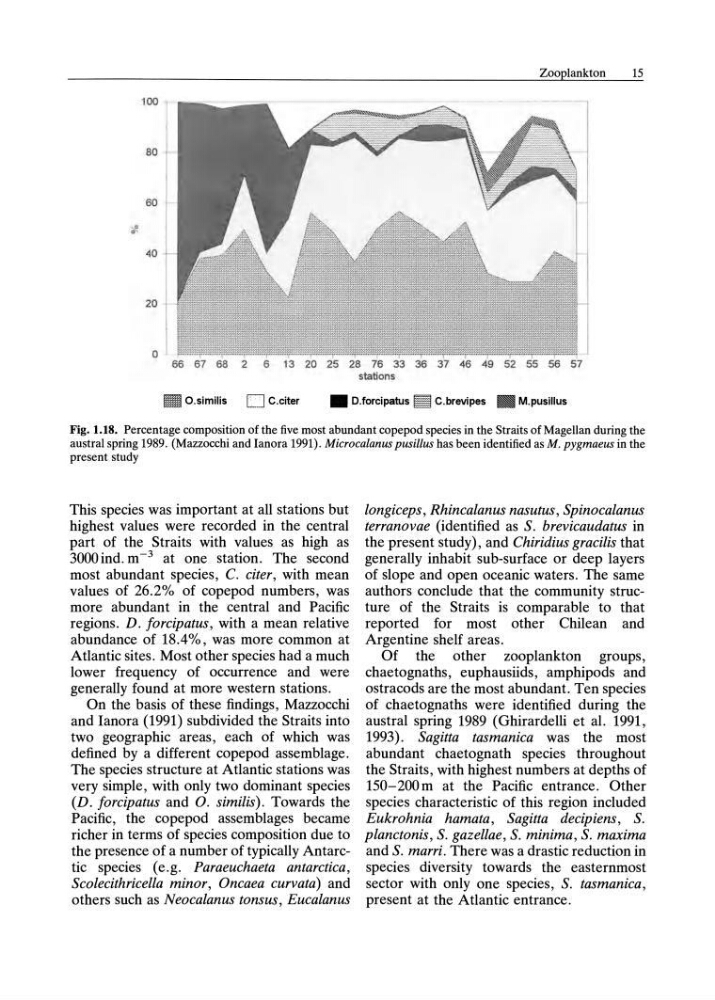
Fig. 1.18. Percentage composition of the five most abundant copepod species in the Straits of Magellan during the
austral spring 1989. (Mazzocchi and Ianora 1991). Microcalanus pusillus has been identified as M. pygmaeus in the
present study
This species was important at all stations but
highest values were recorded in the central
part of the Straits with values as high as
3000ind. m- 3 at one station. The second
most abundant species, C. citer, with mean
values of 26.2% of copepod numbers, was
more abundant in the central and Pacific
regions. D. Jorcipatus, with a mean relative
abundance of 18.4%, was more common at
Atlantic sites. Most other species had a much
lower frequency of occurrence and were
generally found at more western stations.
On the basis of these findings, Mazzocchi
and Ianora (1991) subdivided the Straits into
two geographic areas, each of which was
defined by a different copepod assemblage.
The species structure at Atlantic stations was
very simple, with only two dominant species
(D. Jorcipatus and O. similis). Towards the
Pacific, the copepod assemblages became
richer in terms of species composition due to
the presence of a number of typically Antarctic species (e.g. Paraeuchaeta antarctica,
Scolecithricella minor, Oncaea curvata) and
others such as Neocalanus tons us , Eucalanus
longiceps, Rhincalanus nasutus, Spinocalanus
terranovae (identified as S. brevicaudatus in
the present study), and Chiridius gracilis that
generally inhabit sub-surface or deep layers
of slope and open oceanic waters. The same
authors conclude that the community structure of the Straits is comparable to that
reported for most other Chilean and
Argentine shelf areas.
Of the other zooplankton groups,
chaetognaths, euphausiids, amphipods and
ostracods are the most abundant. Ten species
of chaetognaths were identified during the
austral spring 1989 (Ghirardelli et al. 1991,
1993). Sagitta tasmanica was the most
abundant chaetognath species throughout
the Straits, with highest numbers at depths of
ISO-200m at the Pacific entrance. Other
species characteristic of this region included
Eukrohnia hamata, Sagitta decipiens, S.
planctonis, S. gazellae, S. minima, S. maxima
and S. marri. There was a drastic reduction in
species diversity towards the easternmost
sector with only one species, S. tasmanica,
present at the Atlantic entrance.
15
100
80
60
40
20
o
66 67 68 2
6 13 20 25 28 76 33 36 37 46 49 52 55 56 57
stations
•
O.similis
0 C.citer
•
D.forcipatus ~ C.brevipes •
M.pusillus
Fig. 1.18. Percentage composition of the five most abundant copepod species in the Straits of Magellan during the
austral spring 1989. (Mazzocchi and Ianora 1991). Microcalanus pusillus has been identified as M. pygmaeus in the
present study
This species was important at all stations but
highest values were recorded in the central
part of the Straits with values as high as
3000ind. m- 3 at one station. The second
most abundant species, C. citer, with mean
values of 26.2% of copepod numbers, was
more abundant in the central and Pacific
regions. D. Jorcipatus, with a mean relative
abundance of 18.4%, was more common at
Atlantic sites. Most other species had a much
lower frequency of occurrence and were
generally found at more western stations.
On the basis of these findings, Mazzocchi
and Ianora (1991) subdivided the Straits into
two geographic areas, each of which was
defined by a different copepod assemblage.
The species structure at Atlantic stations was
very simple, with only two dominant species
(D. Jorcipatus and O. similis). Towards the
Pacific, the copepod assemblages became
richer in terms of species composition due to
the presence of a number of typically Antarctic species (e.g. Paraeuchaeta antarctica,
Scolecithricella minor, Oncaea curvata) and
others such as Neocalanus tons us , Eucalanus
longiceps, Rhincalanus nasutus, Spinocalanus
terranovae (identified as S. brevicaudatus in
the present study), and Chiridius gracilis that
generally inhabit sub-surface or deep layers
of slope and open oceanic waters. The same
authors conclude that the community structure of the Straits is comparable to that
reported for most other Chilean and
Argentine shelf areas.
Of the other zooplankton groups,
chaetognaths, euphausiids, amphipods and
ostracods are the most abundant. Ten species
of chaetognaths were identified during the
austral spring 1989 (Ghirardelli et al. 1991,
1993). Sagitta tasmanica was the most
abundant chaetognath species throughout
the Straits, with highest numbers at depths of
ISO-200m at the Pacific entrance. Other
species characteristic of this region included
Eukrohnia hamata, Sagitta decipiens, S.
planctonis, S. gazellae, S. minima, S. maxima
and S. marri. There was a drastic reduction in
species diversity towards the easternmost
sector with only one species, S. tasmanica,
present at the Atlantic entrance.