

observations to identify and assess a meso-scale eddy feature off the east Australian coast (the Capricorn Eddy). This eddy (*150 km diameter) forms in the
lee of the southern GBR as the East Australian Current continues its southward
flow, entraining water behind the ‘cape-like’ coastal feature of the Great Barrier
Reef (Fig. 12.6). Frictional drag resulting from the shallowing sea floor and nearby
land boundary, together with the swiftly flowing offshore current, produces lateral
stress on the water mass in this lee zone and exerts a cyclonic (clockwise) rotation
on the water. Weeks et al. (2010) used an operational 3D ocean forecast model
(OceanMAPS) that was able to replicate eddy patterns observed in the satellite
imagery. In this model, wind stress and in situ sea temperature data (at 5 depths
from 13 to 44 m) revealed the dynamic thermal structure of the eddy. The cyclonic
rotation causes upwelling in the centre of the eddy as well as at the ‘shear zone’ of
the East Australian Current (Fig. 12.7). The system is inherently dynamic, waxing
and waning with the strength of the East Australian Current, local and regional
wind stress, and internal perturbations of the thermocline.
This meso-scale oceanographic feature has a marked effect on the ecology of
the reef. Weeks et al. (in review) show that the foraging ecology of the wedgetailed shearwater (Puffinus pacificus) is inextricably linked to the Capricorn Eddy.
This bird nests on Heron Island near the southwest edge of the eddy and feeds on
planktivorous fish in the eddy zone. During periods of strong summer East Australian Current flow and eddy rotation, enhanced upwelling causes stratification of
the water column, which is exacerbated during periods of low wind and high
insolation in summer. In early 2006 these conditions caused mild bleaching at
Heron Island, but more significantly had a direct effect on sea birds as their prey
appeared to remain in the cooler water below the thermocline, unavailable to the
surface-feeding birds. Meal sizes and the proportion of nests fed halved during the
period of intense stratification, similar to conditions which led to a dramatic failure
in the reproductive success of P. pacificus coinciding with the coral bleaching
event of 2002.
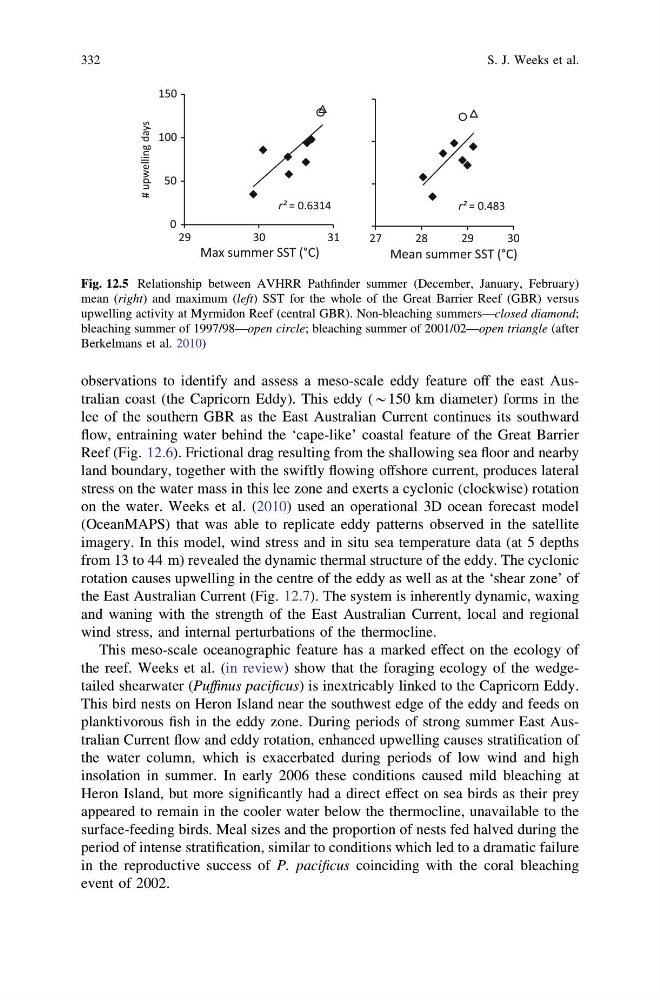
Fig. 12.5 Relationship between AVHRR Pathfinder summer (December, January, February)
mean (right) and maximum (left) SST for the whole of the Great Barrier Reef (GBR) versus
upwelling activity at Myrmidon Reef (central GBR). Non-bleaching summers—closed diamond;
bleaching summer of 1997/98—open circle; bleaching summer of 2001/02—open triangle (after
Berkelmans et al. 2010)
332
S. J. Weeks et al.
lee of the southern GBR as the East Australian Current continues its southward
flow, entraining water behind the ‘cape-like’ coastal feature of the Great Barrier
Reef (Fig. 12.6). Frictional drag resulting from the shallowing sea floor and nearby
land boundary, together with the swiftly flowing offshore current, produces lateral
stress on the water mass in this lee zone and exerts a cyclonic (clockwise) rotation
on the water. Weeks et al. (2010) used an operational 3D ocean forecast model
(OceanMAPS) that was able to replicate eddy patterns observed in the satellite
imagery. In this model, wind stress and in situ sea temperature data (at 5 depths
from 13 to 44 m) revealed the dynamic thermal structure of the eddy. The cyclonic
rotation causes upwelling in the centre of the eddy as well as at the ‘shear zone’ of
the East Australian Current (Fig. 12.7). The system is inherently dynamic, waxing
and waning with the strength of the East Australian Current, local and regional
wind stress, and internal perturbations of the thermocline.
This meso-scale oceanographic feature has a marked effect on the ecology of
the reef. Weeks et al. (in review) show that the foraging ecology of the wedgetailed shearwater (Puffinus pacificus) is inextricably linked to the Capricorn Eddy.
This bird nests on Heron Island near the southwest edge of the eddy and feeds on
planktivorous fish in the eddy zone. During periods of strong summer East Australian Current flow and eddy rotation, enhanced upwelling causes stratification of
the water column, which is exacerbated during periods of low wind and high
insolation in summer. In early 2006 these conditions caused mild bleaching at
Heron Island, but more significantly had a direct effect on sea birds as their prey
appeared to remain in the cooler water below the thermocline, unavailable to the
surface-feeding birds. Meal sizes and the proportion of nests fed halved during the
period of intense stratification, similar to conditions which led to a dramatic failure
in the reproductive success of P. pacificus coinciding with the coral bleaching
event of 2002.
Fig. 12.5 Relationship between AVHRR Pathfinder summer (December, January, February)
mean (right) and maximum (left) SST for the whole of the Great Barrier Reef (GBR) versus
upwelling activity at Myrmidon Reef (central GBR). Non-bleaching summers—closed diamond;
bleaching summer of 1997/98—open circle; bleaching summer of 2001/02—open triangle (after
Berkelmans et al. 2010)
332
S. J. Weeks et al.