

12.3.3 Coastal and Oceanic Upwelling
Understanding and predicting the impacts of global climate change is dependent
on understanding the dynamics of ocean processes from global to local scales.
While large-scale oceanographic processes are often well understood, smallerscale processes, such as upwelling in tropical reef environments, are often not. For
example, Berkelmans et al. (2010) found upwelling activity in the central GBR
correlated strongly with local and regional SST, with the strongest upwelling
occurring during the bleaching years of 1998 and 2002 (Fig. 12.5). In these situations, warm water still encompasses much of the GBR and the cold upwelled
water remains mostly subsurface due to a heavily stratified water column. A link
was also identified between upwelling activities and anomalously warm summers,
when the East Australian Current speeds up during doldrum periods, leading to
enhanced stratification of the water column. Enhanced upwelling signals are thus
correlated with bleaching by a period of several weeks, and may also be used as a
seasonal forecasting tool for a pending warm summer.
In another example, Weeks et al. (2010) use MODIS time series of SST and
chlorophyll-a data in conjunction with in situ measurements and model
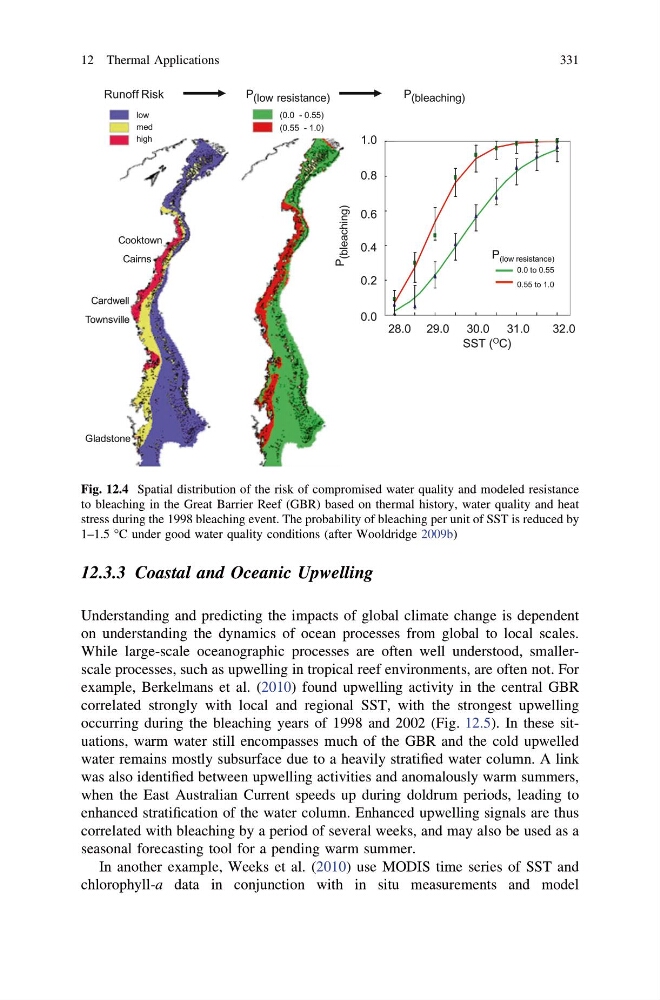
Fig. 12.4 Spatial distribution of the risk of compromised water quality and modeled resistance
to bleaching in the Great Barrier Reef (GBR) based on thermal history, water quality and heat
stress during the 1998 bleaching event. The probability of bleaching per unit of SST is reduced by
1–1.5 °C under good water quality conditions (after Wooldridge 2009b)
12 Thermal Applications
331
Understanding and predicting the impacts of global climate change is dependent
on understanding the dynamics of ocean processes from global to local scales.
While large-scale oceanographic processes are often well understood, smallerscale processes, such as upwelling in tropical reef environments, are often not. For
example, Berkelmans et al. (2010) found upwelling activity in the central GBR
correlated strongly with local and regional SST, with the strongest upwelling
occurring during the bleaching years of 1998 and 2002 (Fig. 12.5). In these situations, warm water still encompasses much of the GBR and the cold upwelled
water remains mostly subsurface due to a heavily stratified water column. A link
was also identified between upwelling activities and anomalously warm summers,
when the East Australian Current speeds up during doldrum periods, leading to
enhanced stratification of the water column. Enhanced upwelling signals are thus
correlated with bleaching by a period of several weeks, and may also be used as a
seasonal forecasting tool for a pending warm summer.
In another example, Weeks et al. (2010) use MODIS time series of SST and
chlorophyll-a data in conjunction with in situ measurements and model
Fig. 12.4 Spatial distribution of the risk of compromised water quality and modeled resistance
to bleaching in the Great Barrier Reef (GBR) based on thermal history, water quality and heat
stress during the 1998 bleaching event. The probability of bleaching per unit of SST is reduced by
1–1.5 °C under good water quality conditions (after Wooldridge 2009b)
12 Thermal Applications
331