

exhibited substantial warming trends during the second period. The observed shift
may have coincided with a reversal of the Pacific Decadal Oscillation (PDO;
Mantua et al. 1997), which moved from a so-called warm phase to a cool phase in
the mid-1990s. Typical conditions during the warm phase of the PDO are positive
SST anomalies in the equatorial Pacific, with negative anomalies in the polar
regions of the ocean (the pattern is reversed during the cool phase). These findings
suggest that warming trends in the tropical Pacific calculated for the overall
22 year period from 1985 to 2006 might have been lessened due to the PDO shift
from warm to cool. This illustrates the significant point that the time domain
through which trend analyses are undertaken must be carefully considered during
interpretation of the outcomes.
Eakin et al. (2009) examined SST anomalies at 50 coral reef locations that were
observed to have bleached during the 1997–1998 global bleaching event (Wilkinson 1998). Annual average SST anomalies were calculated for each of four
regions as well as the long-term regional and global trends for 1985–2006
(Table 12.1). Each region showed significant warming through the 22 year period,
with the Pacific Ocean warming at a slightly lower rate (though not statistically
different). The authors noted that the calculated global trend was already within the
range of predicted warming for the 21st century (2–4 °C/century; IPCC 2007) in
the absence of a reduction in greenhouse gas emissions. Analysis of accumulated
thermal stress through the satellite era showed an increasing trend for all regions.
The greatest level of thermal stress was experienced both globally and regionally
in 1998, with the exception of the Caribbean/Atlantic region for which stress levels
were most severe during the bleaching event of 2005 (Eakin et al. 2010).
Eakin et al. (2009) also examined accumulated thermal stress dating from the
late 19th century using historical SST datasets (HadISST, ERSST) for the same 50
reef locations. These analyses confirmed that the thermal stress levels observed in
the Caribbean/Atlantic during 2005, and regionally and globally during 1998, were
unprecedented in the data record. Heron et al. (2008) similarly calculated regional
trends in SST anomalies of reef-containing pixels for the period 1880–2007
(ERSST data). Temperature increases were observed in all regions, ranging from
0.024 °C per decade in the eastern Pacific Ocean to more than 0.050 °C per decade
in the Indian Ocean and south-western Pacific Ocean. Comparison of these values
with those from the satellite era (Table 12.1) suggests that warming has accelerated through the last century.
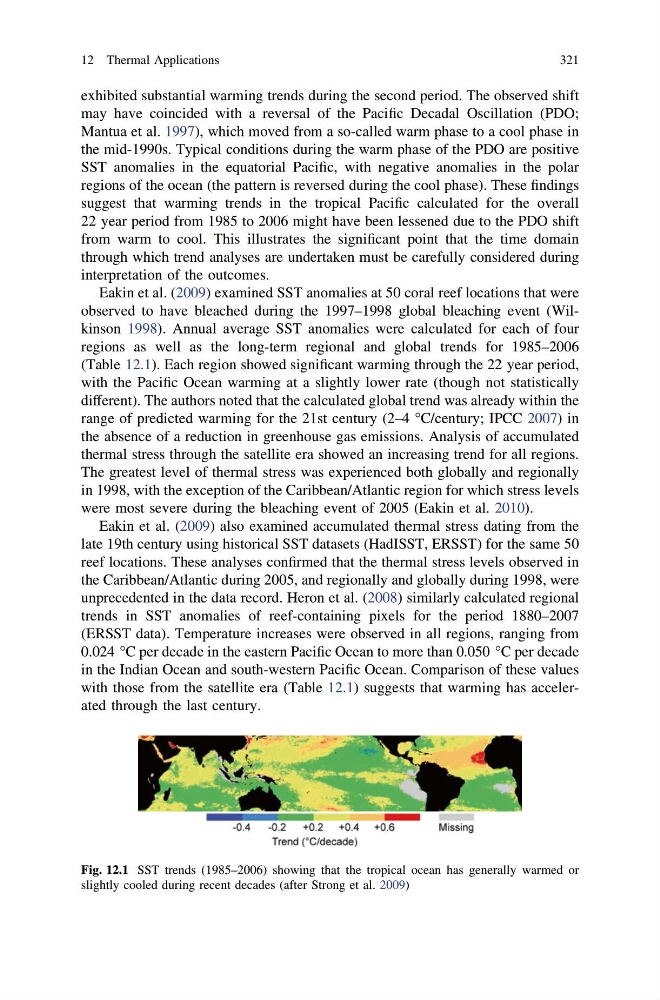
Fig. 12.1 SST trends (1985–2006) showing that the tropical ocean has generally warmed or
slightly cooled during recent decades (after Strong et al. 2009)
12 Thermal Applications
321
may have coincided with a reversal of the Pacific Decadal Oscillation (PDO;
Mantua et al. 1997), which moved from a so-called warm phase to a cool phase in
the mid-1990s. Typical conditions during the warm phase of the PDO are positive
SST anomalies in the equatorial Pacific, with negative anomalies in the polar
regions of the ocean (the pattern is reversed during the cool phase). These findings
suggest that warming trends in the tropical Pacific calculated for the overall
22 year period from 1985 to 2006 might have been lessened due to the PDO shift
from warm to cool. This illustrates the significant point that the time domain
through which trend analyses are undertaken must be carefully considered during
interpretation of the outcomes.
Eakin et al. (2009) examined SST anomalies at 50 coral reef locations that were
observed to have bleached during the 1997–1998 global bleaching event (Wilkinson 1998). Annual average SST anomalies were calculated for each of four
regions as well as the long-term regional and global trends for 1985–2006
(Table 12.1). Each region showed significant warming through the 22 year period,
with the Pacific Ocean warming at a slightly lower rate (though not statistically
different). The authors noted that the calculated global trend was already within the
range of predicted warming for the 21st century (2–4 °C/century; IPCC 2007) in
the absence of a reduction in greenhouse gas emissions. Analysis of accumulated
thermal stress through the satellite era showed an increasing trend for all regions.
The greatest level of thermal stress was experienced both globally and regionally
in 1998, with the exception of the Caribbean/Atlantic region for which stress levels
were most severe during the bleaching event of 2005 (Eakin et al. 2010).
Eakin et al. (2009) also examined accumulated thermal stress dating from the
late 19th century using historical SST datasets (HadISST, ERSST) for the same 50
reef locations. These analyses confirmed that the thermal stress levels observed in
the Caribbean/Atlantic during 2005, and regionally and globally during 1998, were
unprecedented in the data record. Heron et al. (2008) similarly calculated regional
trends in SST anomalies of reef-containing pixels for the period 1880–2007
(ERSST data). Temperature increases were observed in all regions, ranging from
0.024 °C per decade in the eastern Pacific Ocean to more than 0.050 °C per decade
in the Indian Ocean and south-western Pacific Ocean. Comparison of these values
with those from the satellite era (Table 12.1) suggests that warming has accelerated through the last century.
Fig. 12.1 SST trends (1985–2006) showing that the tropical ocean has generally warmed or
slightly cooled during recent decades (after Strong et al. 2009)
12 Thermal Applications
321