

2.4.2 Results Discussion
As we know, runoff has positive correlation with rainfall and negative relation with
evaporation. The simulated results of annual and flood seasonal stream flows
demonstrate the relationships. In arid season, rainfall, evaporation and surface
runoff had the same rising trends revealing that the contributions of rainfall to
runoff were larger than these of evaporation to runoff. Similar results had been
reported in some regions suffered homogeneous climate changes (Hao et al. 2008;
Zhang et al. 2012). But, there is no evidence to prove the flood risk decreasing in the
KRB since there is no decreasing trend in the MD stream flow in the two different
periods, though AAMD stream flow decreased from S1 to S2 and annual stream
flows seemed to reduce.
The results of stream flow variations under land use changes indicate that the
conversion of FGA into urban area resulted in high peak flow, a reduction in annual
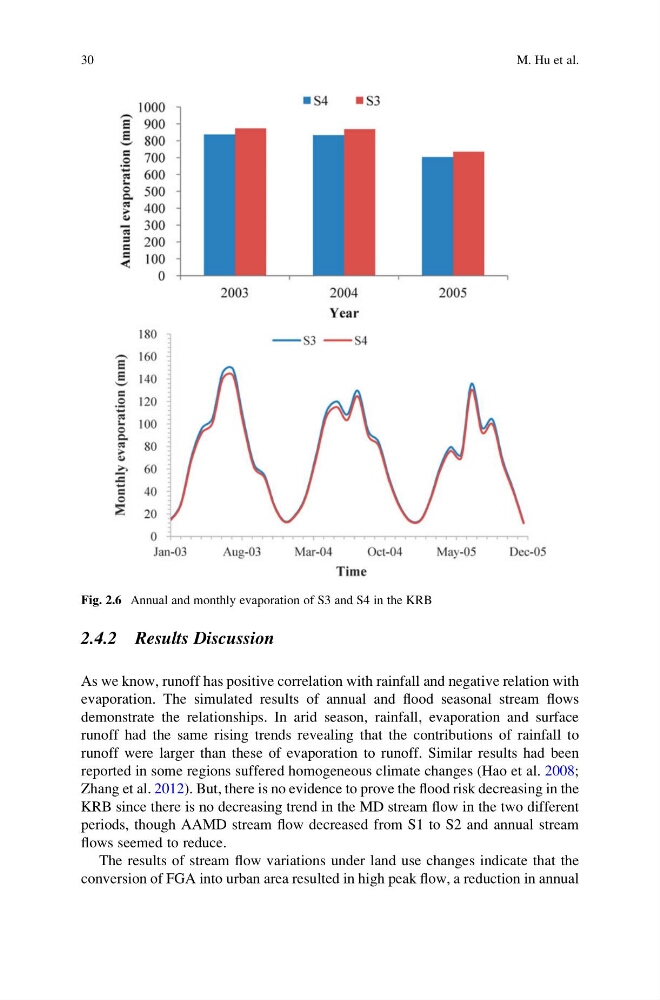
Fig. 2.6 Annual and monthly evaporation of S3 and S4 in the KRB
30
M. Hu et al.
As we know, runoff has positive correlation with rainfall and negative relation with
evaporation. The simulated results of annual and flood seasonal stream flows
demonstrate the relationships. In arid season, rainfall, evaporation and surface
runoff had the same rising trends revealing that the contributions of rainfall to
runoff were larger than these of evaporation to runoff. Similar results had been
reported in some regions suffered homogeneous climate changes (Hao et al. 2008;
Zhang et al. 2012). But, there is no evidence to prove the flood risk decreasing in the
KRB since there is no decreasing trend in the MD stream flow in the two different
periods, though AAMD stream flow decreased from S1 to S2 and annual stream
flows seemed to reduce.
The results of stream flow variations under land use changes indicate that the
conversion of FGA into urban area resulted in high peak flow, a reduction in annual
Fig. 2.6 Annual and monthly evaporation of S3 and S4 in the KRB
30
M. Hu et al.