

He (2014). The dominant native grass species found in the study sites are needleand-thread grass (Stipa comata), western wheat grass (Agropyron smithii), June
grass (Koeleria gracilis) and blue grama (Bouteloua gracilis). Fresh biomass
samples were dried in an oven for 48 h at 60
C and weighed.
8.3 Integration of Remote Sensing Data and Modeling
Approach
The methodology section (Fig. 8.2) starts with a brief overview of the BIOMEBGC model, is followed by the desicritpion of C:N ratio mapping for the study area,
and ends with an assessment of modeling results based on field observations. The
main focuses are on producing a C:N ratio map from MODIS data and on the
comparisons between field-based NPP, the fixed C:N ratio driven modeling results,
and the C:N ratio map driving NPP.
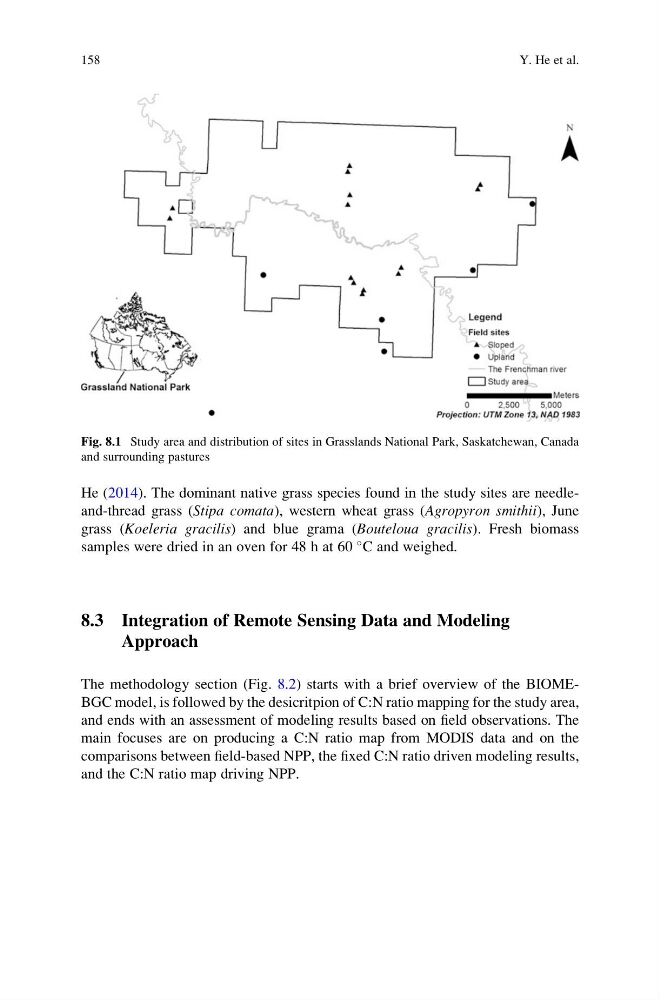
Fig. 8.1 Study area and distribution of sites in Grasslands National Park, Saskatchewan, Canada
and surrounding pastures
158
Y. He et al.
grass (Koeleria gracilis) and blue grama (Bouteloua gracilis). Fresh biomass
samples were dried in an oven for 48 h at 60
C and weighed.
8.3 Integration of Remote Sensing Data and Modeling
Approach
The methodology section (Fig. 8.2) starts with a brief overview of the BIOMEBGC model, is followed by the desicritpion of C:N ratio mapping for the study area,
and ends with an assessment of modeling results based on field observations. The
main focuses are on producing a C:N ratio map from MODIS data and on the
comparisons between field-based NPP, the fixed C:N ratio driven modeling results,
and the C:N ratio map driving NPP.
Fig. 8.1 Study area and distribution of sites in Grasslands National Park, Saskatchewan, Canada
and surrounding pastures
158
Y. He et al.