

251
The participants were asked to spend no more than 30 seconds estimating the number of birds in each image (and not to confer with other observers) before returning
their estimates for collation. The 30 second limit replicates the limited time that an
observer has to estimate the size of mobile bird flocks in the field. In reality, however, estimating the size of a flock of birds as it flies past presents a more difficult
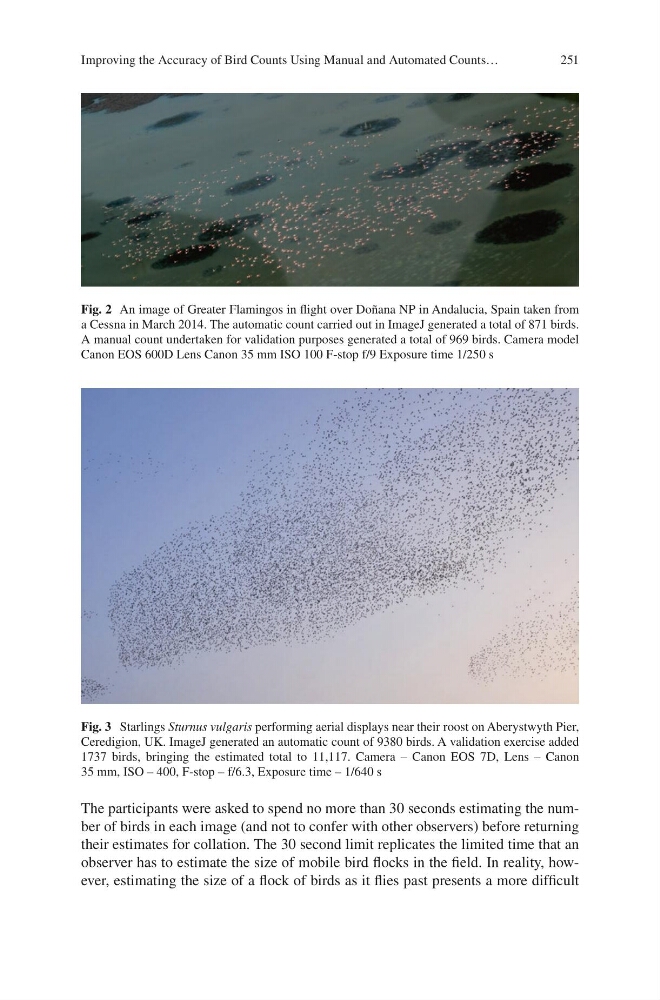
Fig. 2 An image of Greater Flamingos in flight over Doñana NP in Andalucia, Spain taken from
a Cessna in March 2014. The automatic count carried out in ImageJ generated a total of 871 birds.
A manual count undertaken for validation purposes generated a total of 969 birds. Camera model
Canon EOS 600D Lens Canon 35 mm ISO 100 F-stop f/9 Exposure time 1/250 s
Fig. 3 Starlings Sturnus vulgaris performing aerial displays near their roost on Aberystwyth Pier,
Ceredigion, UK. ImageJ generated an automatic count of 9380 birds. A validation exercise added
1737 birds, bringing the estimated total to 11,117. Camera – Canon EOS 7D, Lens – Canon
35 mm, ISO – 400, F-stop – f/6.3, Exposure time – 1/640 s
Improving the Accuracy of Bird Counts Using Manual and Automated Counts…
The participants were asked to spend no more than 30 seconds estimating the number of birds in each image (and not to confer with other observers) before returning
their estimates for collation. The 30 second limit replicates the limited time that an
observer has to estimate the size of mobile bird flocks in the field. In reality, however, estimating the size of a flock of birds as it flies past presents a more difficult
Fig. 2 An image of Greater Flamingos in flight over Doñana NP in Andalucia, Spain taken from
a Cessna in March 2014. The automatic count carried out in ImageJ generated a total of 871 birds.
A manual count undertaken for validation purposes generated a total of 969 birds. Camera model
Canon EOS 600D Lens Canon 35 mm ISO 100 F-stop f/9 Exposure time 1/250 s
Fig. 3 Starlings Sturnus vulgaris performing aerial displays near their roost on Aberystwyth Pier,
Ceredigion, UK. ImageJ generated an automatic count of 9380 birds. A validation exercise added
1737 birds, bringing the estimated total to 11,117. Camera – Canon EOS 7D, Lens – Canon
35 mm, ISO – 400, F-stop – f/6.3, Exposure time – 1/640 s
Improving the Accuracy of Bird Counts Using Manual and Automated Counts…