

207
den sites during spring. If encountered during tracking, hair, blood and excrement
of the three species are sampled for DNA-analysis. The bear population is censused
by direct observations during the moose (Alces alces) hunting season in autumn and
by DNA-analyses of droppings. The population of Golden eagles is tracked by
annual nest surveys, though DNA-analysis is increasingly used for this species too.
Also biotelemetry backpacks with GPS-sensors are used to track the movement of
individual birds in near real-time. Aerial surveys are conducted to some extent.
Finally, attitude surveys are conducted regularly to measure and to track changes in
attitudes towards large carnivores and large carnivore management (Schneider 2012).
Monitoring
Research
Management
Surveillance
Funding
Asking questions
Basic
Applied
Enhancing
survey
performance
Informing
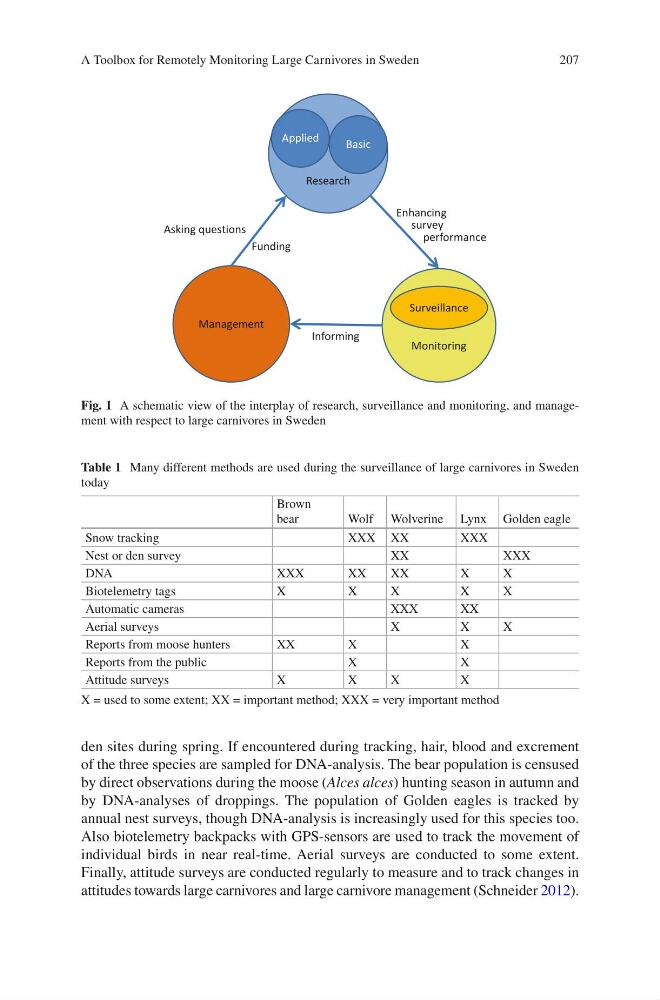
Fig. 1 A schematic view of the interplay of research, surveillance and monitoring, and management with respect to large carnivores in Sweden
Table 1 Many different methods are used during the surveillance of large carnivores in Sweden
today
Brown
bear
Wolf Wolverine Lynx Golden eagle
Snow tracking
XXX XX
XXX
Nest or den survey
XX
XXX
DNA
XXX
XX
XX
X
X
Biotelemetry tags
X
X
X
X
X
Automatic cameras
XXX
XX
Aerial surveys
X
X
X
Reports from moose hunters
XX
X
X
Reports from the public
X
X
Attitude surveys
X
X
X
X
X = used to some extent; XX = important method; XXX = very important method
A Toolbox for Remotely Monitoring Large Carnivores in Sweden
den sites during spring. If encountered during tracking, hair, blood and excrement
of the three species are sampled for DNA-analysis. The bear population is censused
by direct observations during the moose (Alces alces) hunting season in autumn and
by DNA-analyses of droppings. The population of Golden eagles is tracked by
annual nest surveys, though DNA-analysis is increasingly used for this species too.
Also biotelemetry backpacks with GPS-sensors are used to track the movement of
individual birds in near real-time. Aerial surveys are conducted to some extent.
Finally, attitude surveys are conducted regularly to measure and to track changes in
attitudes towards large carnivores and large carnivore management (Schneider 2012).
Monitoring
Research
Management
Surveillance
Funding
Asking questions
Basic
Applied
Enhancing
survey
performance
Informing
Fig. 1 A schematic view of the interplay of research, surveillance and monitoring, and management with respect to large carnivores in Sweden
Table 1 Many different methods are used during the surveillance of large carnivores in Sweden
today
Brown
bear
Wolf Wolverine Lynx Golden eagle
Snow tracking
XXX XX
XXX
Nest or den survey
XX
XXX
DNA
XXX
XX
XX
X
X
Biotelemetry tags
X
X
X
X
X
Automatic cameras
XXX
XX
Aerial surveys
X
X
X
Reports from moose hunters
XX
X
X
Reports from the public
X
X
Attitude surveys
X
X
X
X
X = used to some extent; XX = important method; XXX = very important method
A Toolbox for Remotely Monitoring Large Carnivores in Sweden