

5 Model Generalization
93
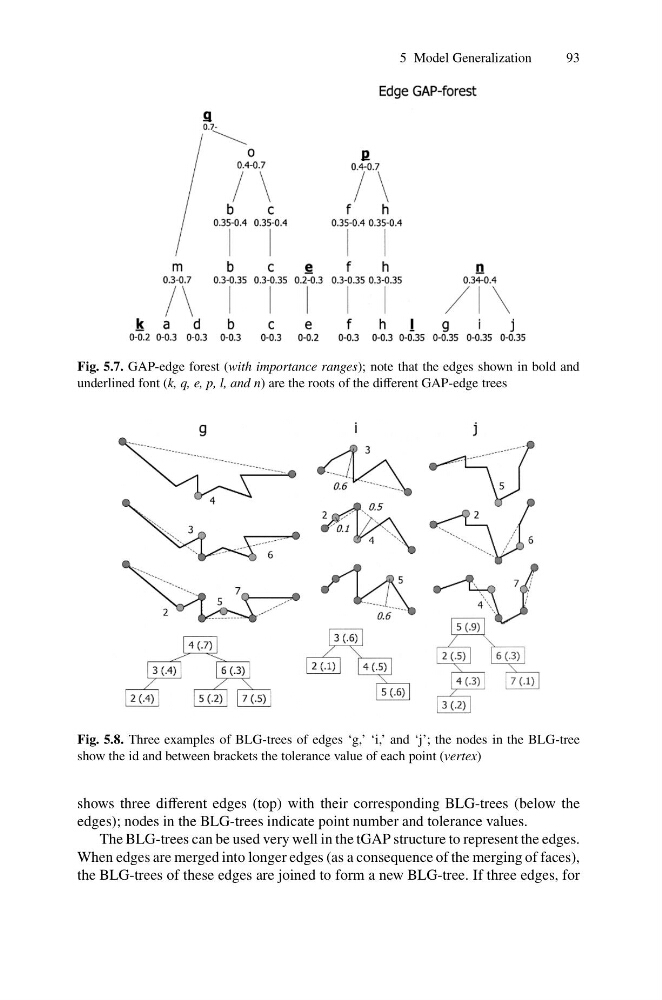
Fig. 5.7. GAP-edge forest (with importance ranges); note that the edges shown in bold and
underlined font (k, q, e, p, l, and n) are the roots of the different GAP-edge trees
Fig. 5.8. Three examples of BLG-trees of edges ‘g,’ ‘i,’ and ‘j’; the nodes in the BLG-tree
show the id and between brackets the tolerance value of each point (vertex)
shows three different edges (top) with their corresponding BLG-trees (below the
edges); nodes in the BLG-trees indicate point number and tolerance values.
The BLG-trees can be used very well in the tGAP structure to represent the edges.
When edges are merged into longer edges (as a consequence of the merging of faces),
the BLG-trees of these edges are joined to form a new BLG-tree. If three edges, for
93
Fig. 5.7. GAP-edge forest (with importance ranges); note that the edges shown in bold and
underlined font (k, q, e, p, l, and n) are the roots of the different GAP-edge trees
Fig. 5.8. Three examples of BLG-trees of edges ‘g,’ ‘i,’ and ‘j’; the nodes in the BLG-tree
show the id and between brackets the tolerance value of each point (vertex)
shows three different edges (top) with their corresponding BLG-trees (below the
edges); nodes in the BLG-trees indicate point number and tolerance values.
The BLG-trees can be used very well in the tGAP structure to represent the edges.
When edges are merged into longer edges (as a consequence of the merging of faces),
the BLG-trees of these edges are joined to form a new BLG-tree. If three edges, for