

2 GeoMTGM
31
........
........
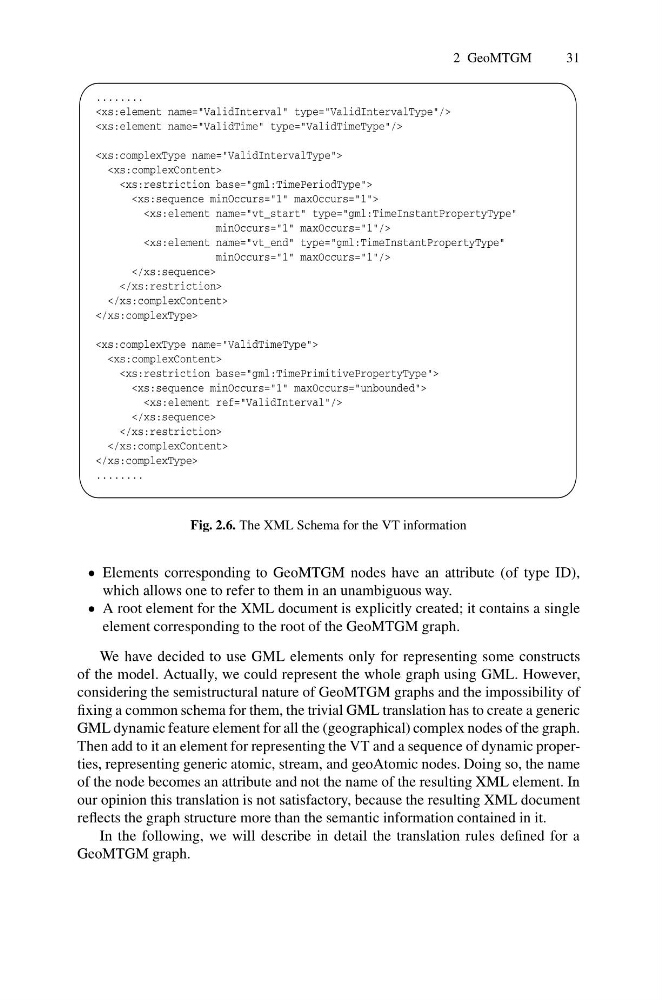
Fig. 2.6. The XML Schema for the VT information
• Elements corresponding to GeoMTGM nodes have an attribute (of type ID),
which allows one to refer to them in an unambiguous way.
• A root element for the XML document is explicitly created; it contains a single
element corresponding to the root of the GeoMTGM graph.
We have decided to use GML elements only for representing some constructs
of the model. Actually, we could represent the whole graph using GML. However,
considering the semistructural nature of GeoMTGM graphs and the impossibility of
fixing a common schema for them, the trivial GML translation has to create a generic
GML dynamic feature element for all the (geographical) complex nodes of the graph.
Then add to it an element for representing the VT and a sequence of dynamic properties, representing generic atomic, stream, and geoAtomic nodes. Doing so, the name
of the node becomes an attribute and not the name of the resulting XML element. In
our opinion this translation is not satisfactory, because the resulting XML document
reflects the graph structure more than the semantic information contained in it.
In the following, we will describe in detail the translation rules defined for a
GeoMTGM graph.
31
........
........
Fig. 2.6. The XML Schema for the VT information
• Elements corresponding to GeoMTGM nodes have an attribute (of type ID),
which allows one to refer to them in an unambiguous way.
• A root element for the XML document is explicitly created; it contains a single
element corresponding to the root of the GeoMTGM graph.
We have decided to use GML elements only for representing some constructs
of the model. Actually, we could represent the whole graph using GML. However,
considering the semistructural nature of GeoMTGM graphs and the impossibility of
fixing a common schema for them, the trivial GML translation has to create a generic
GML dynamic feature element for all the (geographical) complex nodes of the graph.
Then add to it an element for representing the VT and a sequence of dynamic properties, representing generic atomic, stream, and geoAtomic nodes. Doing so, the name
of the node becomes an attribute and not the name of the resulting XML element. In
our opinion this translation is not satisfactory, because the resulting XML document
reflects the graph structure more than the semantic information contained in it.
In the following, we will describe in detail the translation rules defined for a
GeoMTGM graph.