

176
H. Siegel et al.
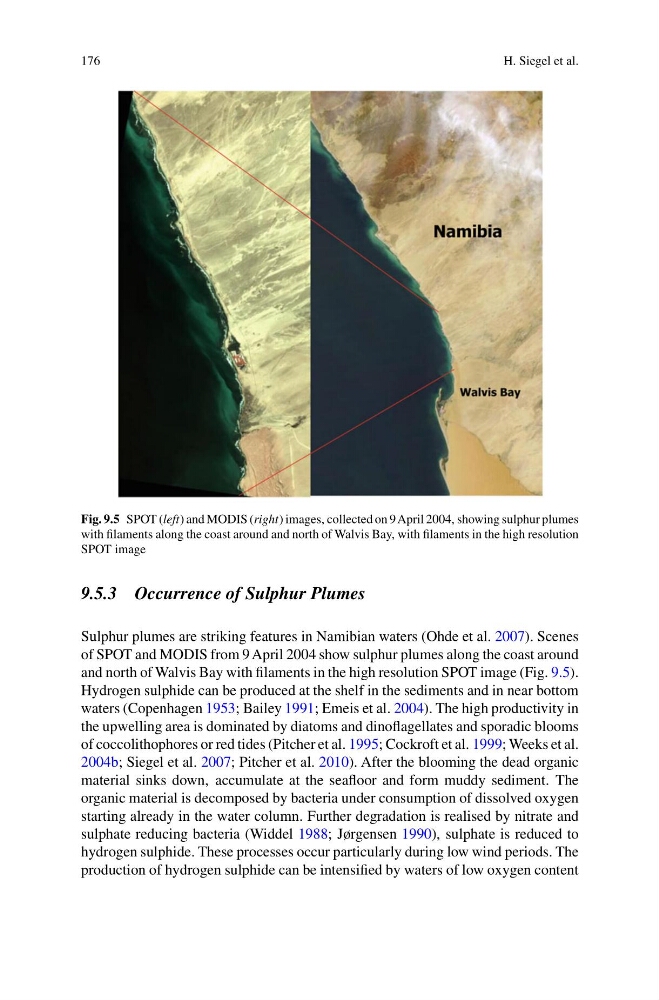
Fig. 9.5 SPOT (left) and MODIS (right) images, collected on 9 April 2004, showing sulphur plumes
with filaments along the coast around and north of Walvis Bay, with filaments in the high resolution
SPOT image
9.5.3 Occurrence of Sulphur Plumes
Sulphur plumes are striking features in Namibian waters (Ohde et al. 2007). Scenes
of SPOT and MODIS from 9 April 2004 show sulphur plumes along the coast around
and north of Walvis Bay with filaments in the high resolution SPOT image (Fig. 9.5).
Hydrogen sulphide can be produced at the shelf in the sediments and in near bottom
waters (Copenhagen 1953; Bailey 1991; Emeis et al. 2004). The high productivity in
the upwelling area is dominated by diatoms and dinoflagellates and sporadic blooms
of coccolithophores or red tides (Pitcher et al. 1995; Cockroft et al. 1999; Weeks et al.
2004b; Siegel et al. 2007; Pitcher et al. 2010). After the blooming the dead organic
material sinks down, accumulate at the seafloor and form muddy sediment. The
organic material is decomposed by bacteria under consumption of dissolved oxygen
starting already in the water column. Further degradation is realised by nitrate and
sulphate reducing bacteria (Widdel 1988; Jørgensen 1990), sulphate is reduced to
hydrogen sulphide. These processes occur particularly during low wind periods. The
production of hydrogen sulphide can be intensified by waters of low oxygen content
H. Siegel et al.
Fig. 9.5 SPOT (left) and MODIS (right) images, collected on 9 April 2004, showing sulphur plumes
with filaments along the coast around and north of Walvis Bay, with filaments in the high resolution
SPOT image
9.5.3 Occurrence of Sulphur Plumes
Sulphur plumes are striking features in Namibian waters (Ohde et al. 2007). Scenes
of SPOT and MODIS from 9 April 2004 show sulphur plumes along the coast around
and north of Walvis Bay with filaments in the high resolution SPOT image (Fig. 9.5).
Hydrogen sulphide can be produced at the shelf in the sediments and in near bottom
waters (Copenhagen 1953; Bailey 1991; Emeis et al. 2004). The high productivity in
the upwelling area is dominated by diatoms and dinoflagellates and sporadic blooms
of coccolithophores or red tides (Pitcher et al. 1995; Cockroft et al. 1999; Weeks et al.
2004b; Siegel et al. 2007; Pitcher et al. 2010). After the blooming the dead organic
material sinks down, accumulate at the seafloor and form muddy sediment. The
organic material is decomposed by bacteria under consumption of dissolved oxygen
starting already in the water column. Further degradation is realised by nitrate and
sulphate reducing bacteria (Widdel 1988; Jørgensen 1990), sulphate is reduced to
hydrogen sulphide. These processes occur particularly during low wind periods. The
production of hydrogen sulphide can be intensified by waters of low oxygen content