

160
A. G. Kostianoy et al.
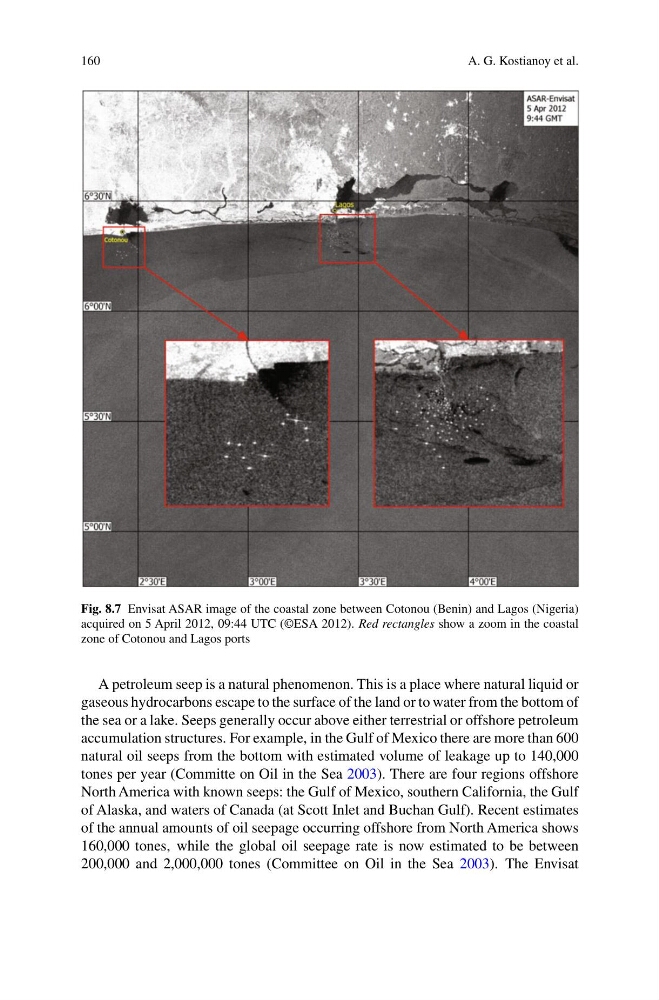
Fig. 8.7 Envisat ASAR image of the coastal zone between Cotonou (Benin) and Lagos (Nigeria)
acquired on 5 April 2012, 09:44 UTC (©ESA 2012). Red rectangles show a zoom in the coastal
zone of Cotonou and Lagos ports
A petroleum seep is a natural phenomenon. This is a place where natural liquid or
gaseous hydrocarbons escape to the surface of the land or to water from the bottom of
the sea or a lake. Seeps generally occur above either terrestrial or offshore petroleum
accumulation structures. For example, in the Gulf of Mexico there are more than 600
natural oil seeps from the bottom with estimated volume of leakage up to 140,000
tones per year (Committe on Oil in the Sea 2003). There are four regions offshore
North America with known seeps: the Gulf of Mexico, southern California, the Gulf
of Alaska, and waters of Canada (at Scott Inlet and Buchan Gulf). Recent estimates
of the annual amounts of oil seepage occurring offshore from North America shows
160,000 tones, while the global oil seepage rate is now estimated to be between
200,000 and 2,000,000 tones (Committee on Oil in the Sea 2003). The Envisat
A. G. Kostianoy et al.
Fig. 8.7 Envisat ASAR image of the coastal zone between Cotonou (Benin) and Lagos (Nigeria)
acquired on 5 April 2012, 09:44 UTC (©ESA 2012). Red rectangles show a zoom in the coastal
zone of Cotonou and Lagos ports
A petroleum seep is a natural phenomenon. This is a place where natural liquid or
gaseous hydrocarbons escape to the surface of the land or to water from the bottom of
the sea or a lake. Seeps generally occur above either terrestrial or offshore petroleum
accumulation structures. For example, in the Gulf of Mexico there are more than 600
natural oil seeps from the bottom with estimated volume of leakage up to 140,000
tones per year (Committe on Oil in the Sea 2003). There are four regions offshore
North America with known seeps: the Gulf of Mexico, southern California, the Gulf
of Alaska, and waters of Canada (at Scott Inlet and Buchan Gulf). Recent estimates
of the annual amounts of oil seepage occurring offshore from North America shows
160,000 tones, while the global oil seepage rate is now estimated to be between
200,000 and 2,000,000 tones (Committee on Oil in the Sea 2003). The Envisat