

8 Externalities in Aquaculture
265
economic analysis is much broader and encompasses elements that may be
ignored by the private investor but which can imply significant costs to society.
The need for economic analysis stems from the fact that projects intended to yield
benefits in the form of the provision of goods and services may negatively affect
society as a whole. This may be the case with the environmental impacts of aquaculture or other production activities. When these impacts are not compensated
we are in the presence of a market failure, defined in economics as an externality.
For instance, this may be the case where the presence of sea cages reduces the
enjoyment of visitors to the coast, but this goes uncompensated by the fish farmer
responsible. Another example is the lack of compensation offered to fish farmers
and fishermen for the decrease in production due to an oil spill. Externalities do
not appear in financial appraisals. Economic analysis attempts to appraise investment projects in ways that correct for market failures such as environmental
externalities. In order to take into account the impact on social welfare of changes
in the quantity or quality of environmental assets, economists assign a monetary
value to them so that they are considered along with the ordinary inputs (labour,
capital, raw materials) and outputs (goods and/or services) of the project being
appraised.
3 The Value of an Investment Project
In both financial and economic appraisals, the procedure for assessing the value of
a project is to convert the stream of future costs and benefits into ‘present’ values.
In this way, costs and benefits that occur at different times become comparable.
This is done through discounting. The need to discount future values stems from
the fact that costs and benefits in the future are not valued as highly as equivalent
costs and benefits occurring in the present. For example, given the choice of receiving € 100 today and € 100 in one-year time, most individuals if not all would prefer
the first option. However, if the amount offered in the future was greater than € 100,
for instance € 105, many of those individuals would prefer the future amount. This
implies that their rate of time preference is at most 5% per year.
265
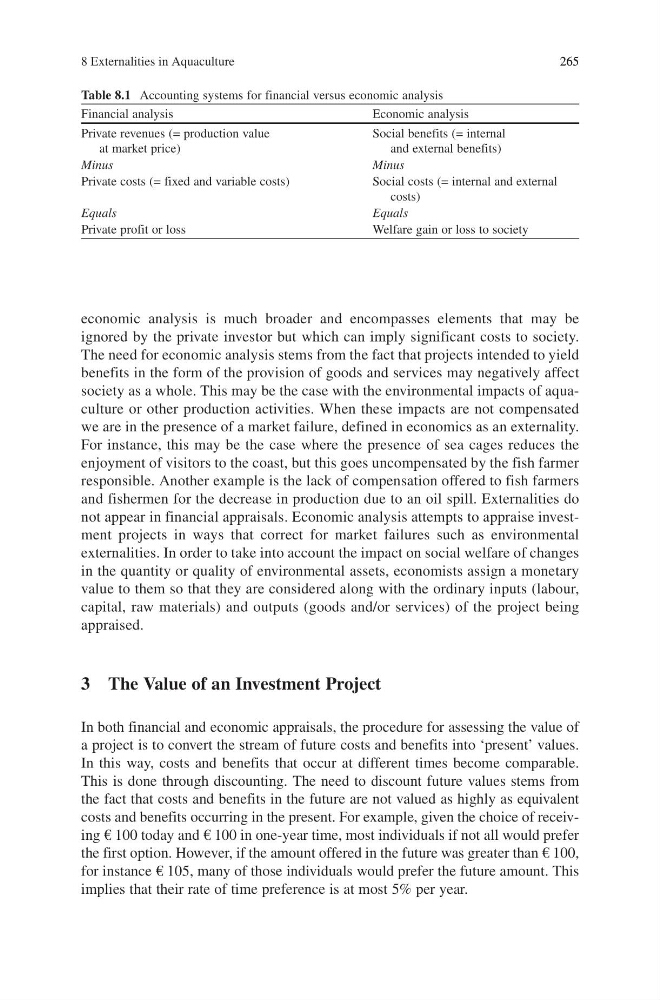
Table 8.1 Accounting systems for financial versus economic analysis
Financial analysis
Economic analysis
Private revenues (= production value
Social benefits (= internal
at market price)
and external benefits)
Minus
Minus
Private costs (= fixed and variable costs)
Social costs (= internal and external
costs)
Equals
Equals
Private profit or loss
Welfare gain or loss to society
265
economic analysis is much broader and encompasses elements that may be
ignored by the private investor but which can imply significant costs to society.
The need for economic analysis stems from the fact that projects intended to yield
benefits in the form of the provision of goods and services may negatively affect
society as a whole. This may be the case with the environmental impacts of aquaculture or other production activities. When these impacts are not compensated
we are in the presence of a market failure, defined in economics as an externality.
For instance, this may be the case where the presence of sea cages reduces the
enjoyment of visitors to the coast, but this goes uncompensated by the fish farmer
responsible. Another example is the lack of compensation offered to fish farmers
and fishermen for the decrease in production due to an oil spill. Externalities do
not appear in financial appraisals. Economic analysis attempts to appraise investment projects in ways that correct for market failures such as environmental
externalities. In order to take into account the impact on social welfare of changes
in the quantity or quality of environmental assets, economists assign a monetary
value to them so that they are considered along with the ordinary inputs (labour,
capital, raw materials) and outputs (goods and/or services) of the project being
appraised.
3 The Value of an Investment Project
In both financial and economic appraisals, the procedure for assessing the value of
a project is to convert the stream of future costs and benefits into ‘present’ values.
In this way, costs and benefits that occur at different times become comparable.
This is done through discounting. The need to discount future values stems from
the fact that costs and benefits in the future are not valued as highly as equivalent
costs and benefits occurring in the present. For example, given the choice of receiving € 100 today and € 100 in one-year time, most individuals if not all would prefer
the first option. However, if the amount offered in the future was greater than € 100,
for instance € 105, many of those individuals would prefer the future amount. This
implies that their rate of time preference is at most 5% per year.
265
Table 8.1 Accounting systems for financial versus economic analysis
Financial analysis
Economic analysis
Private revenues (= production value
Social benefits (= internal
at market price)
and external benefits)
Minus
Minus
Private costs (= fixed and variable costs)
Social costs (= internal and external
costs)
Equals
Equals
Private profit or loss
Welfare gain or loss to society