

7 NGO Approaches to Aquaculture
229
Aquaculture production has become of active interest to a number of nongovernmental organizations (NGOs) around the world. Their interest is to a large
extent aimed at addressing the on-the-ground environmental or social impacts that
threaten or undermine their ability to deliver on their overall missions of conservation
or social welfare. In this regard, as the aquaculture industry continues to grow, a
number of tangible, negative impacts are increasing. The problems that are most
often cited with regard to aquaculture are food safety and the environmental and
social impacts of the different facets of the industry.
An NGO is defined by the World Resources Institute (1992) as “a non-profit
group or association organized outside of institutionalized political structures to
realize particular social objectives (such as environmental protection) or serve particular constituencies (such as indigenous peoples). NGO activities range from
research, information distribution, training, local organization, and community
service to legal advocacy, lobbying for legislative change, and civil disobedience.
NGOs range in size from small groups within a particular community to huge
membership groups with a national or international scope.”
NGOs often serve as self-appointed watchdogs for society and at the heart of
their interests is the sustainability of human activities, including food production.
Sustainability incorporates economic, social and environmental components, and
for conservation-focused NGOs, environmental sustainability serves as a base on
which economic and social sustainability can be built. For aquaculture, environmental sustainability is necessary at the local farm level, the larger ecosystem level,
and the level of international trade.
Some environmental NGOs are interested in aquaculture not only because they
feel it currently has unacceptable negative impacts, but also because of its potential
to reduce pressure on the world’s oceans, and in at least some cases, replace overfished species in the marketplace. While this is certainly not always the case, it is
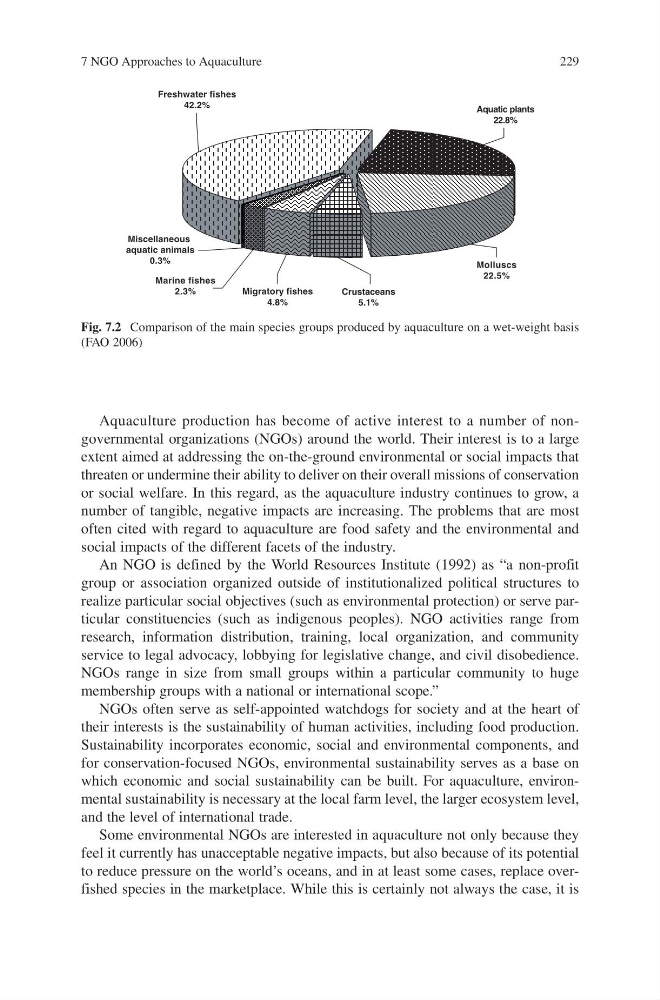
Fig. 7.2 Comparison of the main species groups produced by aquaculture on a wet-weight basis
(FAO 2006)
Freshwater fishes
42.2%
Aquatic plants
22.8%
Molluscs
22.5%
Crustaceans
5.1%
Migratory fishes
4.8%
Marine fishes
2.3%
Miscellaneous
aquatic animals
0.3%
229
Aquaculture production has become of active interest to a number of nongovernmental organizations (NGOs) around the world. Their interest is to a large
extent aimed at addressing the on-the-ground environmental or social impacts that
threaten or undermine their ability to deliver on their overall missions of conservation
or social welfare. In this regard, as the aquaculture industry continues to grow, a
number of tangible, negative impacts are increasing. The problems that are most
often cited with regard to aquaculture are food safety and the environmental and
social impacts of the different facets of the industry.
An NGO is defined by the World Resources Institute (1992) as “a non-profit
group or association organized outside of institutionalized political structures to
realize particular social objectives (such as environmental protection) or serve particular constituencies (such as indigenous peoples). NGO activities range from
research, information distribution, training, local organization, and community
service to legal advocacy, lobbying for legislative change, and civil disobedience.
NGOs range in size from small groups within a particular community to huge
membership groups with a national or international scope.”
NGOs often serve as self-appointed watchdogs for society and at the heart of
their interests is the sustainability of human activities, including food production.
Sustainability incorporates economic, social and environmental components, and
for conservation-focused NGOs, environmental sustainability serves as a base on
which economic and social sustainability can be built. For aquaculture, environmental sustainability is necessary at the local farm level, the larger ecosystem level,
and the level of international trade.
Some environmental NGOs are interested in aquaculture not only because they
feel it currently has unacceptable negative impacts, but also because of its potential
to reduce pressure on the world’s oceans, and in at least some cases, replace overfished species in the marketplace. While this is certainly not always the case, it is
Fig. 7.2 Comparison of the main species groups produced by aquaculture on a wet-weight basis
(FAO 2006)
Freshwater fishes
42.2%
Aquatic plants
22.8%
Molluscs
22.5%
Crustaceans
5.1%
Migratory fishes
4.8%
Marine fishes
2.3%
Miscellaneous
aquatic animals
0.3%