

6 Safe and Nutritious Aquaculture Produce
205
by affecting growth and health of the fish. This effect could be overcome, for example,
by enzymatic treatment (phytase) of the soy product before inclusion in fish feed
(Storebakken et al. 1998; Vielma et al. 1998). As reviewed by Francis et al. (2001)
several other ANFs from plant derived FM substitutes impact on element bioavailability. Strategies to overcome this problem include actions to eliminate these
ANFs or compensate for their reduced element bioavailability. Despite the fact that
elevated feed levels of the essential trace elements like copper, zinc, manganese
and iron are reflected in respective target organs in the fish, they are not easily
enriched in the fillet (Lall 2002; Lorentzen 1998; Maage 1994).
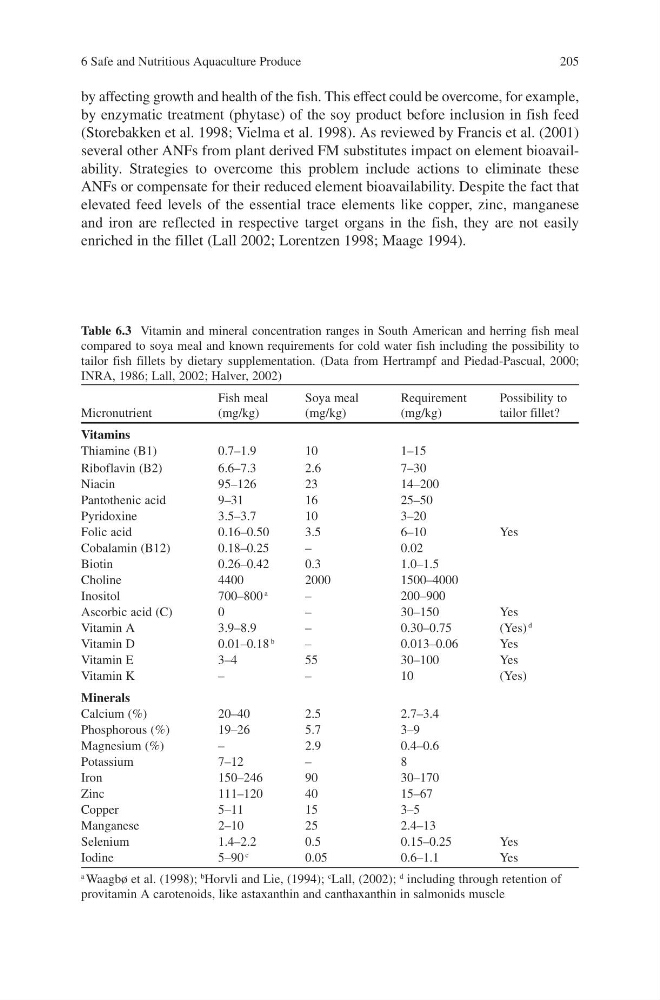
Table 6.3 Vitamin and mineral concentration ranges in South American and herring fish meal
compared to soya meal and known requirements for cold water fish including the possibility to
tailor fish fillets by dietary supplementation. (Data from Hertrampf and Piedad-Pascual, 2000;
INRA, 1986; Lall, 2002; Halver, 2002)
Micronutrient
Fish meal
(mg/kg)
Soya meal
(mg/kg)
Requirement
(mg/kg)
Possibility to
tailor fillet?
Vitamins
Thiamine (B1)
0.7–1.9
10
1–15
Riboflavin (B2)
6.6–7.3
2.6
7–30
Niacin
95–126
23
14–200
Pantothenic acid
9–31
16
25–50
Pyridoxine
3.5–3.7
10
3–20
Folic acid
0.16–0.50
3.5
6–10
Yes
Cobalamin (B12)
0.18–0.25
–
0.02
Biotin
0.26–0.42
0.3
1.0–1.5
Choline
4400
2000
1500–4000
Inositol
700–800
a
–
200–900
Ascorbic acid (C)
0
–
30–150
Yes
Vitamin A
3.9–8.9
–
0.30–0.75
(Yes)
d
Vitamin D
0.01–0.18
b
–
0.013–0.06
Yes
Vitamin E
3–4
55
30–100
Yes
Vitamin K
–
–
10
(Yes)
Minerals
Calcium (%)
20–40
2.5
2.7–3.4
Phosphorous (%)
19–26
5.7
3–9
Magnesium (%)
–
2.9
0.4–0.6
Potassium
7–12
–
8
Iron
150–246
90
30–170
Zinc
111–120
40
15–67
Copper
5–11
15
3–5
Manganese
2–10
25
2.4–13
Selenium
1.4–2.2
0.5
0.15–0.25
Yes
Iodine
5–90
c
0.05
0.6–1.1
Yes
a Waagbø et al. (1998);
b Horvli and Lie, (1994);
c
Lall, (2002);
d including through retention of
provitamin A carotenoids, like astaxanthin and canthaxanthin in salmonids muscle
205
by affecting growth and health of the fish. This effect could be overcome, for example,
by enzymatic treatment (phytase) of the soy product before inclusion in fish feed
(Storebakken et al. 1998; Vielma et al. 1998). As reviewed by Francis et al. (2001)
several other ANFs from plant derived FM substitutes impact on element bioavailability. Strategies to overcome this problem include actions to eliminate these
ANFs or compensate for their reduced element bioavailability. Despite the fact that
elevated feed levels of the essential trace elements like copper, zinc, manganese
and iron are reflected in respective target organs in the fish, they are not easily
enriched in the fillet (Lall 2002; Lorentzen 1998; Maage 1994).
Table 6.3 Vitamin and mineral concentration ranges in South American and herring fish meal
compared to soya meal and known requirements for cold water fish including the possibility to
tailor fish fillets by dietary supplementation. (Data from Hertrampf and Piedad-Pascual, 2000;
INRA, 1986; Lall, 2002; Halver, 2002)
Micronutrient
Fish meal
(mg/kg)
Soya meal
(mg/kg)
Requirement
(mg/kg)
Possibility to
tailor fillet?
Vitamins
Thiamine (B1)
0.7–1.9
10
1–15
Riboflavin (B2)
6.6–7.3
2.6
7–30
Niacin
95–126
23
14–200
Pantothenic acid
9–31
16
25–50
Pyridoxine
3.5–3.7
10
3–20
Folic acid
0.16–0.50
3.5
6–10
Yes
Cobalamin (B12)
0.18–0.25
–
0.02
Biotin
0.26–0.42
0.3
1.0–1.5
Choline
4400
2000
1500–4000
Inositol
700–800
a
–
200–900
Ascorbic acid (C)
0
–
30–150
Yes
Vitamin A
3.9–8.9
–
0.30–0.75
(Yes)
d
Vitamin D
0.01–0.18
b
–
0.013–0.06
Yes
Vitamin E
3–4
55
30–100
Yes
Vitamin K
–
–
10
(Yes)
Minerals
Calcium (%)
20–40
2.5
2.7–3.4
Phosphorous (%)
19–26
5.7
3–9
Magnesium (%)
–
2.9
0.4–0.6
Potassium
7–12
–
8
Iron
150–246
90
30–170
Zinc
111–120
40
15–67
Copper
5–11
15
3–5
Manganese
2–10
25
2.4–13
Selenium
1.4–2.2
0.5
0.15–0.25
Yes
Iodine
5–90
c
0.05
0.6–1.1
Yes
a Waagbø et al. (1998);
b Horvli and Lie, (1994);
c
Lall, (2002);
d including through retention of
provitamin A carotenoids, like astaxanthin and canthaxanthin in salmonids muscle