

530
12 Species Case Studies
events occur given the fairly regular and long durations (weeks to month) spawning
of many species, is an interesting subject. Perhaps a given cohort is lucky in encountering ideal conditions for survival, while others are doomed to not succeed?
Robertson ( 1983 ) reported three possible patterns of diel spawning in surgeonfi shes; early morning (blue-banded surgeonfi sh – Acanthurus lineatus , white-spotted surgeonfi shes – A. guttatus ), peak in late afternoon (brown surgeonfi sh – A.
nigrofuscus , striped bristletooth – C. striatus ) and dusk spawners (Atlantic
Acanthurus , brushtail tang – Zebrasoma scopas in some areas). The last pattern may
be most common where tidal range and currents are minimal. Among those species
of surgeonfi shes known to have spawning aggregations, most also engage in pairspawning, often at the same times and places as aggregations. In Palau these dual
modes of spawning produced high numbers of eggs, principally from aggregations
of brown surgeonfi sh and striped bristletooth, (Hamner et al. 2007 ) along with
smaller outputs of eggs from pair spawning.
12.21.3 Aggregation Occurrence Across the Family
Among the six genera of surgeonfi shes, only Paracanthurus and Prionurus lack
records of aggregation. Acanthurus has the largest number of species and the most
spawning aggregation records. Where surgeonfi sh aggregations have been followed
for some years, the locations of aggregations have remained consistent over that
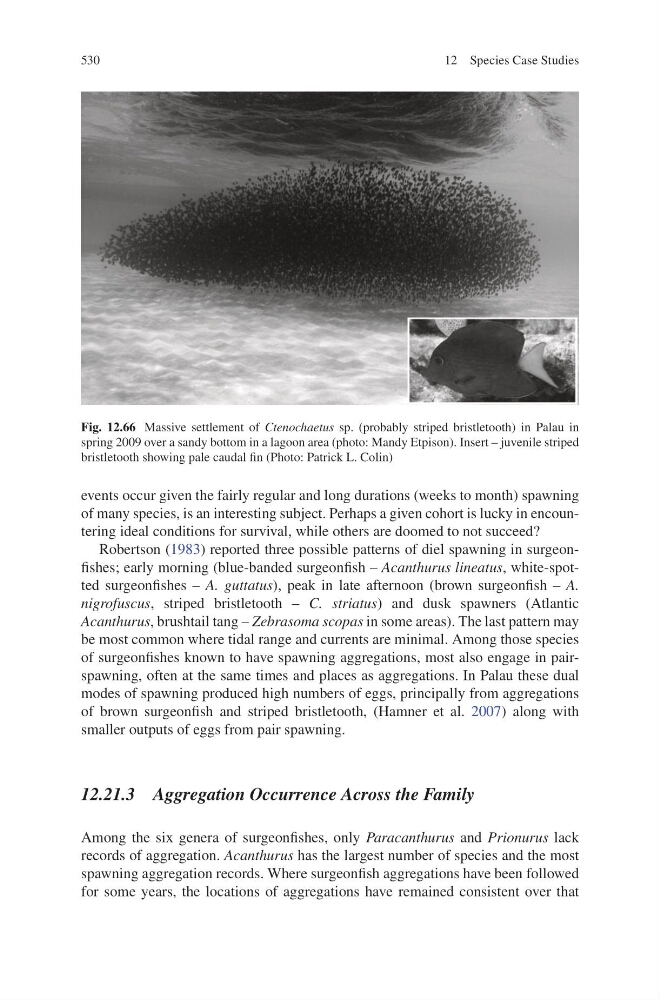
Fig. 12.66 Massive settlement of Ctenochaetus sp. (probably striped bristletooth) in Palau in
spring 2009 over a sandy bottom in a lagoon area (photo: Mandy Etpison). Insert – juvenile striped
bristletooth showing pale caudal fi n (Photo: Patrick L. Colin)
12 Species Case Studies
events occur given the fairly regular and long durations (weeks to month) spawning
of many species, is an interesting subject. Perhaps a given cohort is lucky in encountering ideal conditions for survival, while others are doomed to not succeed?
Robertson ( 1983 ) reported three possible patterns of diel spawning in surgeonfi shes; early morning (blue-banded surgeonfi sh – Acanthurus lineatus , white-spotted surgeonfi shes – A. guttatus ), peak in late afternoon (brown surgeonfi sh – A.
nigrofuscus , striped bristletooth – C. striatus ) and dusk spawners (Atlantic
Acanthurus , brushtail tang – Zebrasoma scopas in some areas). The last pattern may
be most common where tidal range and currents are minimal. Among those species
of surgeonfi shes known to have spawning aggregations, most also engage in pairspawning, often at the same times and places as aggregations. In Palau these dual
modes of spawning produced high numbers of eggs, principally from aggregations
of brown surgeonfi sh and striped bristletooth, (Hamner et al. 2007 ) along with
smaller outputs of eggs from pair spawning.
12.21.3 Aggregation Occurrence Across the Family
Among the six genera of surgeonfi shes, only Paracanthurus and Prionurus lack
records of aggregation. Acanthurus has the largest number of species and the most
spawning aggregation records. Where surgeonfi sh aggregations have been followed
for some years, the locations of aggregations have remained consistent over that
Fig. 12.66 Massive settlement of Ctenochaetus sp. (probably striped bristletooth) in Palau in
spring 2009 over a sandy bottom in a lagoon area (photo: Mandy Etpison). Insert – juvenile striped
bristletooth showing pale caudal fi n (Photo: Patrick L. Colin)