

498
12 Species Case Studies
“Dancer” who were diving regularly at the site. Mandy Etpison also documented the
spawning at this site. A large school of a few thousand longnose parrotfi sh was seen
at Blue Corner in the aggregation area in 11 April 2009, 2 days after the full moon.
Aggregation and spawning has been seen during April, May and December 2010,
occurring 3 days after the new moon in April and 6 days after the full moon at other
times. The lunar cycling is not fully documented.
All aggregation fi sh had a grey body with yellow tail. Schooling fi sh on the reef
swam very actively, often changing direction as a school. Terminal phase males
actively courted both before and at the time aggregation spawning occurred.
Courting males swam rapidly around a possible temporary territory using pectoral
sculling, and had the caudal fi n slightly compressed and the mouth held open
(Fig. 12.44 ). The white to brown bar on the body becomes apparent when males
were courting females. The colour could be changed within seconds to the opposite,
but the role of the two different patterns is not yet clear. The terminal male also had
a pink anterior portion to the pectoral fi n, which is not normally seen. Sharks and
other fi shes are often swimming amongst them with no reaction from the parrotfi sh
or predation attempts by sharks.
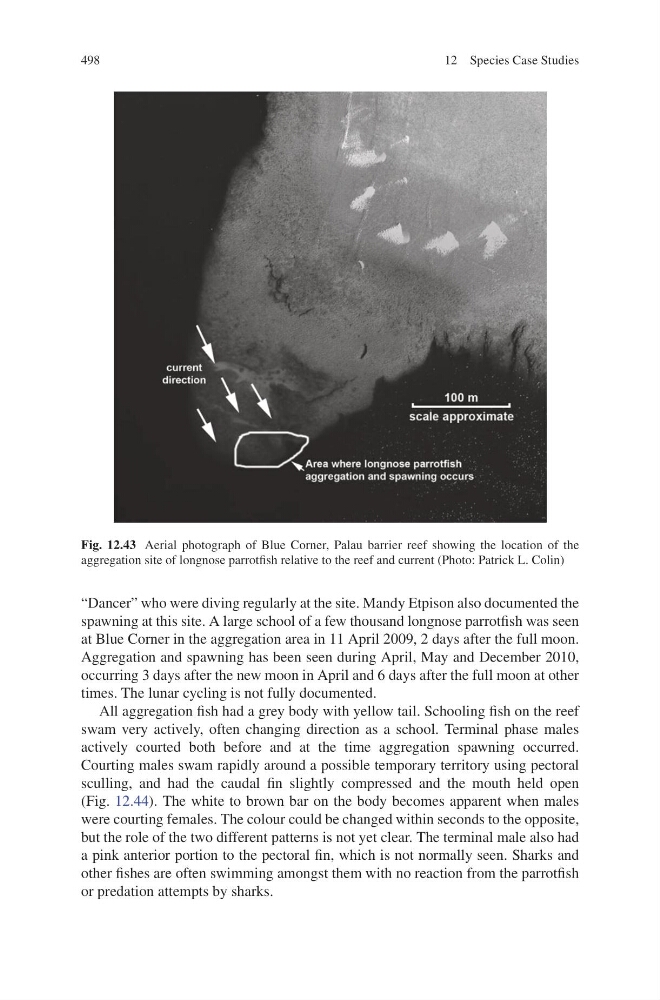
Fig. 12.43 Aerial photograph of Blue Corner, Palau barrier reef showing the location of the
aggregation site of longnose parrotfi sh relative to the reef and current (Photo: Patrick L. Colin)
12 Species Case Studies
“Dancer” who were diving regularly at the site. Mandy Etpison also documented the
spawning at this site. A large school of a few thousand longnose parrotfi sh was seen
at Blue Corner in the aggregation area in 11 April 2009, 2 days after the full moon.
Aggregation and spawning has been seen during April, May and December 2010,
occurring 3 days after the new moon in April and 6 days after the full moon at other
times. The lunar cycling is not fully documented.
All aggregation fi sh had a grey body with yellow tail. Schooling fi sh on the reef
swam very actively, often changing direction as a school. Terminal phase males
actively courted both before and at the time aggregation spawning occurred.
Courting males swam rapidly around a possible temporary territory using pectoral
sculling, and had the caudal fi n slightly compressed and the mouth held open
(Fig. 12.44 ). The white to brown bar on the body becomes apparent when males
were courting females. The colour could be changed within seconds to the opposite,
but the role of the two different patterns is not yet clear. The terminal male also had
a pink anterior portion to the pectoral fi n, which is not normally seen. Sharks and
other fi shes are often swimming amongst them with no reaction from the parrotfi sh
or predation attempts by sharks.
Fig. 12.43 Aerial photograph of Blue Corner, Palau barrier reef showing the location of the
aggregation site of longnose parrotfi sh relative to the reef and current (Photo: Patrick L. Colin)