

441
12 Species Case Studies
12.7.3 Reproduction and Aggregation
Females start maturing at around age 3 or 4 years with 100% reaching maturity by
age 6 (Murdy et al. 1997 ; Heemstra et al. 2002 ) . They are protogynous hermaphrodites, changing sex from female to male over the course of their life-time (Coleman
et al. 1996 ; Koenig et al. 1996 ) . Collins et al. ( 1998 ) found that males in the Gulf
of Mexico range in size from about 886–1,290 mm TL, and in age from about
7–22 years old. Sex change is believed to occur only in a social context when fi sh
are together in groups (CCK unpublished data). The primary time that males and
females co-occur is during the northern hemisphere winter spawning season on offshore reefs where they aggregate at depths exceeding 40 m. They appear to reside
separately at other times of the year. Indeed, females form pre-spawning aggregations in relatively shallow water (20 m) before moving to shelf-edge reefs (50–100 m)
for spawning (Coleman et al. 1996 ; Koenig et al. 1996 ; McGovern et al. 1998b ;
Sedberry et al. 2006 ) . Outside of the spawning season, males remain on spawning
sites while females move into shallower water. So the window of opportunity to
initiate sex change through social mediation appears to be limited in time and place
to the aggregations.
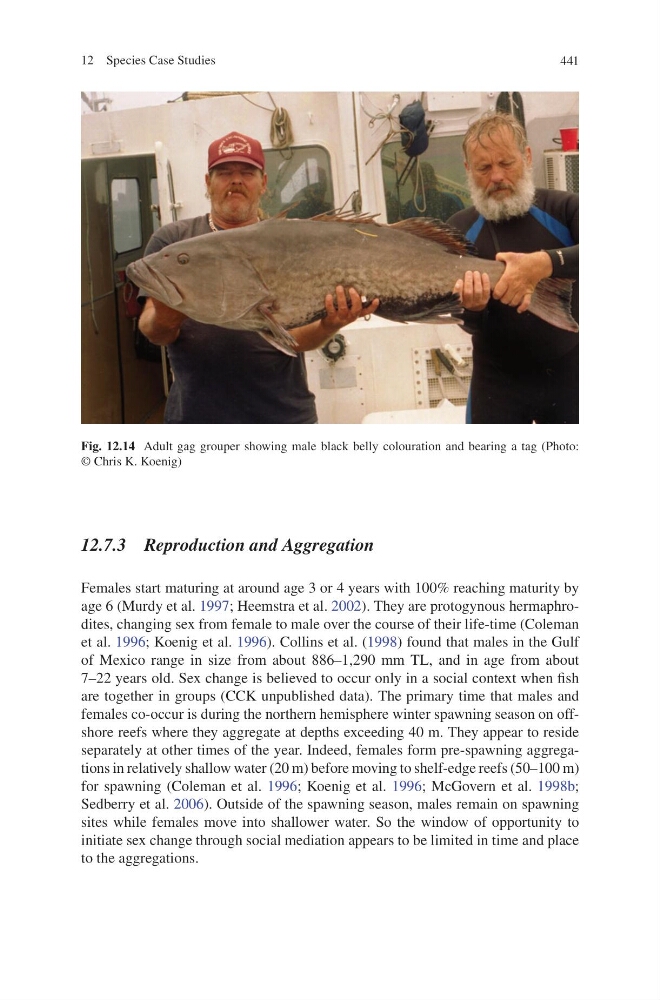
Fig. 12.14 Adult gag grouper showing male black belly colouration and bearing a tag (Photo:
© Chris K. Koenig)
12 Species Case Studies
12.7.3 Reproduction and Aggregation
Females start maturing at around age 3 or 4 years with 100% reaching maturity by
age 6 (Murdy et al. 1997 ; Heemstra et al. 2002 ) . They are protogynous hermaphrodites, changing sex from female to male over the course of their life-time (Coleman
et al. 1996 ; Koenig et al. 1996 ) . Collins et al. ( 1998 ) found that males in the Gulf
of Mexico range in size from about 886–1,290 mm TL, and in age from about
7–22 years old. Sex change is believed to occur only in a social context when fi sh
are together in groups (CCK unpublished data). The primary time that males and
females co-occur is during the northern hemisphere winter spawning season on offshore reefs where they aggregate at depths exceeding 40 m. They appear to reside
separately at other times of the year. Indeed, females form pre-spawning aggregations in relatively shallow water (20 m) before moving to shelf-edge reefs (50–100 m)
for spawning (Coleman et al. 1996 ; Koenig et al. 1996 ; McGovern et al. 1998b ;
Sedberry et al. 2006 ) . Outside of the spawning season, males remain on spawning
sites while females move into shallower water. So the window of opportunity to
initiate sex change through social mediation appears to be limited in time and place
to the aggregations.
Fig. 12.14 Adult gag grouper showing male black belly colouration and bearing a tag (Photo:
© Chris K. Koenig)