

431
12 Species Case Studies
banks and concluded that coral-algal areas are the preferred habitat for settling Nassau
grouper. In the same area offshore, Colin et al. ( 1997 ) documented the occurrence of
newly settled Nassau grouper juveniles in rubble mounds by sand tilefi sh ( Malacanthus
plumieri ). Settlement inshore in macroalgae was reported by Dahlgren and Eggleston
( 2001 ) . Aguilar-Perera ( 2006 ) reported young Nassau grouper (60–80 mm TL) associated with seagrass patches, around an old tyre and in a dissolution hole in shallow
bedrock in Mexico. Claydon et al. ( 2009 ) demonstrated use of discarded conch shells
in shallow sand areas surrounding the Turks and Caicos Islands. There is currently no
evidence to indicate which settlement habitat might be preferred, and only with comprehensive and destructive sampling methods such as rotenone could we determine
whether the species settles into more cryptic reef habitats.
12.6.3 Reproductive Biology
Details of reproduction and aggregation activity are known from several areas of the
greater Caribbean (Colin 1992 ; Sadovy and Colin 1995 ; Whaylen et al. 2004 ; 2007 ;
Sala et al. 2001 ; Aguilar-Perera 2006 ; Starr et al. 2007 ) . The Nassau grouper has a
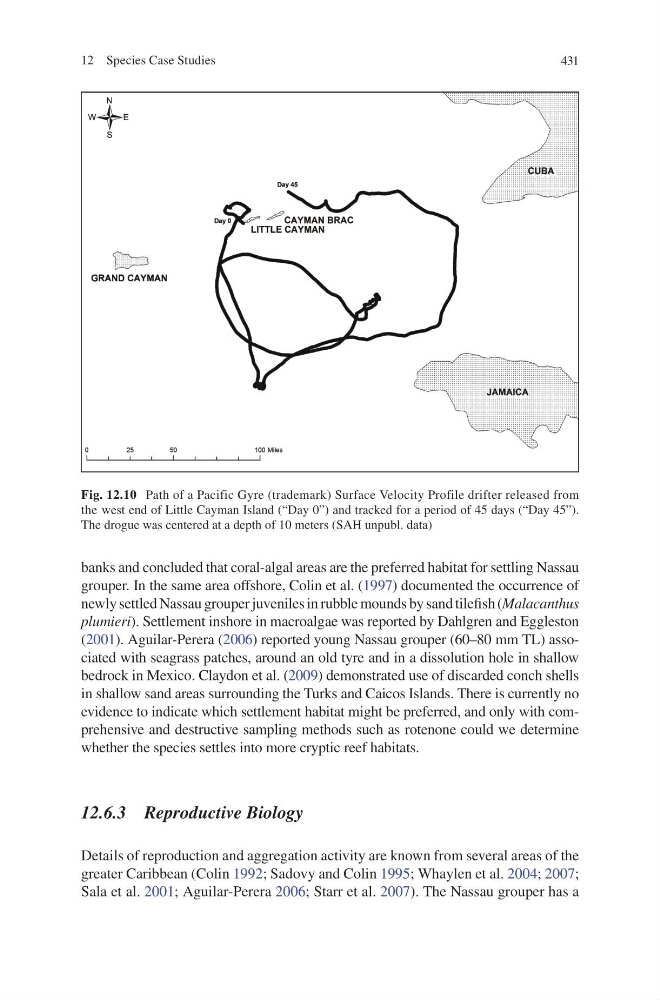
Fig. 12.10 Path of a Pacific Gyre (trademark) Surface Velocity Profile drifter released from
the west end of Little Cayman Island (“Day 0”) and tracked for a period of 45 days (“Day 45”).
The drogue was centered at a depth of 10 meters (SAH unpubl. data)
12 Species Case Studies
banks and concluded that coral-algal areas are the preferred habitat for settling Nassau
grouper. In the same area offshore, Colin et al. ( 1997 ) documented the occurrence of
newly settled Nassau grouper juveniles in rubble mounds by sand tilefi sh ( Malacanthus
plumieri ). Settlement inshore in macroalgae was reported by Dahlgren and Eggleston
( 2001 ) . Aguilar-Perera ( 2006 ) reported young Nassau grouper (60–80 mm TL) associated with seagrass patches, around an old tyre and in a dissolution hole in shallow
bedrock in Mexico. Claydon et al. ( 2009 ) demonstrated use of discarded conch shells
in shallow sand areas surrounding the Turks and Caicos Islands. There is currently no
evidence to indicate which settlement habitat might be preferred, and only with comprehensive and destructive sampling methods such as rotenone could we determine
whether the species settles into more cryptic reef habitats.
12.6.3 Reproductive Biology
Details of reproduction and aggregation activity are known from several areas of the
greater Caribbean (Colin 1992 ; Sadovy and Colin 1995 ; Whaylen et al. 2004 ; 2007 ;
Sala et al. 2001 ; Aguilar-Perera 2006 ; Starr et al. 2007 ) . The Nassau grouper has a
Fig. 12.10 Path of a Pacific Gyre (trademark) Surface Velocity Profile drifter released from
the west end of Little Cayman Island (“Day 0”) and tracked for a period of 45 days (“Day 45”).
The drogue was centered at a depth of 10 meters (SAH unpubl. data)