

383
11 Management of Spawning Aggregations
Additional considerations include sales bans when there are large seasonal
market gluts in catches that could depress prices and cause wastage during spawning periods (which could last several months) (Sect. 8.5.1 , Fig. 11.3 ). Species that
are threatened with extinction should be priorities for management action if aggregations are targeted. For size limits, skin patches can be required on fi llets for ease
of species identifi cation (Sect. 11.3.2 ). Many years may be needed, especially in the
case of long-lived species, before management yields notable increases in fi sh sizes
or catches (Table 11.1 ).
11.3.4 Alternatives to Fishing Spawning Aggregations
Effective conservation of fi shed aggregations typically requires controls during
aggregating periods and, in the short term, there may be direct and/or indirect
economic and food source implications for fi shers and their communities. Mitigation
of negative effects is necessary, especially if it takes many years for the long-term
objective of maintaining or restoring the reproductive function of aggregations and
the benefi ts of higher catches associated with the non-aggregation season to be
achieved. Management initiatives that stop aggregation fi shing should, therefore,
be implemented together with planning for alternative livelihoods, food sources, or
with some form of fi nancial incentive for those communities and fi shers foregoing
catch. Funded incentives and re-employment can reduce impacts on displaced fi shers.
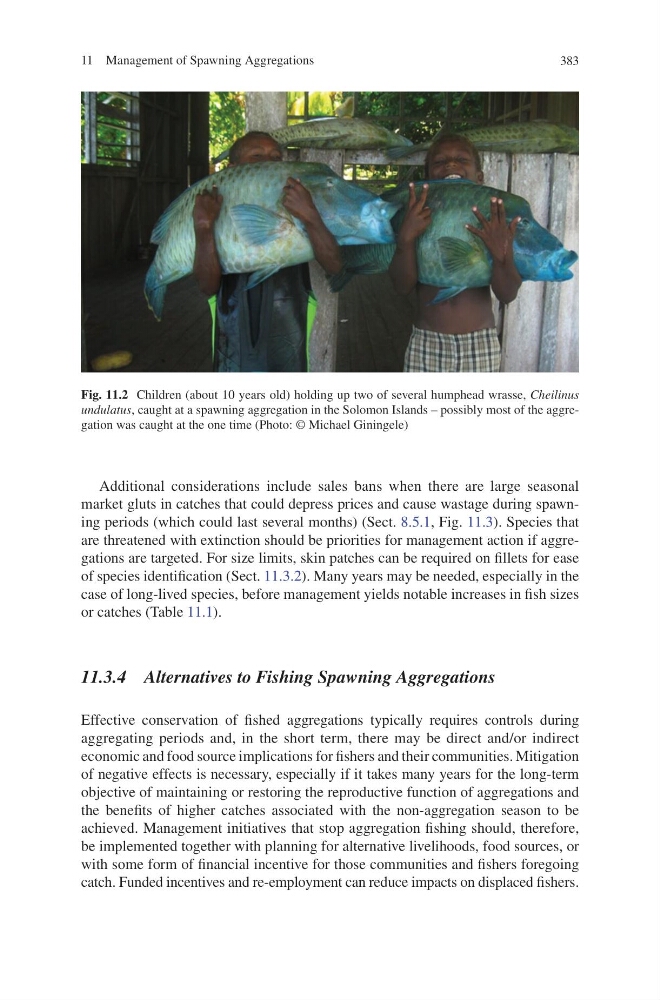
Fig. 11.2 Children (about 10 years old) holding up two of several humphead wrasse, Cheilinus
undulatus , caught at a spawning aggregation in the Solomon Islands – possibly most of the aggregation was caught at the one time (Photo: © Michael Giningele)
11 Management of Spawning Aggregations
Additional considerations include sales bans when there are large seasonal
market gluts in catches that could depress prices and cause wastage during spawning periods (which could last several months) (Sect. 8.5.1 , Fig. 11.3 ). Species that
are threatened with extinction should be priorities for management action if aggregations are targeted. For size limits, skin patches can be required on fi llets for ease
of species identifi cation (Sect. 11.3.2 ). Many years may be needed, especially in the
case of long-lived species, before management yields notable increases in fi sh sizes
or catches (Table 11.1 ).
11.3.4 Alternatives to Fishing Spawning Aggregations
Effective conservation of fi shed aggregations typically requires controls during
aggregating periods and, in the short term, there may be direct and/or indirect
economic and food source implications for fi shers and their communities. Mitigation
of negative effects is necessary, especially if it takes many years for the long-term
objective of maintaining or restoring the reproductive function of aggregations and
the benefi ts of higher catches associated with the non-aggregation season to be
achieved. Management initiatives that stop aggregation fi shing should, therefore,
be implemented together with planning for alternative livelihoods, food sources, or
with some form of fi nancial incentive for those communities and fi shers foregoing
catch. Funded incentives and re-employment can reduce impacts on displaced fi shers.
Fig. 11.2 Children (about 10 years old) holding up two of several humphead wrasse, Cheilinus
undulatus , caught at a spawning aggregation in the Solomon Islands – possibly most of the aggregation was caught at the one time (Photo: © Michael Giningele)