

86
J.H. Choat
environments, many of which support different forms of spawning aggregation
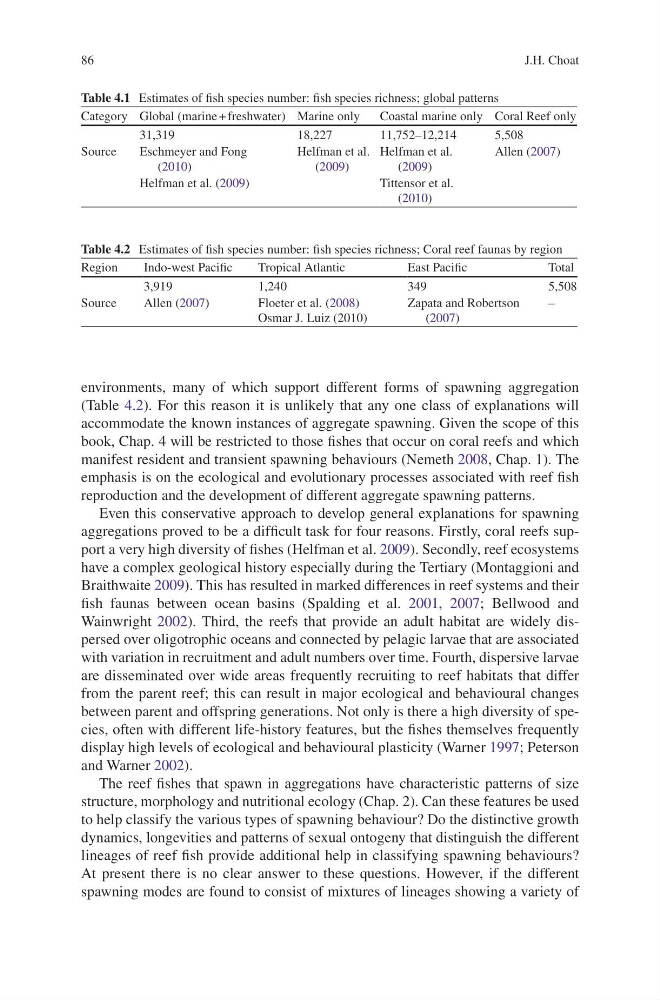
(Table 4.2 ). For this reason it is unlikely that any one class of explanations will
accommodate the known instances of aggregate spawning. Given the scope of this
book, Chap. 4 will be restricted to those fi shes that occur on coral reefs and which
manifest resident and transient spawning behaviours (Nemeth 2008 , Chap. 1 ). The
emphasis is on the ecological and evolutionary processes associated with reef fi sh
reproduction and the development of different aggregate spawning patterns.
Even this conservative approach to develop general explanations for spawning
aggregations proved to be a diffi cult task for four reasons. Firstly, coral reefs support a very high diversity of fi shes (Helfman et al. 2009 ) . Secondly, reef ecosystems
have a complex geological history especially during the Tertiary (Montaggioni and
Braithwaite 2009 ) . This has resulted in marked differences in reef systems and their
fi sh faunas between ocean basins (Spalding et al. 2001, 2007 ; Bellwood and
Wainwright 2002 ) . Third, the reefs that provide an adult habitat are widely dispersed over oligotrophic oceans and connected by pelagic larvae that are associated
with variation in recruitment and adult numbers over time. Fourth, dispersive larvae
are disseminated over wide areas frequently recruiting to reef habitats that differ
from the parent reef; this can result in major ecological and behavioural changes
between parent and offspring generations. Not only is there a high diversity of species, often with different life-history features, but the fi shes themselves frequently
display high levels of ecological and behavioural plasticity (Warner 1997 ; Peterson
and Warner 2002 ) .
The reef fi shes that spawn in aggregations have characteristic patterns of size
structure, morphology and nutritional ecology (Chap. 2 ). Can these features be used
to help classify the various types of spawning behaviour? Do the distinctive growth
dynamics, longevities and patterns of sexual ontogeny that distinguish the different
lineages of reef fi sh provide additional help in classifying spawning behaviours?
At present there is no clear answer to these questions. However, if the different
spawning modes are found to consist of mixtures of lineages showing a variety of
Table 4.1 Estimates of fi sh species number: fi sh species richness; global patterns
Category Global (marine + freshwater) Marine only
Coastal marine only Coral Reef only
31,319
18,227
11,752–12,214
5,508
Source
Eschmeyer and Fong
( 2010 )
Helfman et al.
( 2009 )
Helfman et al.
( 2009 )
Allen ( 2007 )
Helfman et al. ( 2009 )
Tittensor et al.
( 2010 )
Table 4.2 Estimates of fi sh species number: fi sh species richness; Coral reef faunas by region
Region
Indo-west Pacifi c
Tropical Atlantic
East Pacifi c
Total
3,919
1,240
349
5,508
Source
Allen ( 2007 )
Floeter et al. ( 2008 )
Osmar J. Luiz (2010)
Zapata and Robertson
( 2007 )
–
J.H. Choat
environments, many of which support different forms of spawning aggregation
(Table 4.2 ). For this reason it is unlikely that any one class of explanations will
accommodate the known instances of aggregate spawning. Given the scope of this
book, Chap. 4 will be restricted to those fi shes that occur on coral reefs and which
manifest resident and transient spawning behaviours (Nemeth 2008 , Chap. 1 ). The
emphasis is on the ecological and evolutionary processes associated with reef fi sh
reproduction and the development of different aggregate spawning patterns.
Even this conservative approach to develop general explanations for spawning
aggregations proved to be a diffi cult task for four reasons. Firstly, coral reefs support a very high diversity of fi shes (Helfman et al. 2009 ) . Secondly, reef ecosystems
have a complex geological history especially during the Tertiary (Montaggioni and
Braithwaite 2009 ) . This has resulted in marked differences in reef systems and their
fi sh faunas between ocean basins (Spalding et al. 2001, 2007 ; Bellwood and
Wainwright 2002 ) . Third, the reefs that provide an adult habitat are widely dispersed over oligotrophic oceans and connected by pelagic larvae that are associated
with variation in recruitment and adult numbers over time. Fourth, dispersive larvae
are disseminated over wide areas frequently recruiting to reef habitats that differ
from the parent reef; this can result in major ecological and behavioural changes
between parent and offspring generations. Not only is there a high diversity of species, often with different life-history features, but the fi shes themselves frequently
display high levels of ecological and behavioural plasticity (Warner 1997 ; Peterson
and Warner 2002 ) .
The reef fi shes that spawn in aggregations have characteristic patterns of size
structure, morphology and nutritional ecology (Chap. 2 ). Can these features be used
to help classify the various types of spawning behaviour? Do the distinctive growth
dynamics, longevities and patterns of sexual ontogeny that distinguish the different
lineages of reef fi sh provide additional help in classifying spawning behaviours?
At present there is no clear answer to these questions. However, if the different
spawning modes are found to consist of mixtures of lineages showing a variety of
Table 4.1 Estimates of fi sh species number: fi sh species richness; global patterns
Category Global (marine + freshwater) Marine only
Coastal marine only Coral Reef only
31,319
18,227
11,752–12,214
5,508
Source
Eschmeyer and Fong
( 2010 )
Helfman et al.
( 2009 )
Helfman et al.
( 2009 )
Allen ( 2007 )
Helfman et al. ( 2009 )
Tittensor et al.
( 2010 )
Table 4.2 Estimates of fi sh species number: fi sh species richness; Coral reef faunas by region
Region
Indo-west Pacifi c
Tropical Atlantic
East Pacifi c
Total
3,919
1,240
349
5,508
Source
Allen ( 2007 )
Floeter et al. ( 2008 )
Osmar J. Luiz (2010)
Zapata and Robertson
( 2007 )
–