

445
23 Octopus vulgaris. Paralarval Culture
A mixed live diet of enriched Artemia and crustacean zoeae is currently the most
successful in terms of growth rate and survival during the paralarval phase. However, this feeding protocol is not transferable to a commercial level due to the limited
availability of live zoeae.
A protocol for the first 30 days of O� vulgaris paralarvae culture is proposed that
supports the development of individuals with good fitness (in terms of dry weight
and survival) through to the settlement process. Using this method, relatively high
survival rates and paralarvae dry weights between 1.3 and 1.8 mg can be attained
after 1 month when enriched Artemia is used as the sole diet, but these values increase up to 2.5–3.5 mg when zoeae are used in a co-feeding regimen with Artemia.
23.9 Trends in Research and Industrial Level
The following research topics are recommended.
23.9.1 Wild Paralarvae and Natural Prey Studies
It is strongly recommended to study further the biochemical composition of wild
paralarvae and their natural prey preferences and behaviour. It is also of interest
to complete sequence information included in molecular databases (GenBank and
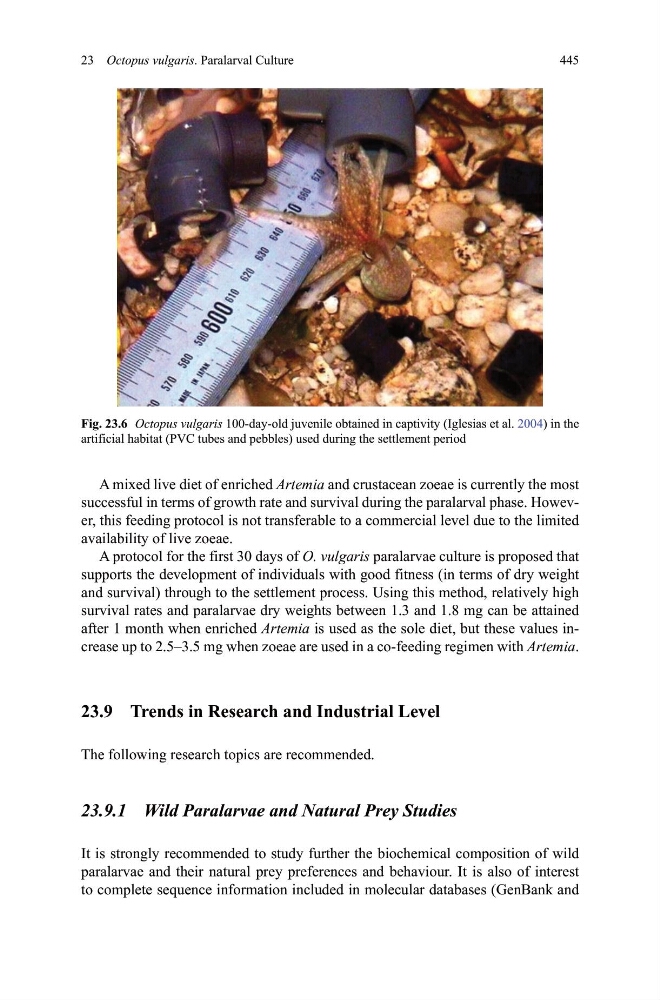
Fig. 23.6 Octopus vulgaris 100-day-old juvenile obtained in captivity (Iglesias et al. 2004) in the
artificial habitat (PVC tubes and pebbles) used during the settlement period
23 Octopus vulgaris. Paralarval Culture
A mixed live diet of enriched Artemia and crustacean zoeae is currently the most
successful in terms of growth rate and survival during the paralarval phase. However, this feeding protocol is not transferable to a commercial level due to the limited
availability of live zoeae.
A protocol for the first 30 days of O� vulgaris paralarvae culture is proposed that
supports the development of individuals with good fitness (in terms of dry weight
and survival) through to the settlement process. Using this method, relatively high
survival rates and paralarvae dry weights between 1.3 and 1.8 mg can be attained
after 1 month when enriched Artemia is used as the sole diet, but these values increase up to 2.5–3.5 mg when zoeae are used in a co-feeding regimen with Artemia.
23.9 Trends in Research and Industrial Level
The following research topics are recommended.
23.9.1 Wild Paralarvae and Natural Prey Studies
It is strongly recommended to study further the biochemical composition of wild
paralarvae and their natural prey preferences and behaviour. It is also of interest
to complete sequence information included in molecular databases (GenBank and
Fig. 23.6 Octopus vulgaris 100-day-old juvenile obtained in captivity (Iglesias et al. 2004) in the
artificial habitat (PVC tubes and pebbles) used during the settlement period