

418
X. D. Zheng et al.
22.3 Broodstock Acclimatization to Captivity
22.3.1 Physical and Chemical Parameters
After capture, wild individuals must be chosen carefully, and those with no wounds
are selected as broodstock and transported indoors for adaptation to captivity. The
broodstock are introduced into 8 × 4 × 1.2 m rectangular concrete pools, whereas
nursery pools are much smaller measuring 3 × 1 × 0.6 m. The recommended light
intensity ranges from 200 to 800 Lx under a seawater temperature of 20–24 °C,
salinity 29–31 psu and dissolved oxygen > 4 mg L
−1
.
Two kinds of shelter nests are provided in advance after sterilizing: 20–30-cmlong polyvinyl chloride (PVC) pipes or eel culture cages. The broodstock density is
controlled to approximately 3–5 individuals m
-2
and a sex ratio of 1:1.
Small crabs of various species are supplied daily as the main food, in a ratio of
1–1.5 times the total number of broodstock individuals. Other live prey species,
such as small-sized marine bivalves ( Ruditapes philippinarum, Potamocorbula
sp.), or polychaetes ( Nereis), etc. are also used. The leftover food should be cleaned
up and seawater also changed the next morning, due to the fact that this species
preys overnight.
22.3.2 Mating
During the period of adaptation to captivity, mating is usually observed in the
early morning or at night under indoor conditions. The male lies on the back of
the female and introduces its hectocotylized arm directly into the female mantle.
The spermatophores are transferred near the oviduct. The mating behaviour lasts
for 10–30 min. After mating, most males die gradually, and females can store
spermatophores up to at least 2 weeks before spawning. Reproductive females
always hide alone in the PVC tubes or eel cages. If more than two individuals are
found in the same shelter, one of them should be immediately transferred to an
empty one.
a
c
d
b
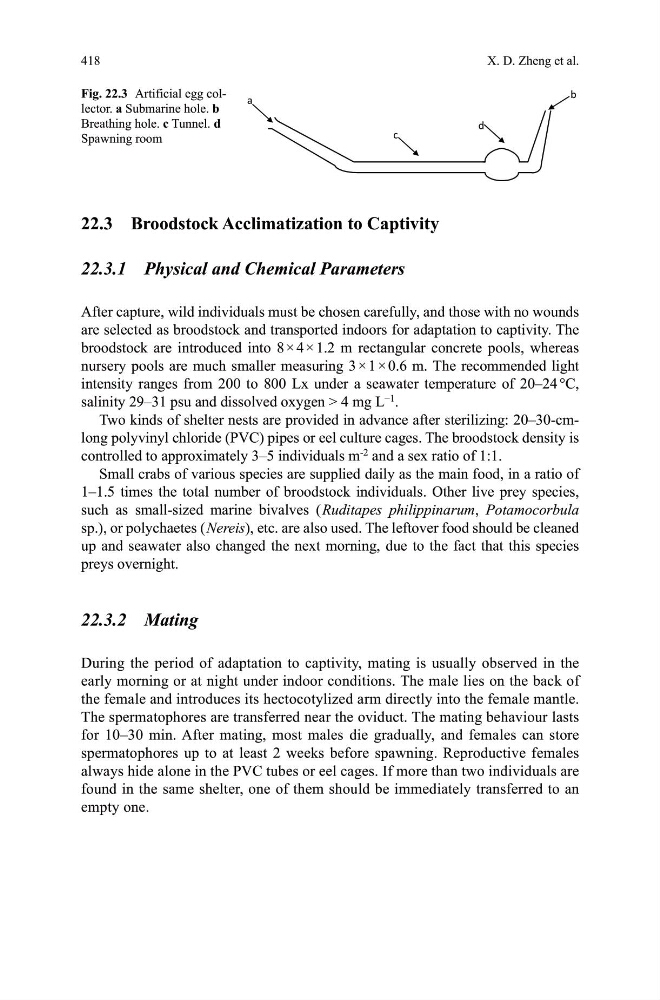
Fig. 22.3 Artificial egg collector. a Submarine hole. b
Breathing hole. c Tunnel. d
Spawning room
X. D. Zheng et al.
22.3 Broodstock Acclimatization to Captivity
22.3.1 Physical and Chemical Parameters
After capture, wild individuals must be chosen carefully, and those with no wounds
are selected as broodstock and transported indoors for adaptation to captivity. The
broodstock are introduced into 8 × 4 × 1.2 m rectangular concrete pools, whereas
nursery pools are much smaller measuring 3 × 1 × 0.6 m. The recommended light
intensity ranges from 200 to 800 Lx under a seawater temperature of 20–24 °C,
salinity 29–31 psu and dissolved oxygen > 4 mg L
−1
.
Two kinds of shelter nests are provided in advance after sterilizing: 20–30-cmlong polyvinyl chloride (PVC) pipes or eel culture cages. The broodstock density is
controlled to approximately 3–5 individuals m
-2
and a sex ratio of 1:1.
Small crabs of various species are supplied daily as the main food, in a ratio of
1–1.5 times the total number of broodstock individuals. Other live prey species,
such as small-sized marine bivalves ( Ruditapes philippinarum, Potamocorbula
sp.), or polychaetes ( Nereis), etc. are also used. The leftover food should be cleaned
up and seawater also changed the next morning, due to the fact that this species
preys overnight.
22.3.2 Mating
During the period of adaptation to captivity, mating is usually observed in the
early morning or at night under indoor conditions. The male lies on the back of
the female and introduces its hectocotylized arm directly into the female mantle.
The spermatophores are transferred near the oviduct. The mating behaviour lasts
for 10–30 min. After mating, most males die gradually, and females can store
spermatophores up to at least 2 weeks before spawning. Reproductive females
always hide alone in the PVC tubes or eel cages. If more than two individuals are
found in the same shelter, one of them should be immediately transferred to an
empty one.
a
c
d
b
Fig. 22.3 Artificial egg collector. a Submarine hole. b
Breathing hole. c Tunnel. d
Spawning room