

361
18 Amphioctopus aegina
18.8 Conclusions
The marbled octopus, Amphioctopus aegina, can be cultured on a small scale because of its small size and benthic habit. The nursing of brooding females is similar
to the nursing of the eggs since the hatching rate is high only because of brooding by
the female. Feeding of planktonic young in the first month during the nursing phase
with live prey is a bottleneck similar to that for other cephalopods. However, live
feed for Amphioctopus aegina is collected from the wild (mysids) as well as those
produced in hatcheries (palaemonid shrimp larvae) can be supplied. The planktonic
phase includes a transitional settling stage for about 10 days before the settlement is
completed. After the settlement, the young can learn to feed on dead prey (chopped
fish meat). The octopus reaches maturity in about 120 days and their lifespan is about
210 days. Survival is low and requires further improvements. Amphioctopus aegina
is a new octopod species in aquaculture and the second benthic octopus species with
planktonic hatchlings that can be cultured. The market demand for live octopus of
moderate size should be initiated.
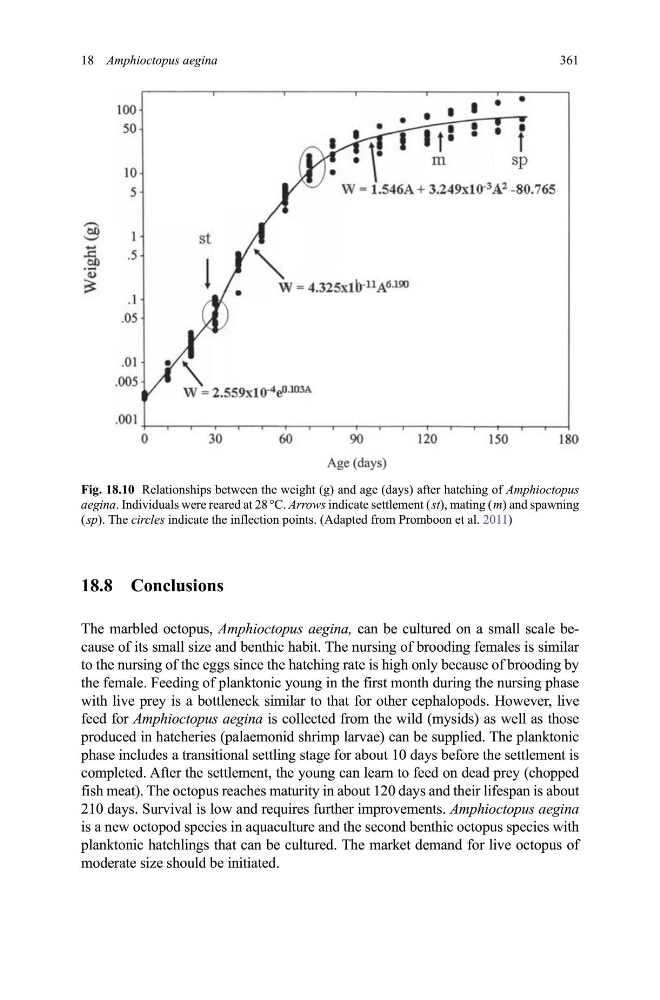
Fig. 18.10 Relationships between the weight (g) and age (days) after hatching of Amphioctopus
aegina. Individuals were reared at 28 °C. Arrows indicate settlement ( st), mating ( m) and spawning
( sp). The circles indicate the inflection points. (Adapted from Promboon et al. 2011)
18 Amphioctopus aegina
18.8 Conclusions
The marbled octopus, Amphioctopus aegina, can be cultured on a small scale because of its small size and benthic habit. The nursing of brooding females is similar
to the nursing of the eggs since the hatching rate is high only because of brooding by
the female. Feeding of planktonic young in the first month during the nursing phase
with live prey is a bottleneck similar to that for other cephalopods. However, live
feed for Amphioctopus aegina is collected from the wild (mysids) as well as those
produced in hatcheries (palaemonid shrimp larvae) can be supplied. The planktonic
phase includes a transitional settling stage for about 10 days before the settlement is
completed. After the settlement, the young can learn to feed on dead prey (chopped
fish meat). The octopus reaches maturity in about 120 days and their lifespan is about
210 days. Survival is low and requires further improvements. Amphioctopus aegina
is a new octopod species in aquaculture and the second benthic octopus species with
planktonic hatchlings that can be cultured. The market demand for live octopus of
moderate size should be initiated.
Fig. 18.10 Relationships between the weight (g) and age (days) after hatching of Amphioctopus
aegina. Individuals were reared at 28 °C. Arrows indicate settlement ( st), mating ( m) and spawning
( sp). The circles indicate the inflection points. (Adapted from Promboon et al. 2011)