

245
14 Sepiella japonica
14.4 Hatchling and Juvenile Nursing
Once the fertilized eggs are hatched, they are then transferred to the nursing pools.
The hatchlings with about 4 mm ML usually swim near the water surface. They can
be nursed in round pools with rotating current to avoid mortality by collision with
the walls (Fig. 14.3). The current and water level can be adjusted by valves outside
the pool so as to make the hatchling distribution more uniform to effectively utilize
the water volume and increase density. During the planktonic phase, the hatchlings
should be closely observed for their growth, ingestion and condition of the feeds, so
as to discover and isolate the sick ones at an early time.
14.4.1 Feed
Feed is a key factor for hatchling growth and development. The size, buoyancy,
density and nutrition value of feed should be taken into consideration. The hatchling has yolk in its mouth which may disappear in 1 or 2 days. Most of them take
feed soon after hatching. S� japonica is a typical carnivorous cuttlefish. As soon as
the hatchlings are placed into the pools, free-swimming copepods, Artemia nauplii
or Miona mongolica, should be added at a density of 0.1–0.2 individuals L
−1
, 1–2
times per day. The hatchling survival rate can be higher (83.3 %) when initial feedings are cladoceran, copepods, shrimp or Artemia (Li et al. 2007).
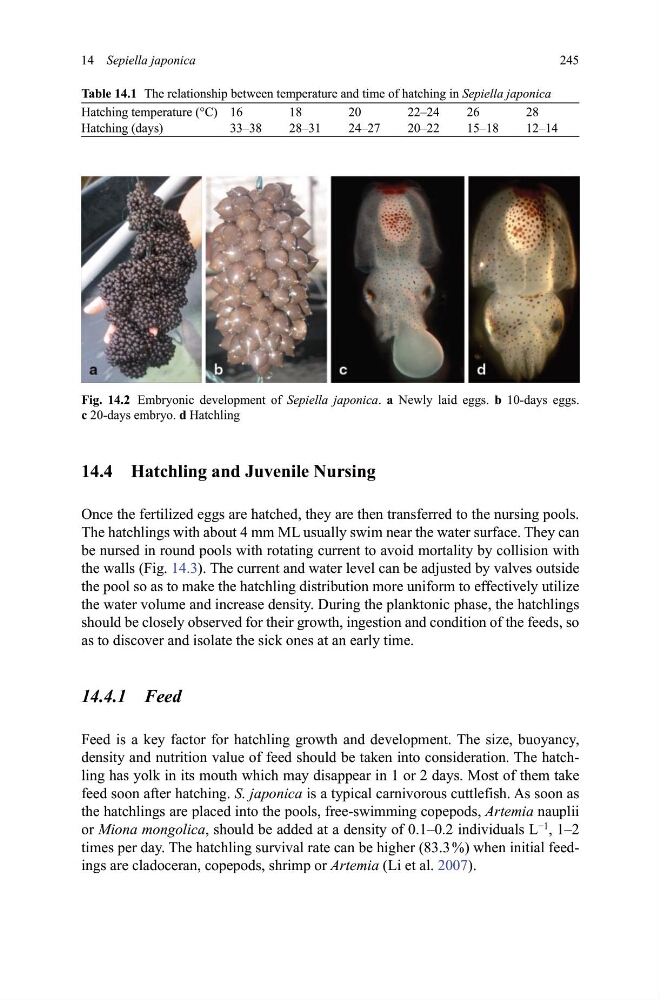
Fig. 14.2 Embryonic development of Sepiella japonica. a Newly laid eggs. b 10-days eggs.
c 20-days embryo. d Hatchling
Table 14.1 The relationship between temperature and time of hatching in Sepiella japonica
Hatching temperature (°C) 16
18
20
22–24
26
28
Hatching (days)
33–38
28–31
24–27
20–22
15–18
12–14
14 Sepiella japonica
14.4 Hatchling and Juvenile Nursing
Once the fertilized eggs are hatched, they are then transferred to the nursing pools.
The hatchlings with about 4 mm ML usually swim near the water surface. They can
be nursed in round pools with rotating current to avoid mortality by collision with
the walls (Fig. 14.3). The current and water level can be adjusted by valves outside
the pool so as to make the hatchling distribution more uniform to effectively utilize
the water volume and increase density. During the planktonic phase, the hatchlings
should be closely observed for their growth, ingestion and condition of the feeds, so
as to discover and isolate the sick ones at an early time.
14.4.1 Feed
Feed is a key factor for hatchling growth and development. The size, buoyancy,
density and nutrition value of feed should be taken into consideration. The hatchling has yolk in its mouth which may disappear in 1 or 2 days. Most of them take
feed soon after hatching. S� japonica is a typical carnivorous cuttlefish. As soon as
the hatchlings are placed into the pools, free-swimming copepods, Artemia nauplii
or Miona mongolica, should be added at a density of 0.1–0.2 individuals L
−1
, 1–2
times per day. The hatchling survival rate can be higher (83.3 %) when initial feedings are cladoceran, copepods, shrimp or Artemia (Li et al. 2007).
Fig. 14.2 Embryonic development of Sepiella japonica. a Newly laid eggs. b 10-days eggs.
c 20-days embryo. d Hatchling
Table 14.1 The relationship between temperature and time of hatching in Sepiella japonica
Hatching temperature (°C) 16
18
20
22–24
26
28
Hatching (days)
33–38
28–31
24–27
20–22
15–18
12–14