

134
N. Koueta et al.
gland, as a feeding ingredient has beneficial effects in rats on cellular proliferation
(spleen cells and bone marrow cells) and on humoral immune functions. Sinanoglou
and Miniadis-Meimaroglou (1999) have examined the mantles of three species of
cephalopod molluscs from Saronicos Bay (Greece) for its fatty acids. They found
that cephalopod skins can be excellent sources for PUFAs, especially Ω-3. Total lipids in the mantle of the cephalopods Eledone moschata, S� officinalis and Todarodes
sagittatus constituted 2.0, 1.4 and 1.7 % of wet tissue, respectively (Sinanoglou and
Miniadis-Meimaroglou 1999).
8.2.2 Chitin and Chitosan
Cuttlebones and pens from cephalopods are rich in chitin. In general, squid and cuttlefish contained 3–20 % of chitin (Patil and Satam 2002). Sometimes, higher quantities
of chitin were observed, for example, the chitin content was about 40 % of the original
weight of the dried pens (Tolaimate et al. 2000). Chitin can be industrially converted
into a more applicable chitosan, a structural modification of chitin often performed
by alkaline hydrolysis (Wang et al. 2009b). Chitosan, produced by thermochemical
alkaline deacetylation of chitin, is a biopolymer with unique properties favourable
for a broad variety of industrial and biomedical applications (Tolaimate et al. 2000).
Chitin has been identified in nature as the main supporting structure in a wide variety
of organisms such as the exoskeleton or cuticle of different invertebrates (Cortizo
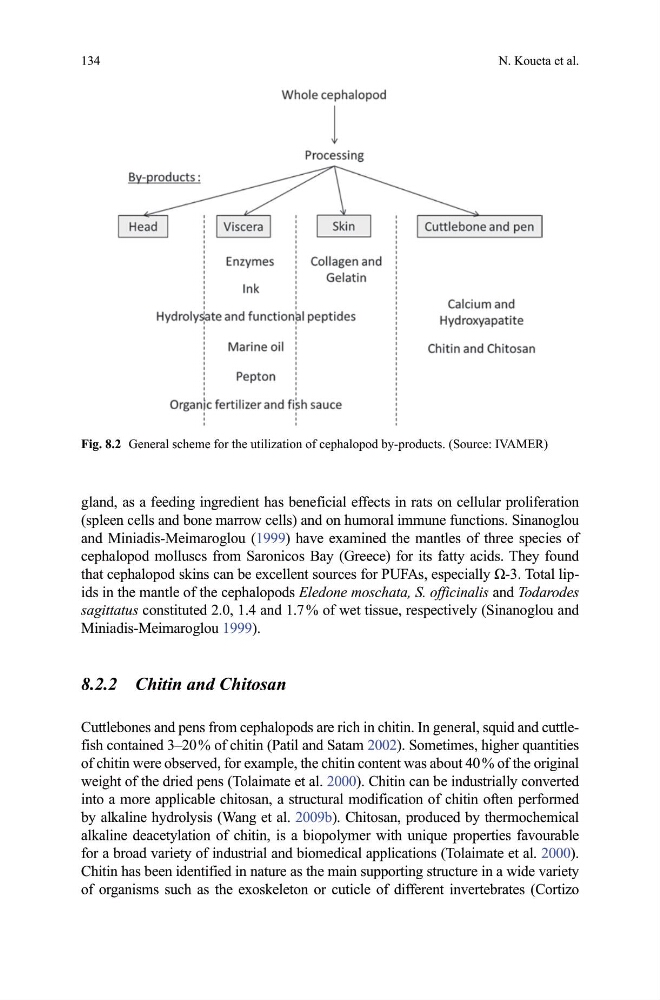
Fig. 8.2 General scheme for the utilization of cephalopod by-products. (Source: IVAMER)
N. Koueta et al.
gland, as a feeding ingredient has beneficial effects in rats on cellular proliferation
(spleen cells and bone marrow cells) and on humoral immune functions. Sinanoglou
and Miniadis-Meimaroglou (1999) have examined the mantles of three species of
cephalopod molluscs from Saronicos Bay (Greece) for its fatty acids. They found
that cephalopod skins can be excellent sources for PUFAs, especially Ω-3. Total lipids in the mantle of the cephalopods Eledone moschata, S� officinalis and Todarodes
sagittatus constituted 2.0, 1.4 and 1.7 % of wet tissue, respectively (Sinanoglou and
Miniadis-Meimaroglou 1999).
8.2.2 Chitin and Chitosan
Cuttlebones and pens from cephalopods are rich in chitin. In general, squid and cuttlefish contained 3–20 % of chitin (Patil and Satam 2002). Sometimes, higher quantities
of chitin were observed, for example, the chitin content was about 40 % of the original
weight of the dried pens (Tolaimate et al. 2000). Chitin can be industrially converted
into a more applicable chitosan, a structural modification of chitin often performed
by alkaline hydrolysis (Wang et al. 2009b). Chitosan, produced by thermochemical
alkaline deacetylation of chitin, is a biopolymer with unique properties favourable
for a broad variety of industrial and biomedical applications (Tolaimate et al. 2000).
Chitin has been identified in nature as the main supporting structure in a wide variety
of organisms such as the exoskeleton or cuticle of different invertebrates (Cortizo
Fig. 8.2 General scheme for the utilization of cephalopod by-products. (Source: IVAMER)