

122
J. Nabhitabhata and S. Segawa
least 50 % smaller than those near to hatching. Second-stage egg capsules are similar in shape but with comparatively larger egg chambers. In the third stage, each
chamber of the egg capsule is globular in shape, becoming cubic in the fourth stage
with a finger-like shape and comparatively more transparent. The capsules collected
and transported at the early stages can yield a better hatching rate than those collected nearer to hatching (Nabhitabhata 1978a, b).
The egg capsules require good aeration and ventilation to yield a good hatching rate. After being transported to the hatchery and being left overnight for
acclimatization (Fig. 7.5), the capsules have to be separated from their clusters by
cutting with scissors. Squid egg capsules are put into baskets of 5 mm mesh size for
those in the first and second stages and of 10 mm mesh size for those in the third
and the fourth stages (Fig. 7.6). Cuttlefish egg capsules require just one kind of
plastic basket, with a 5 mm mesh size. The capsules are maintained until hatching
in such baskets floating in concrete tanks of 4,000-L capacity and 1.8 m diameter
(Nabhitabhata 1978a, b, 1996; Nabhitabhata and Kbinrum 1981). The egg capsules
of squid and cuttlefish are always in separate tanks, due to differences in their embryonic periods, and hence the incubation periods are required.
Nursing of Egg Capsules Egg capsules are nursed under controlled conditions in
tanks of similar size and water quality to the acclimatization tanks in the hatchery.
An open system is employed where any changes in physical and chemical parameters are minimized. Egg capsules are visually checked every morning, and empty
capsules and those with dead or abnormally developed embryos are discarded in
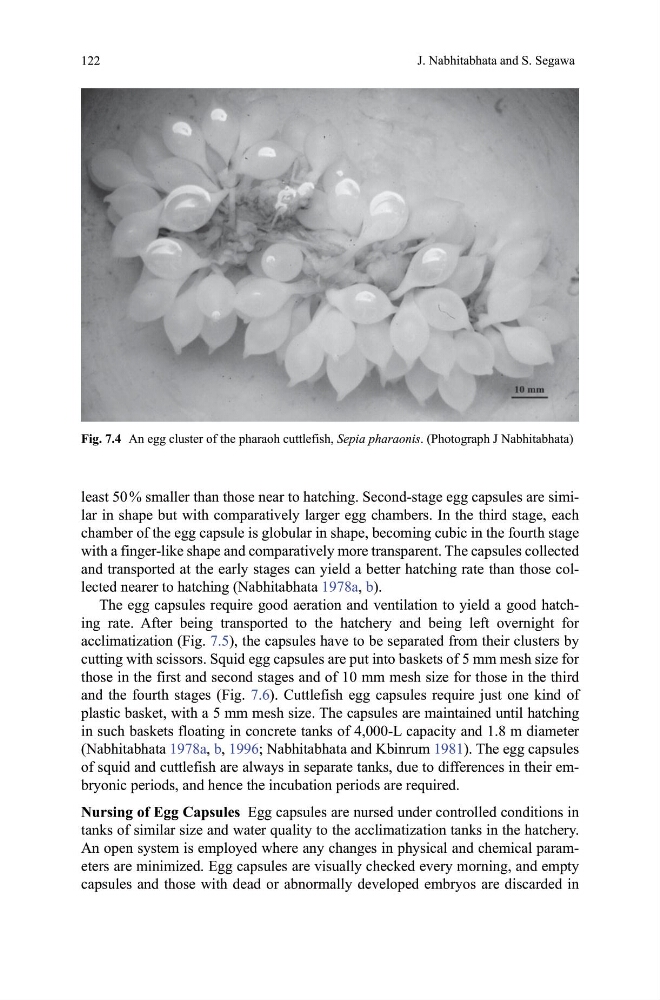
Fig. 7.4 An egg cluster of the pharaoh cuttlefish, Sepia pharaonis. (Photograph J Nabhitabhata)
J. Nabhitabhata and S. Segawa
least 50 % smaller than those near to hatching. Second-stage egg capsules are similar in shape but with comparatively larger egg chambers. In the third stage, each
chamber of the egg capsule is globular in shape, becoming cubic in the fourth stage
with a finger-like shape and comparatively more transparent. The capsules collected
and transported at the early stages can yield a better hatching rate than those collected nearer to hatching (Nabhitabhata 1978a, b).
The egg capsules require good aeration and ventilation to yield a good hatching rate. After being transported to the hatchery and being left overnight for
acclimatization (Fig. 7.5), the capsules have to be separated from their clusters by
cutting with scissors. Squid egg capsules are put into baskets of 5 mm mesh size for
those in the first and second stages and of 10 mm mesh size for those in the third
and the fourth stages (Fig. 7.6). Cuttlefish egg capsules require just one kind of
plastic basket, with a 5 mm mesh size. The capsules are maintained until hatching
in such baskets floating in concrete tanks of 4,000-L capacity and 1.8 m diameter
(Nabhitabhata 1978a, b, 1996; Nabhitabhata and Kbinrum 1981). The egg capsules
of squid and cuttlefish are always in separate tanks, due to differences in their embryonic periods, and hence the incubation periods are required.
Nursing of Egg Capsules Egg capsules are nursed under controlled conditions in
tanks of similar size and water quality to the acclimatization tanks in the hatchery.
An open system is employed where any changes in physical and chemical parameters are minimized. Egg capsules are visually checked every morning, and empty
capsules and those with dead or abnormally developed embryos are discarded in
Fig. 7.4 An egg cluster of the pharaoh cuttlefish, Sepia pharaonis. (Photograph J Nabhitabhata)